Endless plains, the Great Migration, elephants beneath Kilimanjaro, and barefoot days on the Indian Ocean
Photo: Kévin et Laurianne Langlais / Pexels
East Africa is where the classic safari was born. Together, Kenya and Tanzania share one vast ecosystem, where millions of wildebeest and zebra follow the rains, lions doze in the shade of acacias, and elephants wander beneath Africa’s highest mountain. Add warm hospitality, rich cultures, and turquoise Indian Ocean coastlines, and you have a journey that changes how you see the world.
Here’s what we tell our clients: the best safari isn’t about seeing everything. It’s about choosing the right parks for your month, staying long enough in each to slow down, and pairing busy national parks with quieter private areas.
Our take: For a first safari combining both countries, we love late June through early October. For fewer vehicles and baby animals, consider the southern Serengeti from late January to February.
The migration is a year-round loop rather than a single event. Roughly speaking, herds calve in the southern Serengeti early in the year, move west and north through the middle of the year, and spend part of the dry season in the northern Serengeti and Maasai Mara before heading south again with the short rains. River crossings often happen between about July and October, but rainfall shifts the timing every year and no crossing is guaranteed. We plan around the most likely areas and build in flexibility.
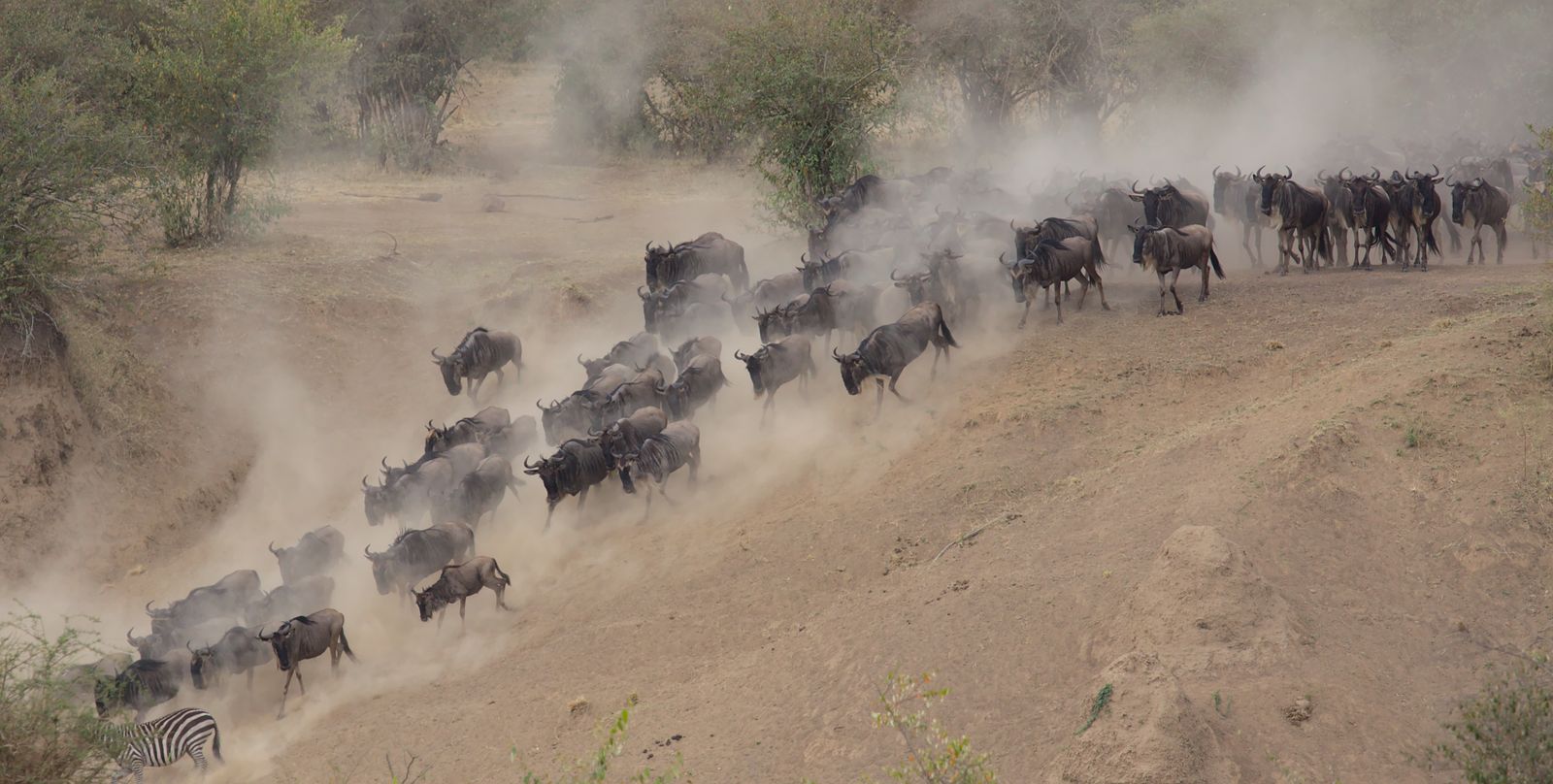
Photo: Nirav Shah / Pexels
The migration is less a single stampede than a living river of animals that redraws itself with the rains. From the air you see dark threads of wildebeest braided across pale grass; on the ground you hear the low murmur of tens of thousands of hooves and smell dust, dung and wet earth after a storm. Guides watch the weather maps as carefully as the herds, because a week of rain in the wrong place can shift the whole story south or north overnight.
Planning around that uncertainty is part of the craft. We build itineraries that put you in the most likely region for your dates, then keep a night or two of flexibility so you can lean toward a river crossing, a quieter valley or a private conservancy when the herds move. The drama is real, but so is the patience: some mornings deliver the crossing you came for, and others deliver lions, elephants and empty golden plains that feel just as African.
Kenya’s classic circuit runs from the Maasai Mara and its neighboring private conservancies through Amboseli, Laikipia and Samburu, with Nairobi as a convenient base. Distances look modest on a map, yet the landscapes change fast: open Mara grassland gives way to Amboseli’s dusty lake beds and Kilimanjaro views, then to Laikipia’s rolling highlands and Samburu’s dry thornbush, where different antelope and giraffe species appear.
Across the border, the Serengeti, Ngorongoro Crater, Tarangire and Lake Manyara form the famous northern circuit, usually starting from Arusha near Kilimanjaro Airport. One country favors road and conservancy variety; the other offers enormous continuous wilderness and crater drama. Combining both is the richest safari many travelers ever take, if you give each area enough nights to slow down.
Nonstop flights link New York (JFK) and Nairobi. Many travelers from other US cities connect through hubs in Europe or the Middle East to reach Nairobi, Kilimanjaro, or Dar es Salaam. Between parks, most safaris use scheduled or private light aircraft between bush airstrips. These small planes have strict luggage limits and usually require soft-sided bags, so pack light.
Entry rules (as of October 2026): US citizens need an approved Kenya Electronic Travel Authorisation (eTA) before traveling. Apply only on the official Kenya eTA website or app, ideally well ahead of your trip. For Tanzania, US citizens must apply for a multiple-entry visa. The official e-visa portal is recommended. From October 2026, foreign visitors to mainland Tanzania must also hold the government’s mandatory inbound travel insurance, which already applied in Zanzibar. One policy covers both, bought according to where you first enter. For both countries, your passport should be valid for at least six months beyond arrival. The US State Department advises two blank pages for Kenya and at least one for Tanzania. Kenya is on Tanzania’s yellow fever list, so if you travel from Kenya to Tanzania (or transit through certain countries), you’ll need a yellow fever vaccination certificate. Please consult a travel clinic well before departure about vaccinations and health precautions. We recheck these rules before every departure. Also review the State Department’s advisories and consider enrolling in STEP.
Ideal for first-timers. A professional driver-guide in a private 4×4 handles spotting, tracking, and logistics, so you can focus on the wildlife.
Hop between parks on light aircraft to skip long road transfers and spend more time on game drives.
Stay in intimate tented camps and lodges in private conservancies, where vehicle numbers are limited and activities can include walking safaris, night drives, and bush dinners. Conservancy fees support the local landowners and conservation.
Private vehicles, family tents, and flexible schedules make safaris rewarding for all ages. Some camps set minimum ages for certain activities.
> Advisor tip: Booking through us as a Fora advisor can unlock extra perks at many partner camps, lodges, and hotels in East Africa, such as a property credit, a special experience, or an upgrade when available. Benefits vary by property, so ask us what applies to your dates.
Kenya’s most famous reserve is renowned for big cats and the migration’s dramatic river crossings. The surrounding conservancies offer a quieter, more exclusive experience.
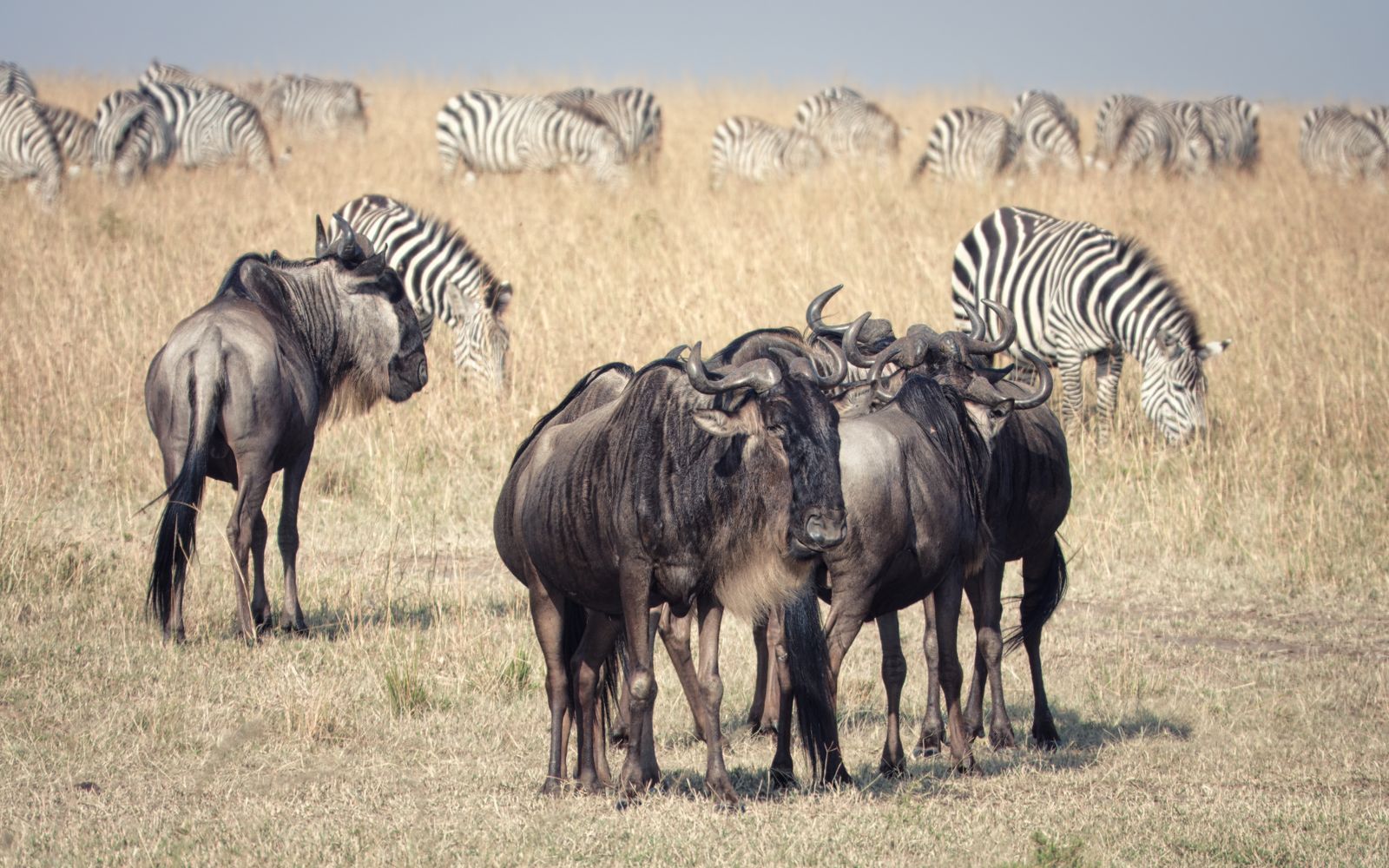
Photo: Jos van Ouwerkerk / Pexels
The Maasai Mara is Kenya’s most famous reserve for good reason: big cats are unusually visible here, and when the migration arrives the riverbanks become theaters of tension and release. Outside peak weeks the plains still hold resident lions, cheetahs and elephants, and the light at dawn turns the grass the color of honey. Neighboring private conservancies often feel quieter, with limited vehicle numbers and activities that national parks rarely allow, such as guided walks and night drives.
A sunrise balloon flight is the standout for many first-timers, floating low enough to hear birds and high enough to see the Mara unfold in every direction. Even without a balloon, early starts matter: animals are most active in the cool hours, and the best sightings often come before breakfast. Stay at least three nights if you can; one short game drive rarely shows what this landscape can offer.
Tanzania’s Serengeti is not one place but a shifting set of habitats. The southern plains fill with calving herds early in the year; the west and north draw the migration mid-year; and predators stay busy in every season. Endless grass, granite kopjes and acacia silhouettes create the postcard Africa many travelers imagine long before they arrive.
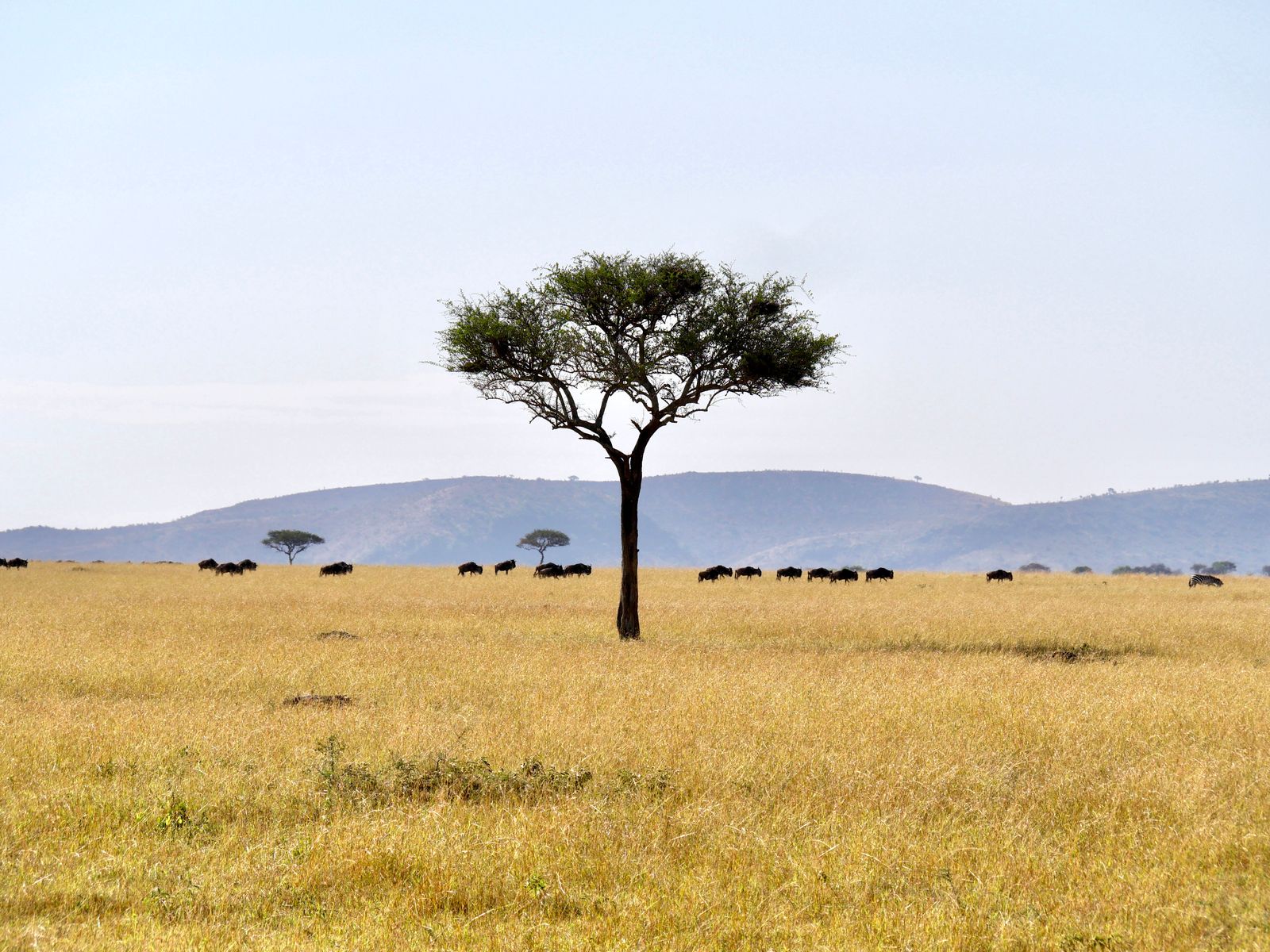
Photo: Dirk Pothen / Pexels
What surprises people on the ground is the sense of space. You can drive for an hour and see only a few other vehicles, then round a bend into a pride of lions on a kopje or a line of elephants walking a dust trail toward water. The Serengeti rewards patience more than rushing between famous viewpoints. Full-day drives with a picnic lunch let you follow a story as it unfolds instead of turning back for lunch.
Between the southern calving grounds and the northern river country, the central Serengeti holds year-round wildlife that many first safaris underestimate. Kopjes shelter lions and leopards; hyenas patrol the edges of herds; and birdlife is rich after the rains. Ask your guide to linger when something interesting starts rather than racing for the next sighting. The best memories are often the quiet ones: a cheetah on a termite mound, a giraffe framed against storm clouds, or simply the wind moving through grass that seems to go on forever.
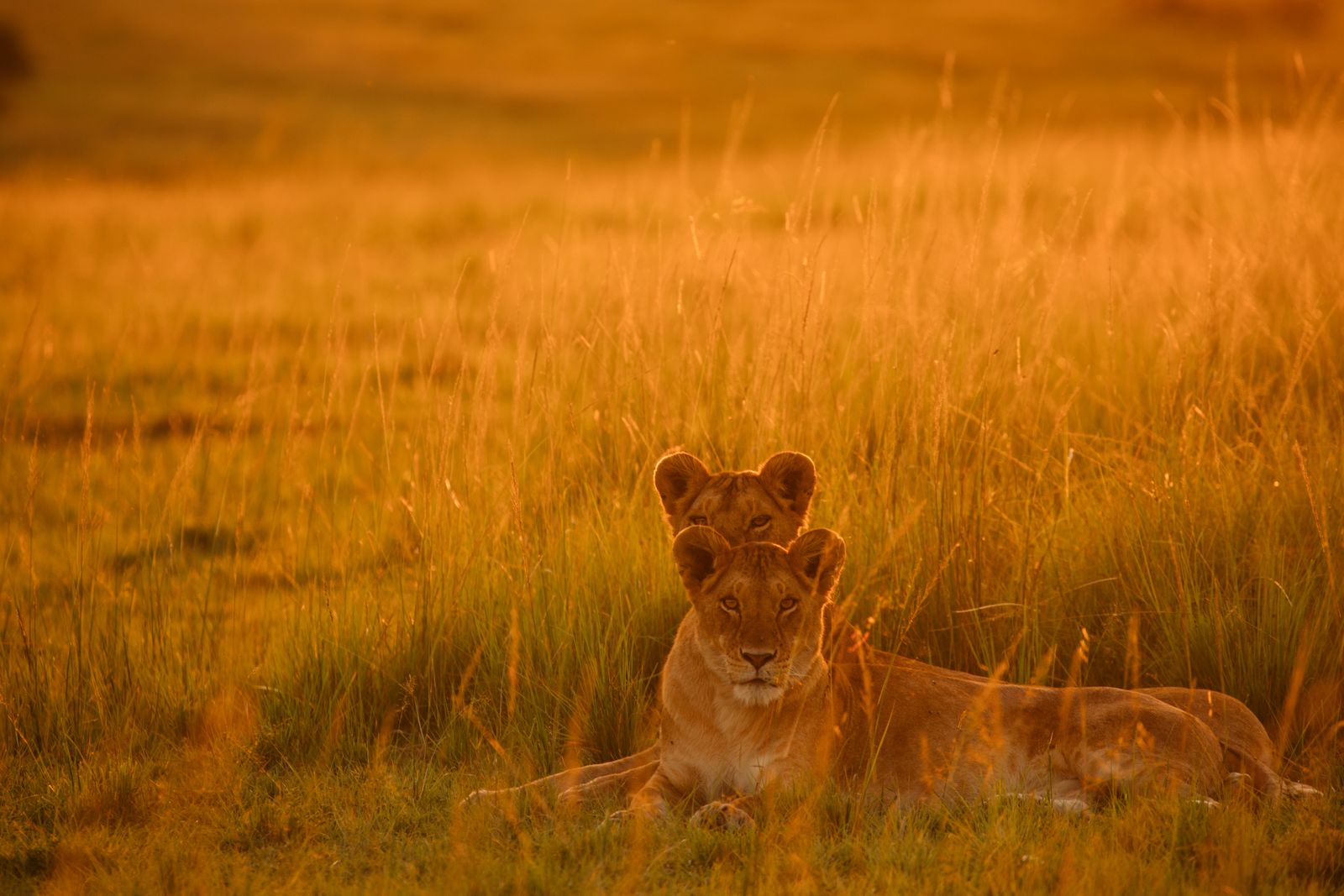
Photo: Natalia Msungu / Pexels
Late light is when the Serengeti feels cinematic. Lions rise from the grass, elephants turn gold at the edges, and the sky goes from blue to copper in minutes. If you travel in migration season, keep expectations flexible: crossings happen when herds and water levels align, not on a timetable. The rest of the year still delivers predators, elephants and those classic acacia horizons.
Standout experience: A full-day game drive with a picnic lunch, following the herds wherever they lead that day.
This vast volcanic caldera, part of a UNESCO World Heritage Site, shelters lions, hyenas, flamingos, and rare black rhinos on its floor. The rim sits high and cool, often wrapped in mist at dawn, before the road drops into a self-contained world of grass, soda lake and forest. From the viewpoint you grasp the scale; once you are on the floor, the wildlife feels close and continuous in a way open plains rarely match.
Travelers who only raced through Ngorongoro in half a day often wish they had started earlier and stayed longer among the herds. Morning light on the crater walls, flamingos working the shallows and the chance of rhino tracks in soft ground are reasons to treat this stop with care. We usually place it beside several Serengeti nights so the crater feels like a concentrated finale rather than a hurried checkbox between flights.
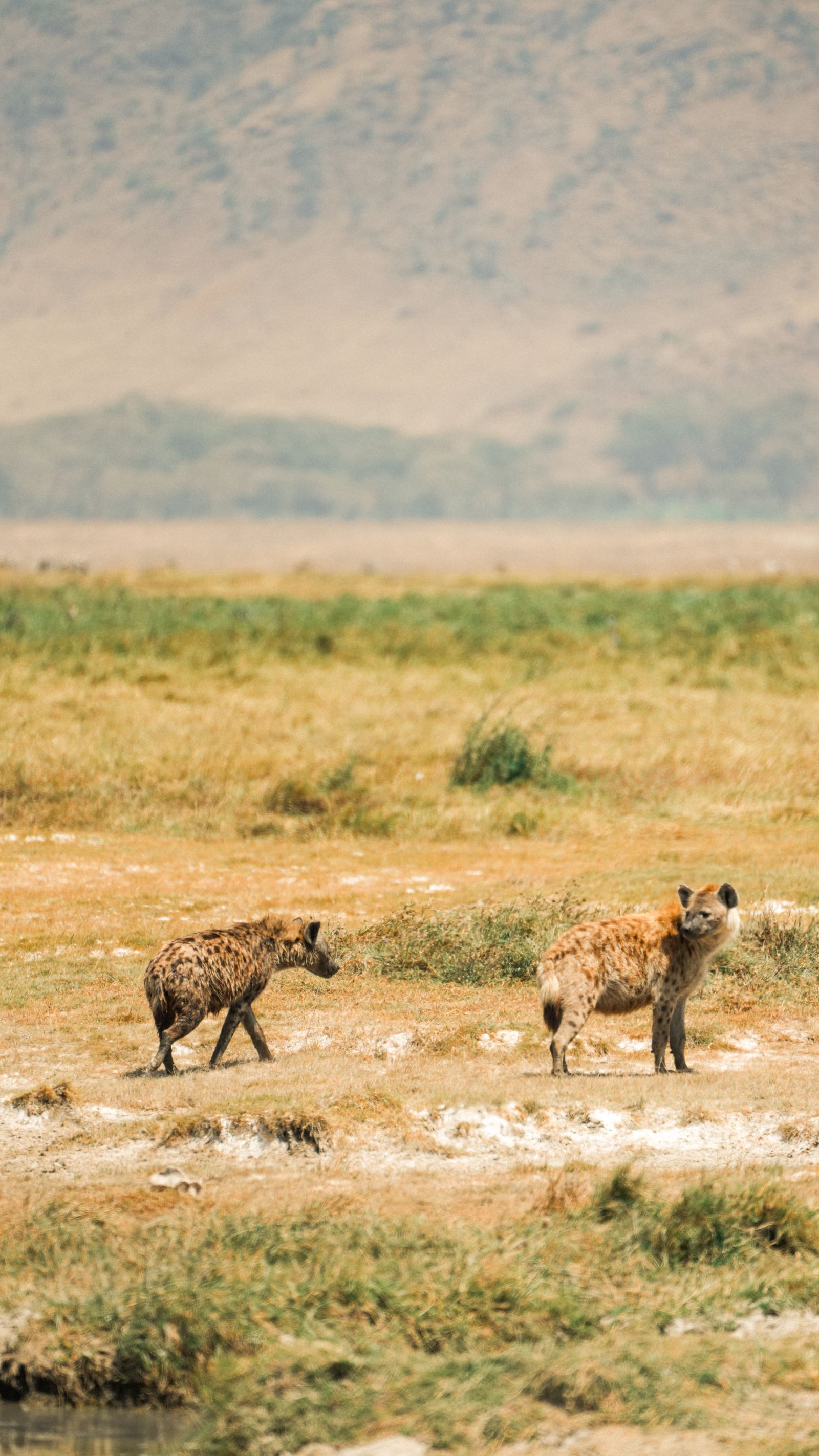
Photo: Alex Ning / Pexels
Ngorongoro is a collapsed volcano so large that grasslands, soda lake and forest all fit inside its walls. On the crater floor you may see lions, hyenas, flamingos and, with luck, black rhinos in a single morning. Because the space is enclosed, wildlife density is high, and so can be the number of vehicles in peak months. Descending at dawn helps you reach the floor before the rush and catch soft light across the crater rim.
The crater is part of a wider conservation area where Maasai communities still graze cattle on the highlands. That living landscape is part of why Ngorongoro feels different from a fenced park. Plan it as a focused day or two rather than a long stay: the floor is extraordinary, but the lodges sit up on the rim, and most guests spend their daylight hours down below. Pair it with several nights in the Serengeti so the crater becomes a highlight, not the whole trip.
Tarangire is elephant country, especially in the dry season when herds gather along the river under enormous baobabs. The park feels less crowded than the Mara or central Serengeti, and the mix of woodland, swamp and open plain rewards slow driving. Birders love it after the rains, when migrants arrive and the landscape turns green.
Standout experience: A guided walking safari in areas where it is offered, for tracks, insects and the smaller details you miss from a vehicle.
Amboseli’s fame is the backdrop: big-tusked elephants moving across dusty flats with snow-capped Kilimanjaro behind them when the mountain is clear. Dawn and dusk are the best chances for that view, and midday haze often hides the peak. Wetlands fed by underground meltwater draw birds and keep wildlife close even when the plains look dry.
Standout experience: An early-morning drive timed for elephants with the mountain behind them.
Laikipia’s private conservancies are among Kenya’s best places for rhino and wild dog conservation, with a more intimate camp style than big national parks. Samburu, farther north, is hotter and drier, with species you rarely see farther south: reticulated giraffe, Grevy’s zebra and the long-necked gerenuk. Together they add a different chapter to a Kenya safari that only visited the Mara.
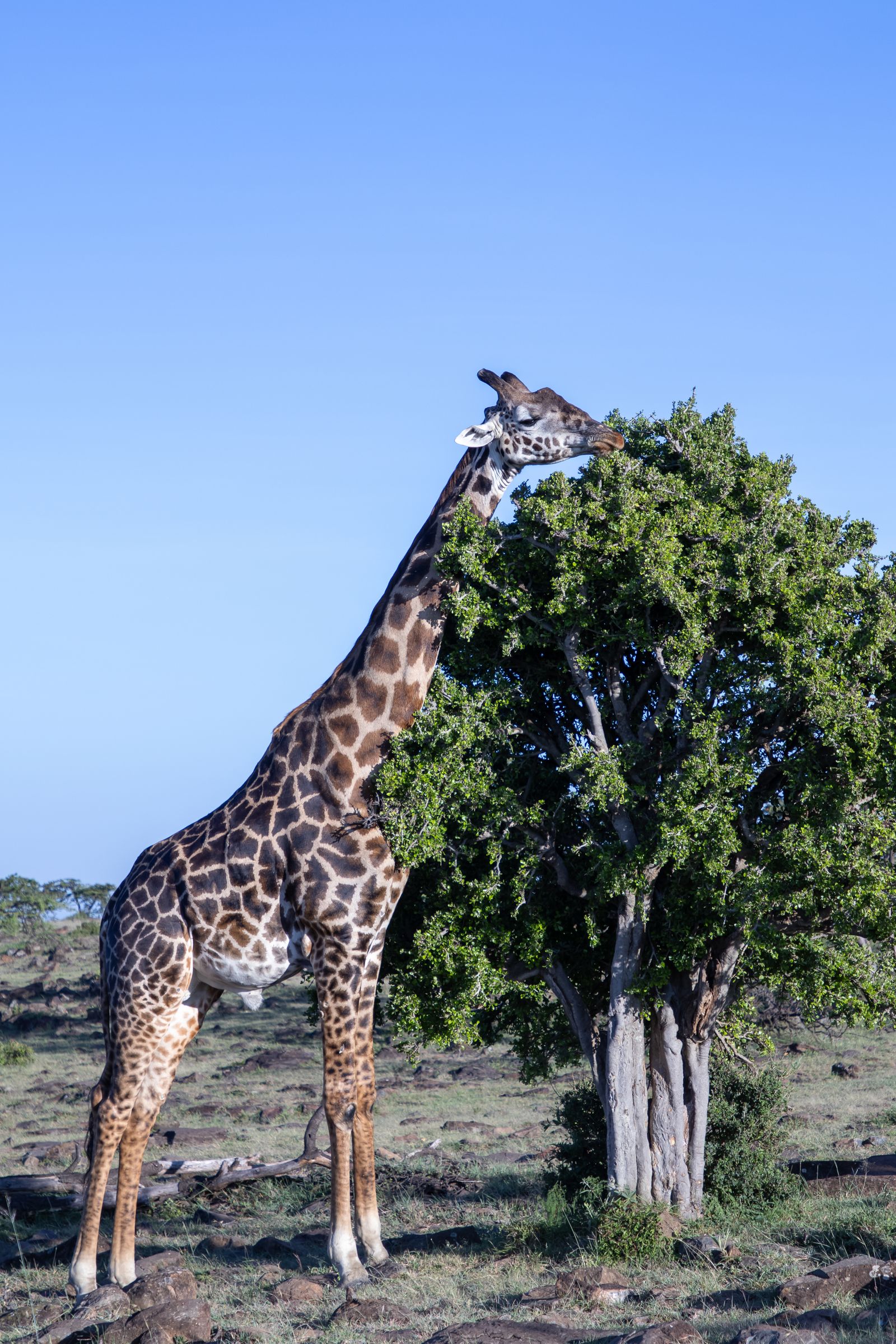
Photo: Mr Sketch / Pexels
Giraffe sightings are common across both Kenya and Tanzania, yet each region has its own character. In the Mara they move through long grass; in Samburu the reticulated pattern looks painted against thorn trees; around Amboseli they share the frame with elephants and, on clear mornings, the mountain. Watching them feed is a reminder that safari is not only about the Big Five. The quiet moments between predator sightings are when the landscape teaches you its rhythms.
Conservancies in Laikipia often allow walking with armed rangers, which brings you closer to tracks, plants and the smaller animals that vehicles pass by. Rhino tracking on foot, where it is responsibly offered, is a highlight for many guests and supports the communities and rangers who protect these animals. Ask us which properties fit your comfort level, fitness and travel style before we lock the route.
Nairobi National Park puts lions and giraffes against a city skyline, which makes an arrival or departure day feel like part of the safari rather than dead travel time. Nearby orphanages and giraffe centers support conservation and education, and they work well with families. Use Nairobi as a bridge, not a long city stay, unless you specifically want galleries, restaurants and a slower urban pause.
Standout experience: Timing a public viewing hour at an elephant orphanage if it fits your schedule.
After dusty game drives, many travelers crave salt air and a slower pace. East Africa’s coast delivers that contrast beautifully, and the jump from bush to beach is part of why Kenya and Tanzania trips feel complete.
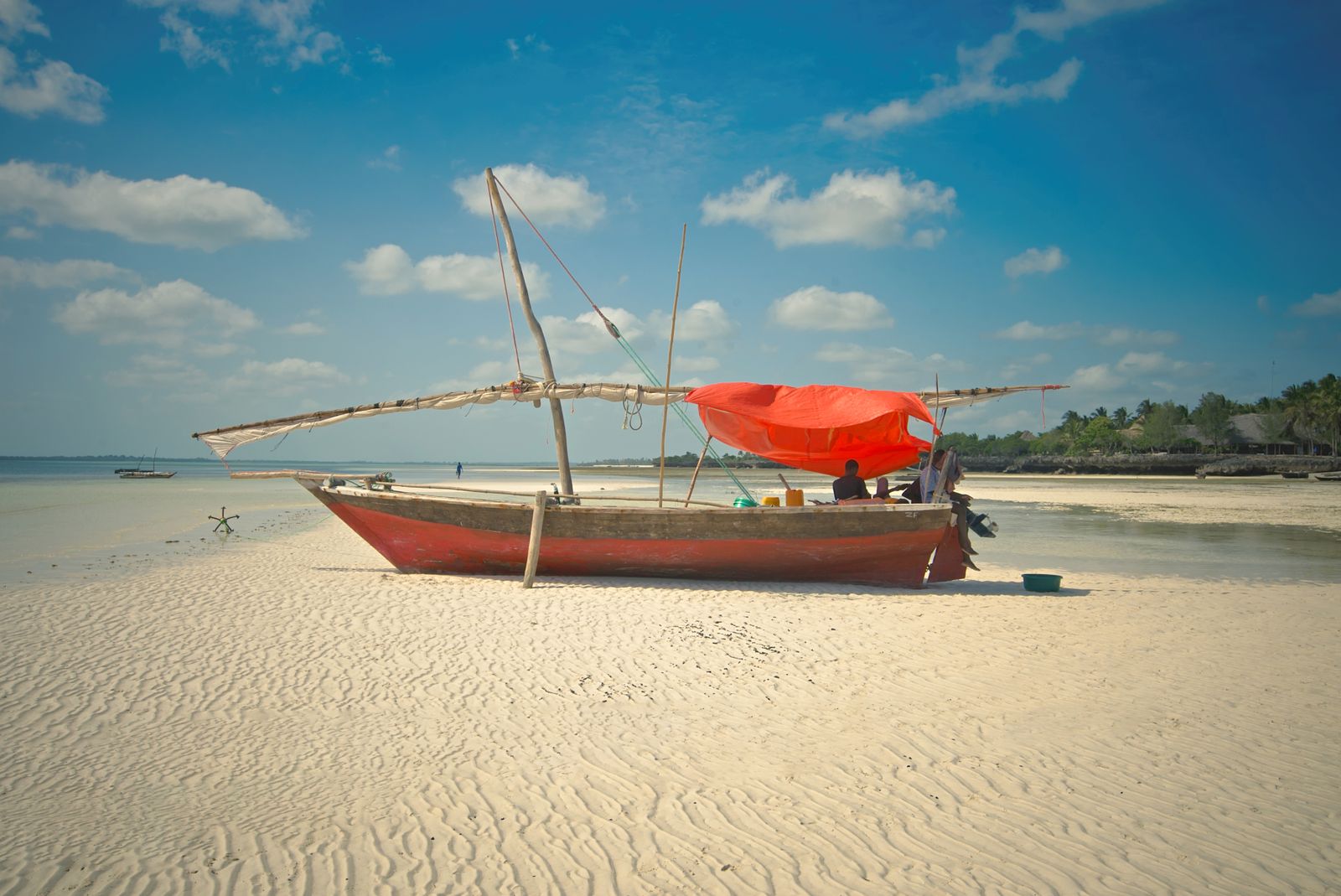
Photo: Denys Gromov / Pexels
A few nights on the Indian Ocean after safari softens the whole journey. Stone Town’s alleys smell of cloves and coffee; beaches on the east and north coasts offer soft sand and warm water; and a sunset dhow sail is a gentle way to close the trip. If you prefer Kenya’s coast, Diani and Lamu each have a different mood, one breezy and resort-friendly, the other historic and walkable. Tell us whether you want snorkeling, spice tours, pure beach time or a mix, and we will match the island nights to the safari that came before.
Kenya and Tanzania are home to many communities, including the Maasai and Samburu, whose lands border many parks. Choose community-run cultural visits that benefit residents, follow your hosts’ lead, and always ask before taking photos. Learn a few words of Swahili, such as “jambo” (hello) and “asante” (thank you). Food highlights include nyama choma (grilled meat), ugali, pilau, chapati, and Zanzibar’s Swahili seafood and spices, along with excellent Kenyan tea and coffee. Single-use plastic bags are banned in both countries.
Kenya requires an approved eTA before travel. Tanzania requires a multiple-entry visa, best obtained online in advance.
Herds are in the southern Serengeti early in the year and in the northern Serengeti and Maasai Mara for part of the dry season, but timing varies every year.
Yes, especially with private vehicles and family-friendly camps, though some activities have minimum ages.
Both are superb. Many travelers combine them, or choose based on the month and the experiences they want most.
Please consult a travel clinic for personal advice. A yellow fever certificate may be required depending on your route.
As Fora advisors, we take care of the details for you: the right season and parks, hand-picked camps and lodges with added amenities at select properties, trusted guides, and a pace that leaves room for the unexpected.
Novera Travel will be happy to arrange your international flights when you’re traveling first class.
Call +1 33 22 NOVERA – +1 (332) 266-8372 or email info@noveratravel.com
Prefer to reach out another way? Visit our Contact page.