Turquoise lagoons, private island hideaways, and some of the Indian Ocean’s richest reefs
Photo: Asad Photo Maldives / Pexels
The Maldives is a nation built almost entirely of coral: 26 natural atolls strung north to south across the equator in the Indian Ocean, holding roughly 1,200 islands, only about two hundred of which are inhabited by Maldivians. Most islands rise barely a meter or two above the sea, making this the lowest-lying country on Earth. From a seaplane window the effect is unforgettable, a pattern of reef rings, sandbars and lagoons in every shade from pale jade to sapphire, with a single island resort or fishing village set in the middle of each.
People have lived on these islands for many centuries, trading coir rope, dried fish and cowrie shells, once used as money around the Indian Ocean, with passing merchants. The islands converted to Islam in the twelfth century, became a British protectorate, and gained full independence in 1965. Maldivians speak Dhivehi, written right to left in its own Thaana script. Tourism arrived only in 1972, when the first resorts opened near Malé, and the model it established, one resort on one island, still shapes how visitors experience the country today.
Few places look as impossibly beautiful from the air as the Maldives. More than a thousand low coral islands are scattered across a chain of atolls in the Indian Ocean, each ringed by white sand and shallow lagoons that shade from aquamarine to deep blue. Below the surface are reefs alive with turtles, reef sharks, manta rays, and, if you’re lucky, whale sharks. Above it, you’ll find barefoot luxury, sunset dhoni cruises, and dinners on the sand.
Here’s what we tell our clients: in the Maldives, your choice of island matters more than almost anywhere else. Most resorts occupy their own island, so the atoll, the transfer, the house reef, and the villa style will shape your entire stay.
The Maldives is warm year-round, with two monsoon seasons.
Our take: For guaranteed-feeling sunshine, aim for February through April. For mantas and value, consider June through October, accepting that some days will be cloudy.
The Maldives is made up of natural atolls, rings of coral reefs and islands surrounding lagoons. Resorts close to Malé, in the North and South Malé Atolls, are a short speedboat ride from the airport. Farther-flung atolls such as Baa, Raa, Lhaviyani, Ari, and the deep south offer more seclusion and are reached by seaplane or domestic flight.
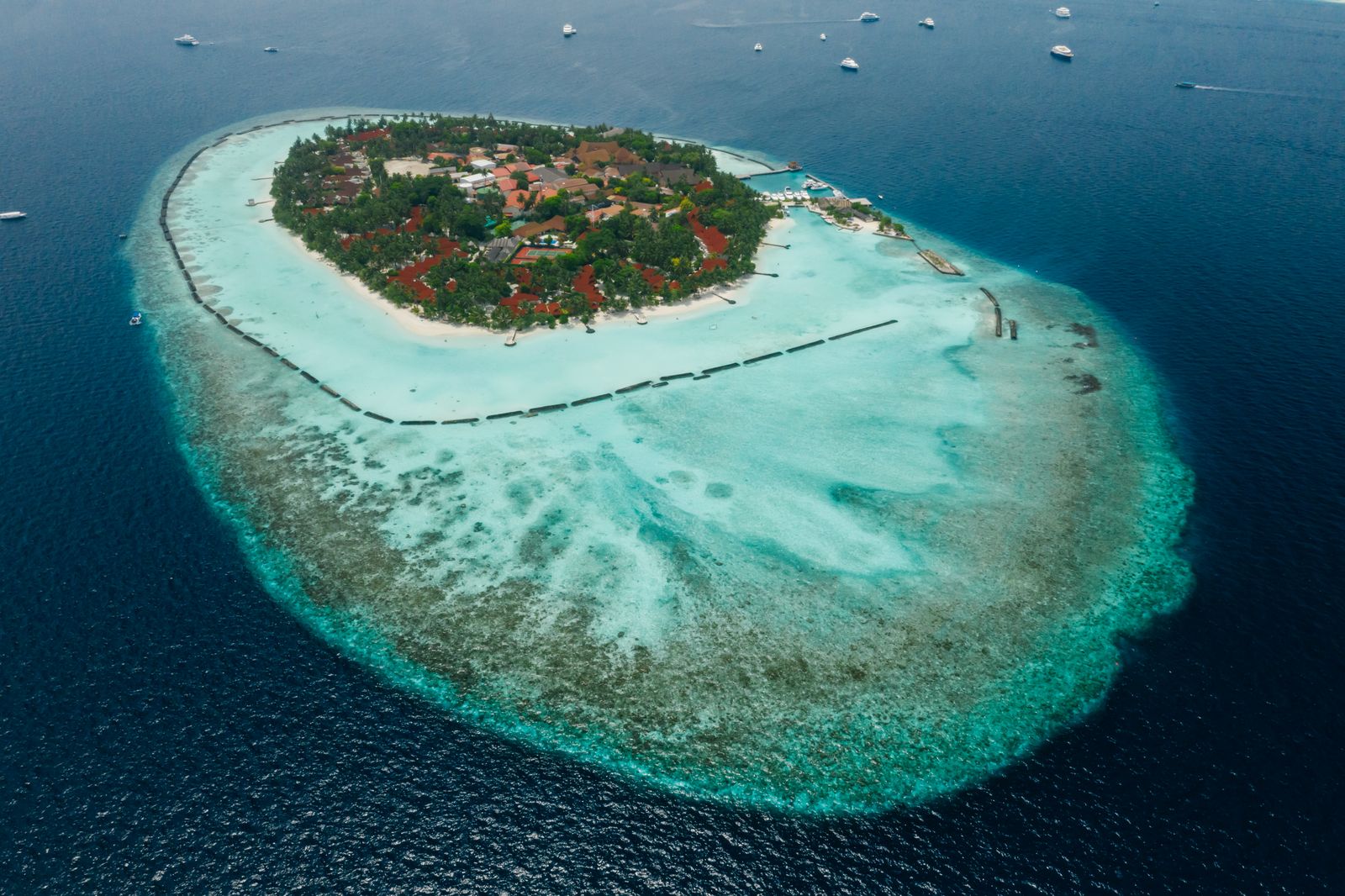
Photo: Mikhail Nilov / Pexels
Arrival is part of the experience. Velana International Airport occupies its own island, Hulhulé, so you walk out of the terminal almost straight onto a jetty where resort speedboats wait, while seaplanes take off from the lagoon on the far side of the runway. The flights cruise low enough to pick out individual reefs and sandbars, and the approach to your atoll is often the best aerial view of the trip. Seaplanes generally land beside a floating platform near your island, and a short boat ride covers the last stretch to the jetty.
The atolls differ more than the photos suggest. North and South Malé suit shorter stays and late arrivals, with quick boat transfers and long-established reefs and dive sites. Ari Atoll, west of Malé, is known for whale sharks in the south and manta cleaning stations, while Baa’s biosphere reserve draws manta lovers in the southwest monsoon. The far south, including Laamu and Addu, is reached by domestic flight. Addu lies just south of the equator, and on its island of Gan you can still see traces of a former British air base.
Speedboats serve islands near Malé, day and night. Seaplanes offer spectacular flights to more distant atolls but fly only in daylight and have tighter luggage limits. Domestic flights connect to regional airports, followed by a boat ride. If you arrive after dark, you may need a night near the airport before continuing.
There are no nonstop flights from the US to the Maldives. Most travelers connect through hubs in the Gulf, Turkey, Europe, or Asia, such as Dubai, Doha, Abu Dhabi, Istanbul, Singapore, or Colombo. If your resort uses a seaplane, plan to land at Malé in the daytime.
Entry rules (as of October 2026): US citizens receive a free 30-day tourist visa on arrival. You’ll need a machine-readable passport, a confirmed return or onward ticket, a prepaid booking at a registered resort, hotel, or guesthouse, and sufficient funds. Maldives Immigration lists a shorter minimum passport validity, but the US State Department advises six months beyond your arrival, which we recommend. All visitors must complete the free Traveller Declaration on the official IMUGA portal within 96 hours before arrival. Use only the official site, since look-alike sites may charge. Alcohol and pork can’t be brought in without a permit (duty-free purchases en route will be confiscated). Idols for worship, religious materials offensive to Islam, pornography, and narcotics are prohibited, and tobacco and vaping rules are strict (vapes and e-cigarettes are banned), so check before you travel. Visitors also pay a green tax and a departure tax, which are typically included in your resort bill and airfare. We recheck these rules before every departure. Also review the State Department’s Maldives page and consider enrolling in STEP.
Ideal for honeymooners and relaxation seekers. One island, one resort, and nothing to plan but your next swim.
Split your time between two resorts, perhaps an overwater villa in one atoll and a beach villa with a superb house reef in another, for variety without much travel.
Exclusive-use islands and multi-bedroom residences offer private butlers, chefs, and boats, ideal for milestones and multigenerational trips.
Divers can explore multiple atolls on a liveaboard dive safari. Travelers who want local culture and a lighter footprint can stay in guesthouses on inhabited islands.
> Advisor tip: Booking through us as a Fora advisor can unlock extra perks at many partner resorts in the Maldives, such as daily breakfast, a resort credit, or a villa upgrade when available. Benefits vary by property, so ask us what applies to your dates.
Many islands sit right on a reef, where you can snorkel with turtles, reef sharks, and schools of colorful fish just steps from the beach.
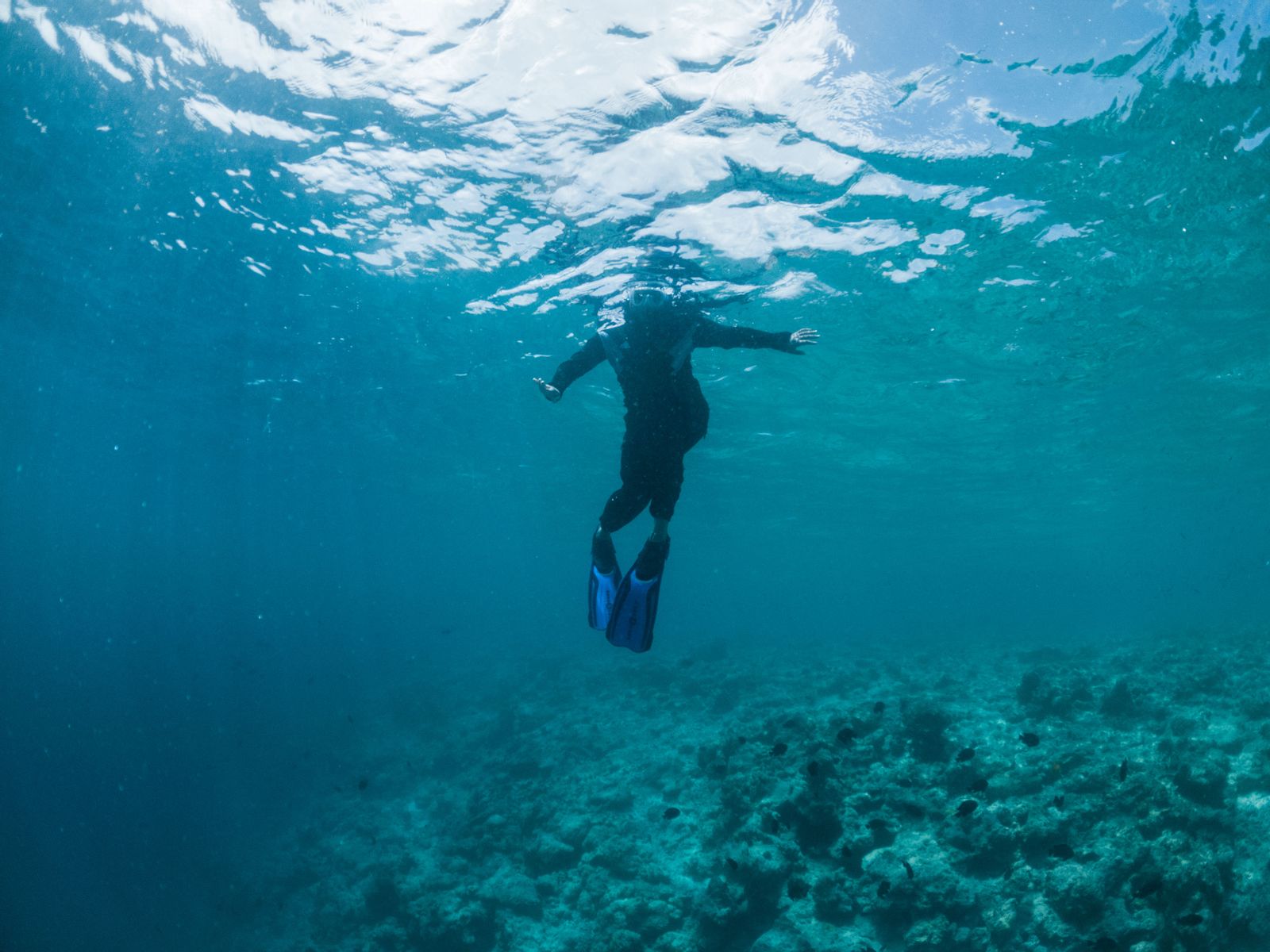
Photo: Maahid Photos / Pexels
Maldivian reefs support more than a thousand species of fish, along with hawksbill and green sea turtles, blacktip and whitetip reef sharks, eagle rays, octopus and moray eels. The channels that cut through each atoll’s rim, called kandu in Dhivehi, are where tidal currents funnel nutrients and draw large animals, which makes them prized sites for experienced divers. Inside the lagoons, coral pinnacles and submerged reefs, known locally as giris and thilas, offer gentler conditions that suit snorkelers and newer divers.
The ocean here stays warm all year, typically in the high 20s Celsius, or the low 80s Fahrenheit, so a rash guard is usually all the cover you need. Visibility is often at its best in the dry northeast monsoon. Because prevailing currents reverse with the monsoons, mantas and other plankton feeders shift between the eastern and western sides of the atolls through the year, and good local guides know which channels and cleaning stations are active each month. Reefs were hit by bleaching during marine heatwaves, notably in 2016, and recovery varies from site to site.
Standout experience: A guided sunset snorkel, when reef life is especially active.
Baa Atoll is a UNESCO Biosphere Reserve, and its Hanifaru Bay is famous for gatherings of feeding manta rays and occasional whale sharks during the southwest monsoon, roughly May to November. It’s a strictly protected area. Visits are snorkel-only with licensed guides, time in the water is limited, numbers are capped, and scuba diving is not allowed.
Standout experience: Snorkeling above a manta feeding gathering at Hanifaru on a good-tide day.
This atoll is one of the best places in the world to look for whale sharks, which can be seen year-round. Mantas visit cleaning stations in several atolls, too.
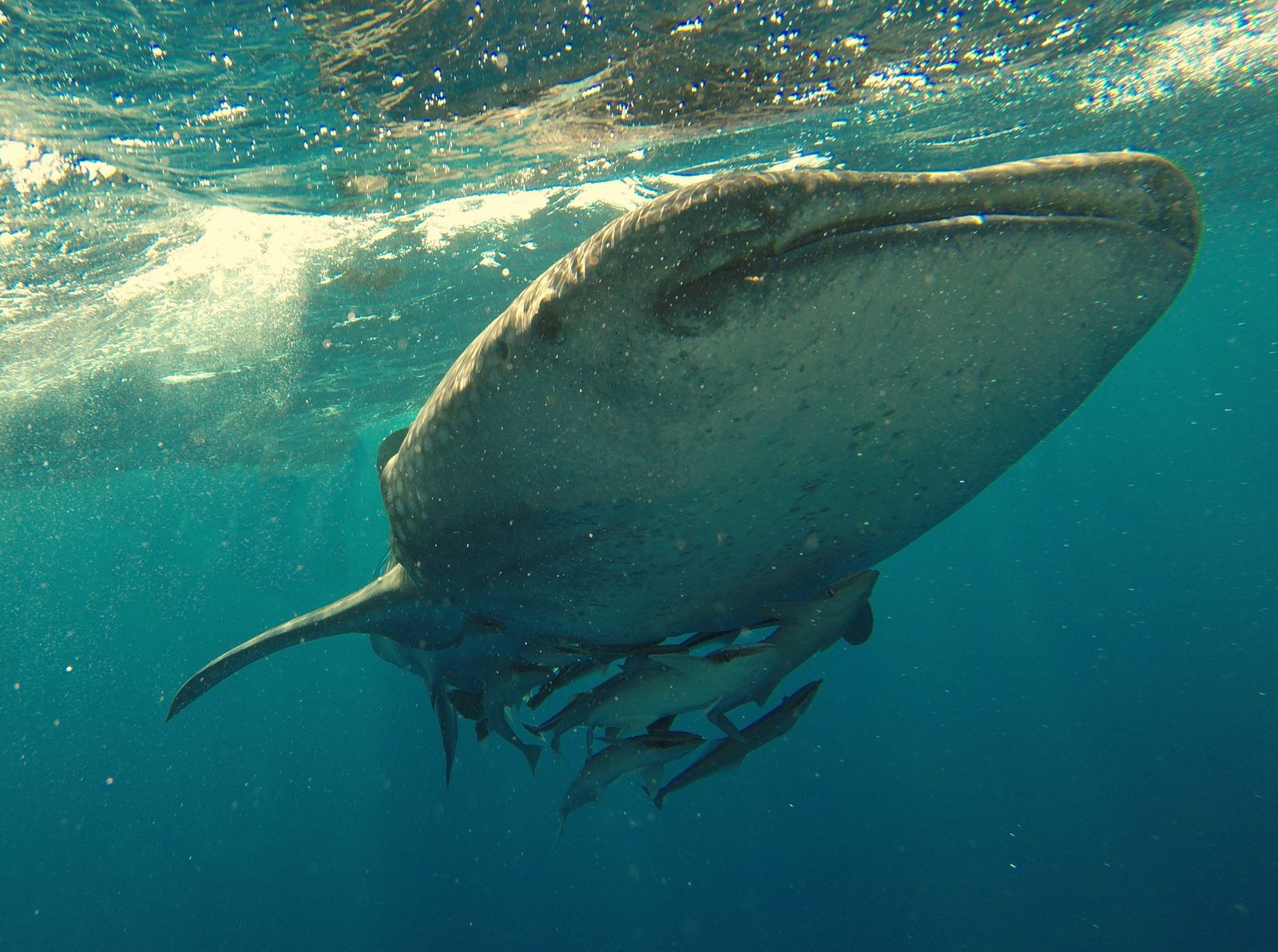
Photo: Red Brick / Pexels
South Ari Atoll is one of the few places on Earth where whale sharks can be found year-round. Most of the sharks seen here are juveniles, and researchers have identified hundreds of individuals by the unique spot patterns behind their gills. They often cruise near the surface along the atoll’s outer reef, so snorkelers can swim alongside them. The area is a Marine Protected Area, and guides follow a code of conduct that limits how many boats and swimmers may approach and how close they can get.
Despite being the largest fish in the sea, whale sharks are gentle filter feeders that live on plankton and tiny fish, and they pose no danger to swimmers. Sightings tend to be best on calm, bright days when the sharks rise toward the surface. Mantas are the Maldives’ other headline giant. Reef mantas visit cleaning stations in several atolls, where small wrasse pick parasites from their skin and gills, and snorkelers or divers can watch them hover and circle for long minutes.
Standout experience: A whale shark excursion with an experienced guide who follows the area’s code of conduct.
Many resorts can arrange a private picnic on a tiny sandbank surrounded by nothing but ocean.
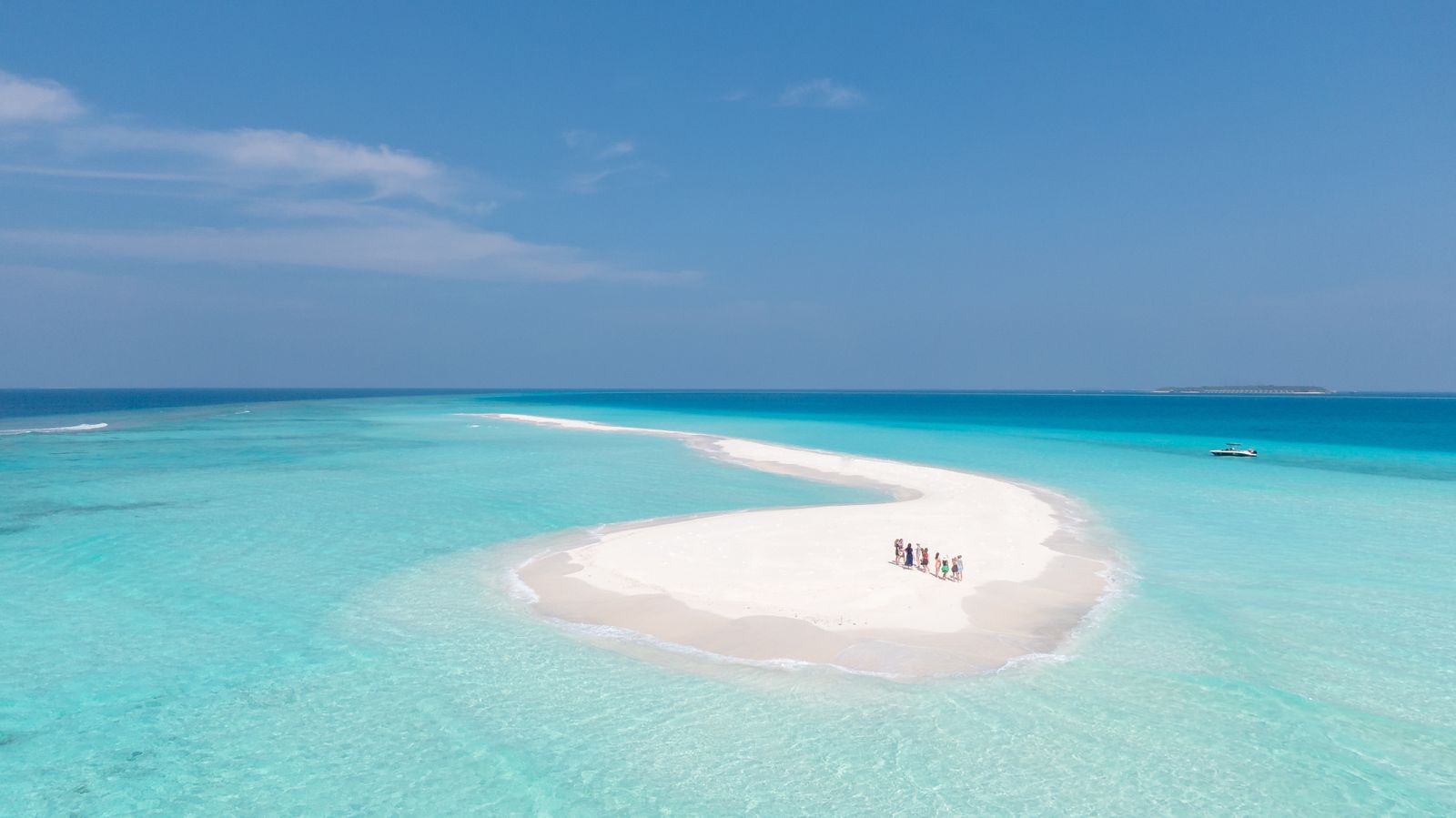
Photo: Asad Photo Maldives / Pexels
Maldivian cooking rests on fish, coconut and starch. Tuna, caught for generations with pole and line, appears fresh in curries, smoked and dried as hard Maldive fish, or boiled down into rihaakuru, a thick, savory paste. In local teashops, glass cases hold hedhikaa, the short eats served with sweet milky tea: bis keemiya pastries stuffed with tuna and cabbage, and kulhi boakibaa, a spiced fish cake. Breadfruit, taro, curry leaves and fiery local chilies round out the flavors. Many resorts host a Maldivian night or cooking class, and it’s worth asking for local dishes.
Sandbanks are fleeting landforms, built up and reshaped by currents and storms, and some shift position or vanish from one season to the next. That fragility mirrors the whole country. With most land so close to sea level, the Maldives has become one of the world’s most outspoken voices on climate change, and in 2009 its cabinet famously held a meeting underwater in scuba gear to draw attention to rising seas. Many resorts run marine biology programs, coral-planting projects and turtle identification work that guests can join.
Standout experience: A champagne picnic or sunset dinner on your own sandbank.
Watching the sun sink from your deck, or from a traditional dhoni on a dolphin cruise, is a Maldives ritual.
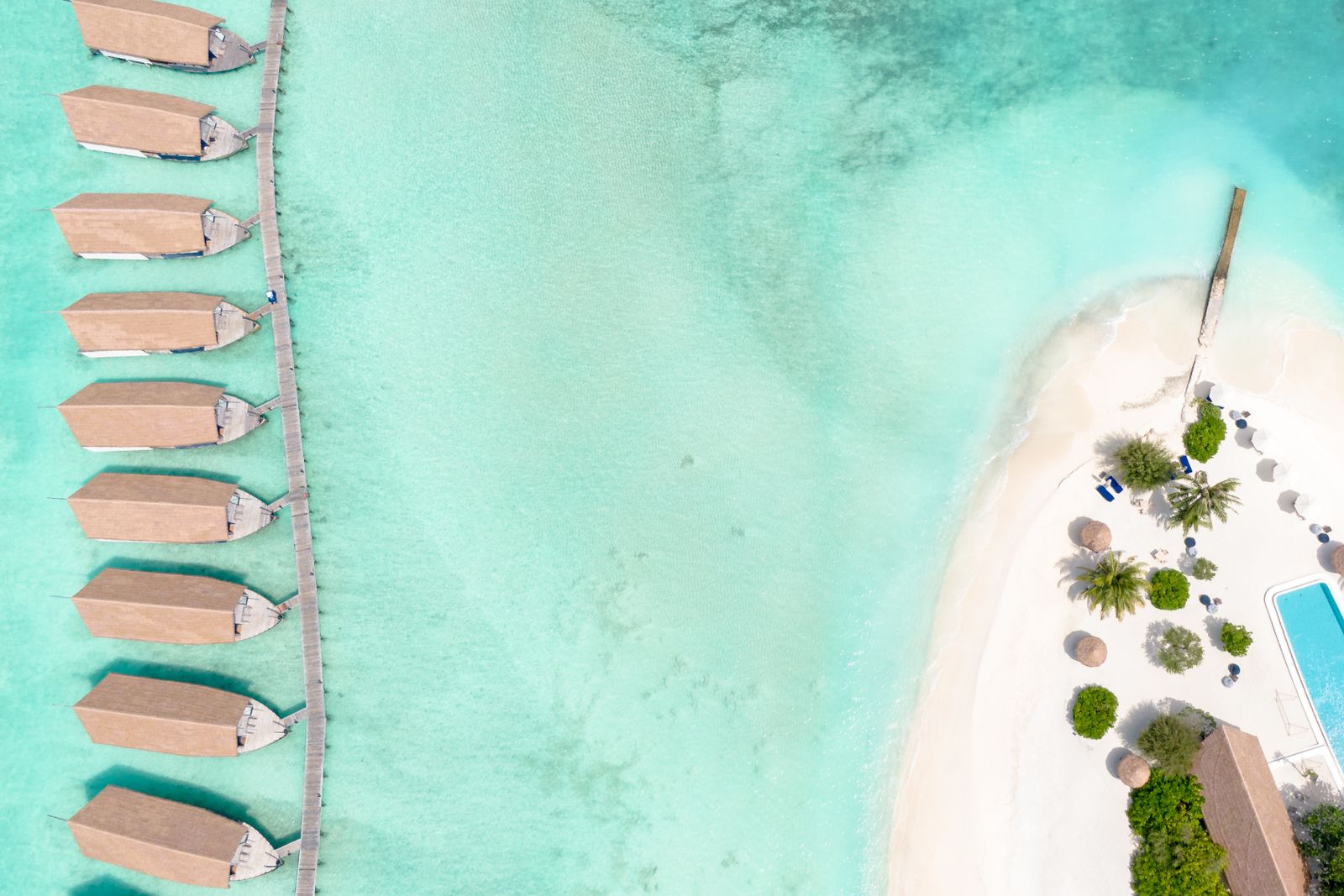
Photo: Asad Photo Maldives / Pexels
Overwater bungalows were first made famous in French Polynesia, and the Maldives embraced the idea wholeheartedly: villas on stilts now line the lagoons of many resort islands, linked to shore by long wooden jetties. Steps lead straight from the deck into the water, and some villas have glass floor panels for watching fish below your feet. Orientation is worth considering. Sunrise-facing villas suit early risers, sunset-facing ones catch the evening glow, and those near the end of a jetty usually feel the most private.
Living over the water gives you a front-row seat to the lagoon. Baby blacktip reef sharks and stingrays patrol the shallows near the beach at dusk, grey herons stalk the water’s edge, and large fruit bats flap across the sky as the light fades. The dhoni, the traditional Maldivian boat once built from coconut-palm timber and powered by sail, now carries guests on sunset cruises, and pods of spinner dolphins often leap and spin near the atoll channels as the boat heads home.
Standout experience: A sunset dhoni cruise, often joined by spinner dolphins.
On some nights, glowing plankton light up the shoreline in a “sea of stars.” Sightings are unpredictable and depend on conditions, so treat it as a lucky bonus.
Standout experience: A dark-beach walk on a moonless night, watching each wave sparkle.
The compact capital offers a glimpse of everyday Maldivian life, with the coral-stone Old Friday Mosque, the National Museum, and the busy fish market.
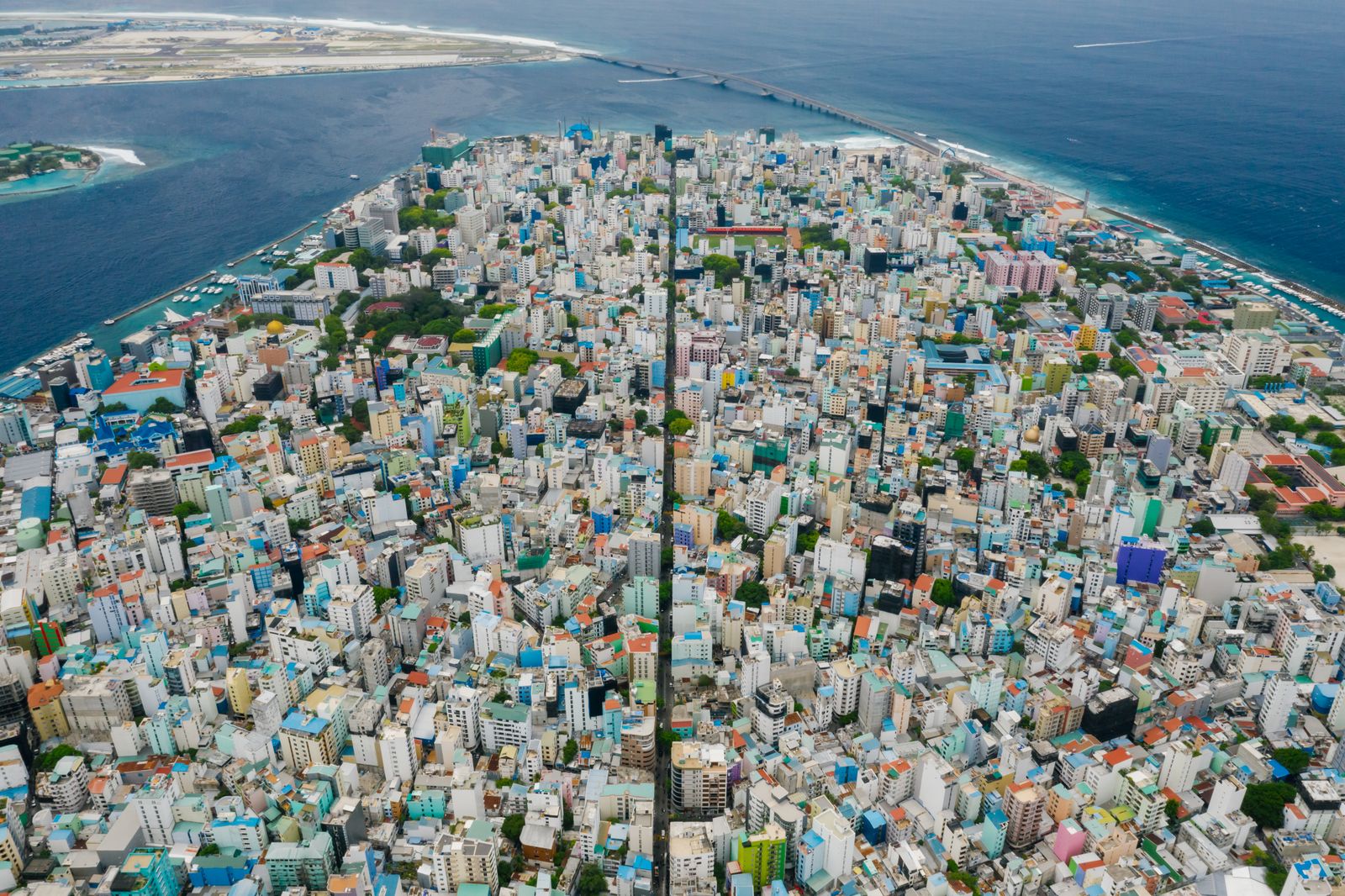
Photo: Mikhail Nilov / Pexels
Standout experience: A guided walking tour of Malé before or after your resort stay.
The Maldives is a Muslim nation, and local life centers on family, the sea, and the mosque. In Malé and on inhabited islands, dress modestly with your shoulders and knees covered, swim in designated “bikini beaches,” and remember that alcohol isn’t available there. Resorts are separate islands where swimwear and alcohol are fine. Try Maldivian dishes such as mas huni (tuna with coconut, onion, and chili, usually at breakfast with roshi flatbread), garudhiya fish soup, and “short eats” snacks, and taste the local tuna curries.
No advance visa is needed. A free 30-day tourist visa is granted on arrival if you meet the entry requirements.
December through April for the driest weather, or May through November for mantas and better availability.
Overwater villas offer lagoon access and views. Beach villas offer more privacy and shade and suit families well. Many couples split their stay.
Yes. Many resorts have kids’ clubs, family villas, and calm, shallow lagoons.
Yes. Guided excursions or guesthouse stays let you experience daily life. Dress modestly, and note that alcohol isn’t available.
As Fora advisors, we take care of the details for you: the right atoll and island, hand-picked resorts with added amenities at select properties, seamless transfers, and a pace that leaves room for the unexpected.
Novera Travel will be happy to arrange your international flights when you’re traveling first class.
Call +1 33 22 NOVERA – +1 (332) 266-8372 or email info@noveratravel.com
Prefer to reach out another way? Visit our Contact page.
Novera Travel is an independent travel advisor of Fora Travel.