Colonial Cartagena, Dutch-Caribbean color, Costa Rican rainforest, volcano-ringed Antigua and Mexico’s Pacific beaches: our advisor’s playbook for a Panama Canal cruise built around the places you’ll see.
Photo: Ricky Beron / Unsplash
Most people book a Panama Canal cruise for the canal and come home talking about everything else. One voyage can link a Spanish walled city, two Dutch-Caribbean islands, a Costa Rican cloud forest, a Guatemalan colonial town and the beaches of Mexico’s Pacific coast. You unpack once and wake up somewhere different, in a different country, almost every morning.
The joy of this voyage is the variety. In a single trip you can taste fresh ceviche in a Caribbean fishing town, hear Papiamento spoken in a Dutch-gabled harbor, spot scarlet macaws in a Pacific rainforest, wander the ruins of a colonial capital beneath smoking volcanoes and watch humpback whales off the Mexican coast. The secret is choosing the route, season and shore days that match your interests. Here’s what we tell our own clients.
Most sailings run in the cooler, drier months, and each part of the season has its own appeal.
Our take: January through March gives you the best mix of dry weather in Central America, calm seas and whale watching in Mexico.
A full transit crosses from one ocean to the other on a one-way voyage of two weeks or more. It’s the richest itinerary for port lovers: typically a Caribbean island or two, Cartagena, the canal, then Costa Rica, Guatemala and Mexico’s Pacific Riviera on the way to California. You’ll begin in one city and finish in another, so plan for a trip home from the opposite coast.
On a partial transit, the ship sails into the canal, spends the day on Gatun Lake and returns to the Caribbean. These shorter round-trips usually pair the canal with Aruba, Curaçao, Cartagena and Colón, and sometimes Costa Rica’s Caribbean coast. Logistics are simple because you start and end in the same port, and the shorter length suits travelers with about ten days to spare who want the turquoise water and colonial history of the southern Caribbean without a long voyage.
Which is right for you? Choose a full transit if you want the most variety and have two weeks or more. Choose a partial transit if you’d like a taste of the canal plus the southern Caribbean in about ten days.
Many Florida itineraries call at one or both of these sunny, dry islands off the coast of Venezuela, and they make a gentle, beautiful start to the voyage. Both belong to the Kingdom of the Netherlands, so you’ll see Dutch gables beside Caribbean color, hear the local Creole language, Papiamento, mixed with Dutch, Spanish and English, and feel a steady trade-wind breeze that takes the edge off the heat. Rain is scarce, and both islands sit south of the usual hurricane track.
In Aruba, the beaches are the headline. Eagle Beach and Palm Beach are long stretches of soft white sand and calm turquoise water, and the twisted, wind-bent divi-divi trees make the island’s signature photo. For something wilder, Arikok National Park covers a big share of the island with cactus-studded hills, limestone caves decorated with Indigenous drawings and a rugged, wave-battered north coast. The California Lighthouse at the island’s northwest tip has sweeping views at sunset.
In Curaçao, the capital steals the show. Willemstad’s candy-colored waterfront of Dutch colonial merchant houses is a UNESCO World Heritage Site, and you can watch the Queen Emma Bridge, a floating pontoon bridge, swing aside for passing boats between the Punda and Otrobanda districts. Look inside the Mikvé Israel-Emanuel Synagogue, with its sand-covered floor, one of the oldest synagogues still in use in the Americas, then try local dishes such as keshi yena, a baked cheese stuffed with spiced meat, or pastechi, flaky savory turnovers. A calm west-end cove is perfect for an afternoon swim.
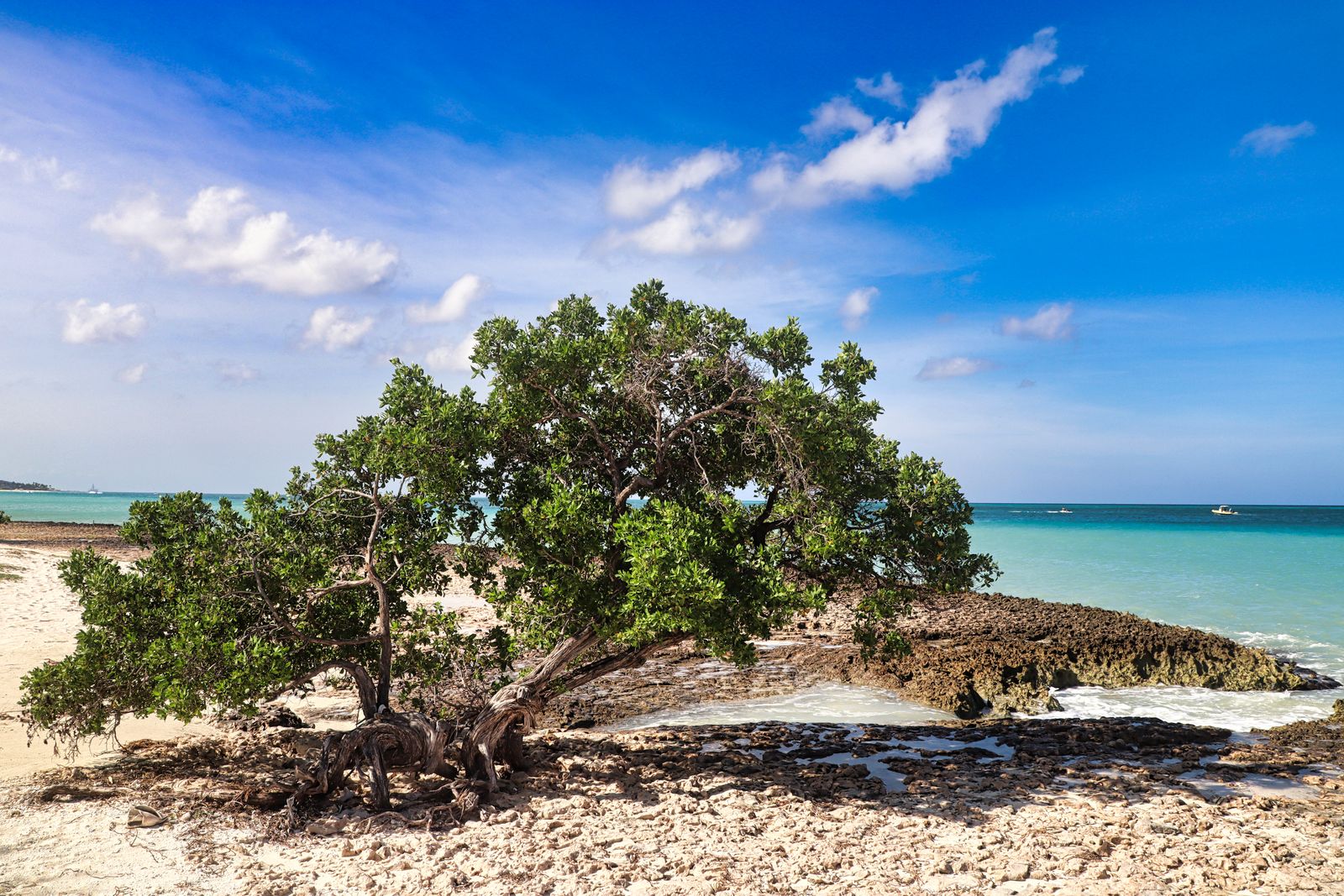
Photo: Katie Schankula / Pexels
Cartagena is the port many travelers remember most. Founded by the Spanish in 1533, it became one of the richest harbors of the colonial Caribbean, and centuries of pirate raids, including one led by Francis Drake in 1586, pushed the crown to ring the city with massive stone walls and forts. Today the walled old city is a UNESCO World Heritage Site of bougainvillea-draped balconies, carved wooden doors, shady plazas and centuries-old churches, best explored on foot in the cooler morning or golden late afternoon.
Walk the ramparts at sunset, wander the street art and lively cafés of Getsemaní, and climb the Castillo San Felipe de Barajas, the largest Spanish fortress in the Americas, for views over the city. Browse the craft shops tucked into Las Bóvedas, former storerooms built into the walls, and stop in a plaza for fresh tropical fruit, an arepa de huevo or a cup of Colombian coffee. Fried fish with coconut rice and plantains is the classic coastal lunch. The city is hot all year, but December through April brings drier days and steady breezes. With more time, a boat trip to the Rosario Islands adds snorkeling and white sand.
Ships call at Colón on the Caribbean side, and some voyages begin or end near Panama City on the Pacific. Colón is a working port town, so the best of the day lies just beyond it. Drive along the coast to Portobelo, where the moss-covered Spanish forts once guarded the treasure fleets and are now a UNESCO World Heritage Site. Or head inland for a boat ride among the forested islands of Gatun Lake, where you’ll look for howler and capuchin monkeys, sloths and toucans, or visit an Emberá community along the Chagres River to learn about their crafts, music and traditions.
Panama City is a capital of contrasts, with a glittering skyline across the bay from a beautifully restored colonial quarter. Founded in 1519 and sacked by the pirate Henry Morgan in 1671, the city was rebuilt on a fortified peninsula that is now Casco Viejo, a UNESCO-listed maze of plazas, churches, rooftop terraces and pastel balconies. Explore the ruins of the original settlement at Panamá Viejo, browse the vivid mola textiles sewn by Guna women, and walk the Cinta Costera waterfront at sunset. Try sancocho, the hearty chicken soup that many call the national dish, or fresh ceviche at the seafood market. The dry season from about mid-December through April brings the sunniest weather.
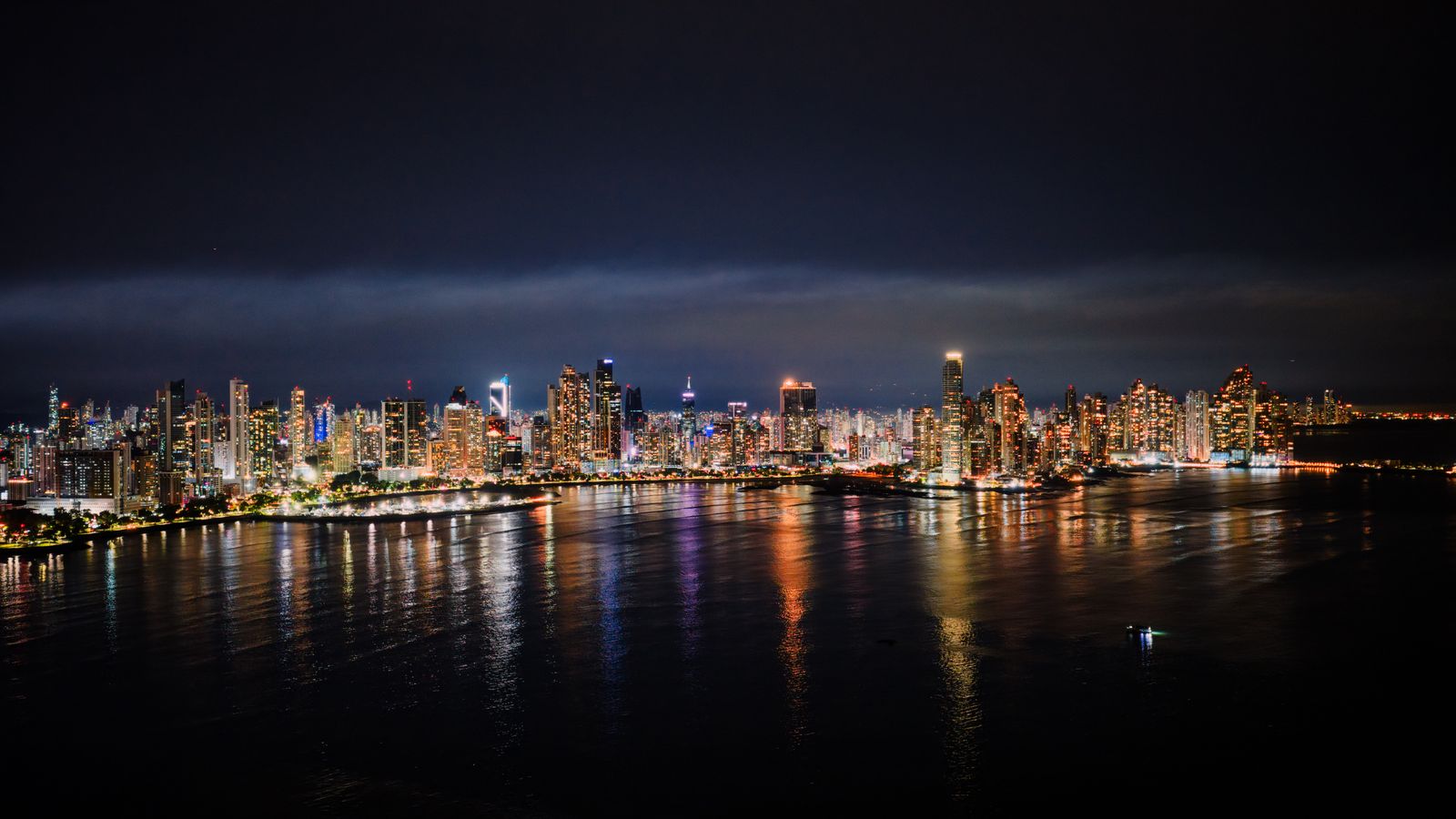
Photo: K / Pexels
Ships dock at Puntarenas, a long, narrow spit of sand reaching into the Gulf of Nicoya, or at nearby Puerto Caldera. Puntarenas was once the country’s main port for shipping coffee to Europe, and today its seaside promenade is a relaxed place for a stroll, a fresh fruit juice and the town’s famous “churchill,” a shaved-ice treat layered with syrup, condensed milk and ice cream. The real draw, though, is how quickly you can reach Costa Rica’s forests, rivers and beaches from the pier.
Wildlife is the star. In Carara National Park, where the dry forests of the north meet the humid forests of the south, look for scarlet macaws flashing red overhead, then take a boat on the Tárcoles River to see some of the largest crocodiles in the Americas. Sail to the white-sand beaches of Tortuga Island, make the longer trip up to the misty cloud forests of Monteverde, or visit Manuel Antonio National Park, where rainforest runs down to crescent beaches and monkeys and sloths are common. Lunch on a casado, the classic plate of rice, beans, plantains, salad and fish or meat. On the Pacific side, December through April is the dry season and the sunniest time to visit.

Photo: Atanas Malamov / Unsplash
Guatemala’s Pacific port is mostly a launching point for one of the loveliest day trips in Central America. The road climbs from sugarcane fields into the cool highlands to Antigua Guatemala, a colonial town of cobblestone streets, pastel houses and ruined baroque churches ringed by three volcanoes: Agua, Fuego and Acatenango. Founded in the 1540s, Antigua was the capital of Spain’s Kingdom of Guatemala for more than two centuries, until the earthquakes of 1773 led the government to move to present-day Guatemala City. Many churches were never rebuilt, which is why the town is filled with romantic, roofless ruins.
Start under the yellow Santa Catalina Arch, then visit the ornate yellow-and-white La Merced church, the vast ruins of the Capuchinas convent and the central plaza, framed by the cathedral and the Palace of the Captains General. Browse handwoven Maya textiles at the artisans’ market, visit a jade workshop or a coffee farm on the volcano slopes, and climb to the Cerro de la Cruz lookout for the classic view of the town beneath Agua. Try pepián, a rich, spiced stew often called the national dish, and local chocolate. Visit in March or April and you may see Holy Week preparations, when residents lay carpets of colored sawdust and flowers in the streets for the processions.

Photo: Rodrigo Escalante / Unsplash
Huatulco, on Oaxaca’s Pacific coast, is a string of bays scattered along a rocky coastline backed by dry forest and the foothills of the Sierra Madre del Sur. Ships dock at Santa Cruz Bay, steps from a small beach and marina, and much of the surrounding coast is protected in Huatulco National Park. Development here has been kept low-rise, so the beaches feel quiet and uncrowded. Go bay-hopping by boat to swim and snorkel in clear coves, or relax on the sand at Tangolunda or Chahué.
Huatulco is also your taste of Oaxaca, one of Mexico’s great food regions. In the little town square of La Crucecita, look for tlayudas, large crisp tortillas topped with beans, quesillo cheese and meat, and dishes made with Oaxaca’s famous moles. Sample mezcal, the smoky agave spirit the state is known for, or ride into the hills around Pluma Hidalgo to a shade-grown coffee farm. Winter and spring bring sunny, dry days and warm water, which makes cruise season an ideal time to visit.
Set on Banderas Bay below the green slopes of the Sierra Madre, Puerto Vallarta was a quiet fishing village until the mid-20th century, when a Hollywood film shot nearby in the 1960s put it on the map. It has kept much of its charm, with whitewashed houses, red-tile roofs and cobblestone lanes climbing the hills above the old town. Walk the seaside Malecón past its bronze sculptures and the Los Arcos amphitheater, and admire the crowned tower of the Church of Our Lady of Guadalupe, which glows at night.
Spend the afternoon in the Zona Romántica, browsing galleries, Wixárika (Huichol) bead art and seaside cafés, or take a boat to snorkel among the rocky Los Arcos islands. Food is a big part of the fun: try pescado zarandeado, a whole fish butterflied and grilled over wood, fresh marlin or shrimp tacos, and raicilla, a local agave spirit. Puerto Vallarta is in Jalisco, home of tequila, so a tasting is easy to arrange. From December to March, humpback whales gather in the bay to breed and raise their calves, and a whale-watching cruise is a highlight of the season.

Photo: Manuel Marín / Unsplash
At the tip of the Baja Peninsula, desert cliffs and cactus drop into the sea at Land’s End, where the Pacific Ocean meets the Sea of Cortez. Ships usually anchor in the bay and bring passengers ashore by tender, right beside the marina. Take a boat out to El Arco, the famous granite arch, and to Lover’s Beach, a stretch of sand you can reach only by water, then swim at calm Médano Beach. In winter, humpback whales pass close to shore, and many boat trips double as whale watching.
For a quieter, more traditional side of Los Cabos, head about half an hour east to San José del Cabo, with its shady plaza, historic mission church and streets lined with art galleries. Back in Cabo San Lucas, lunch on Baja-style fish tacos, fresh ceviche or chocolate clams, a local shellfish named for its brown shell, often grilled on the beach. With sunshine nearly all year and barely any rain, the desert climate makes almost any month pleasant, but the cooler, whale-filled winter months are the favorite.

Photo: Juan Carlos Madrigal / Unsplash
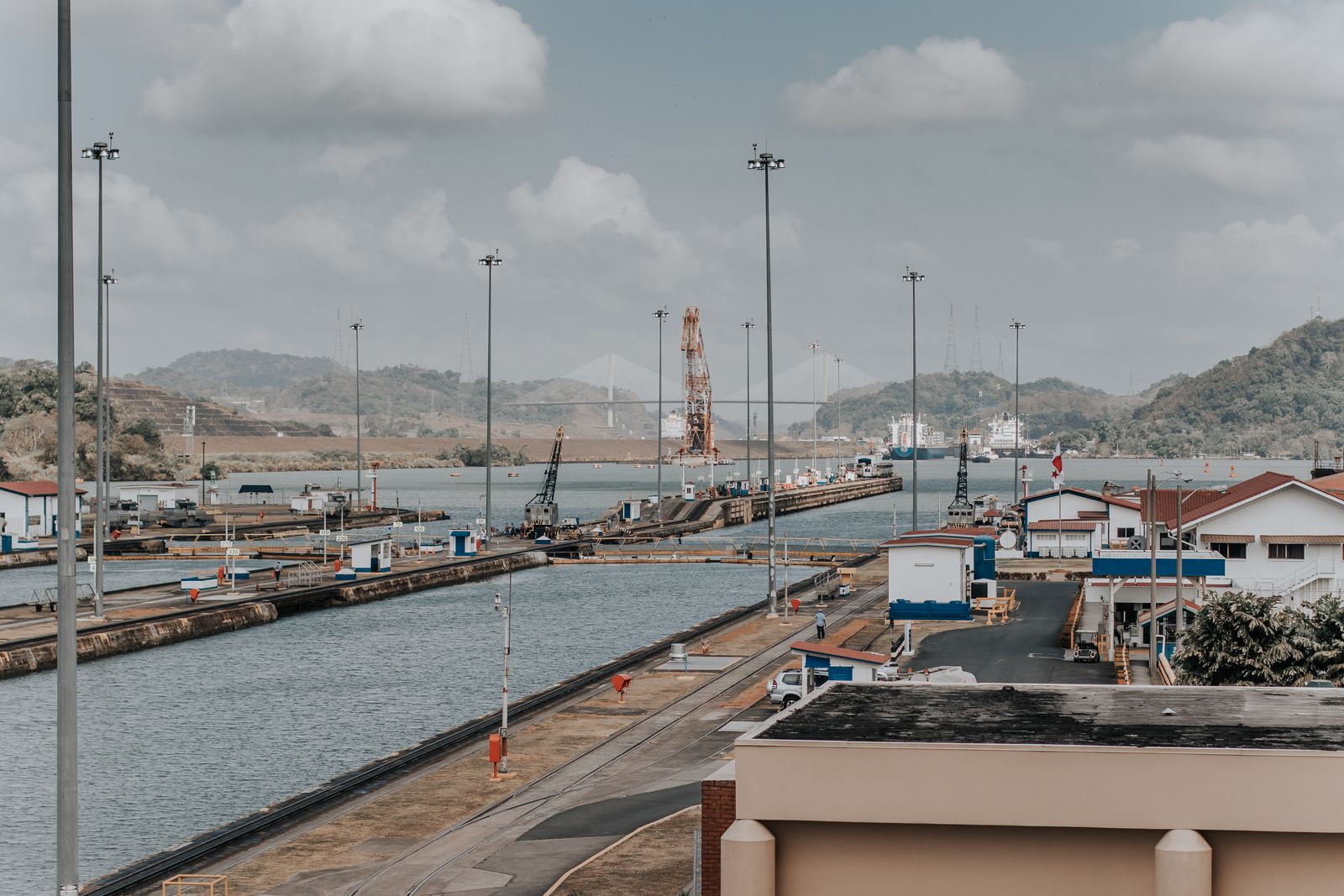
Photo: Rodolfo Quirós / Pexels
The canal itself takes one day. Your ship rises through a set of locks to Gatun Lake, crosses forested hills and islands, then steps back down to the other ocean. A full crossing takes most of a day, so find a spot on an open deck early and watch the rainforest slide by. Water levels can occasionally shift schedules, and we keep an eye on the latest canal advisories for you.
A night or two on land makes the start and finish far more relaxing.
Passports: We recommend a valid passport for every Panama Canal cruise. One-way voyages begin and end in different US ports, and all the ports of call are foreign.
Pick a full transit for the widest range of ports, from Cartagena to Cabo. Pick a partial transit for a shorter round-trip from Florida that pairs the canal with Aruba, Curaçao and Cartagena.
Most travelers rave about Cartagena’s walled city and the day trip to Antigua Guatemala. Wildlife lovers often name Costa Rica.
January through March brings dry weather in Central America and whale season in Mexico.
Yes, we recommend one for every Panama Canal cruise.
Colombia and Guatemala carry elevated US travel advisories, though the cruise areas in this guide aren’t on the highest-risk lists. We favor organized excursions and plan with current guidance in mind.
The right route, the right season and the right shore days are what make a Panama Canal cruise unforgettable. Planning all that is our specialty. As independent affiliates of Fora Travel with IATAN accreditation, the Novera Travel team will match you with the right itinerary and look for added amenities on select sailings. We’ll handle every detail on the ground, from shore excursions to pre-cruise hotels.
Novera Travel will be happy to arrange your international flights when you’re traveling first class.
Call +1 33 22 NOVERA – +1 (332) 266-8372 or email info@noveratravel.com
Prefer to reach out another way? Visit our Contact page.