Glaciers, whales, Gold Rush towns and the wild interior: our advisor’s playbook for planning an Alaska cruise that fits the way you travel.
Photo: Robert Thiemann / Unsplash
Few trips change your sense of scale like Alaska. One morning you’re on deck as a wall of blue ice splits and crashes into the sea. That afternoon you’re walking the boardwalks of a frontier town, or watching a humpback lift its tail just off the bow. Much of this coastline has no road access, so a cruise is the easiest way to see it. The ship becomes your hotel, your restaurant and your front-row seat.
Alaska also rewards good planning, and this guide covers what we tell our own clients.
Most Alaska cruises focus on the Southeast, a narrow strip of mainland and more than a thousand islands wedged between the Coast Mountains and the Pacific. Much of it lies within the Tongass, the largest national forest in the United States, a temperate rainforest of towering spruce and hemlock where mist hangs in the treetops. The Tlingit, Haida and Tsimshian peoples have lived along these waterways for thousands of years, and their carving, weaving and storytelling traditions are very much alive in the towns you’ll visit.
Every month in the season has its own trade-offs. Southeast Alaska’s weather changes quickly, so expect some mix of sun, mist and rain whenever you go.
Our take: First-timers usually get the best odds in June, July or August. Travelers who prefer quieter ships and ports over warmer weather tend to like the shoulder months.
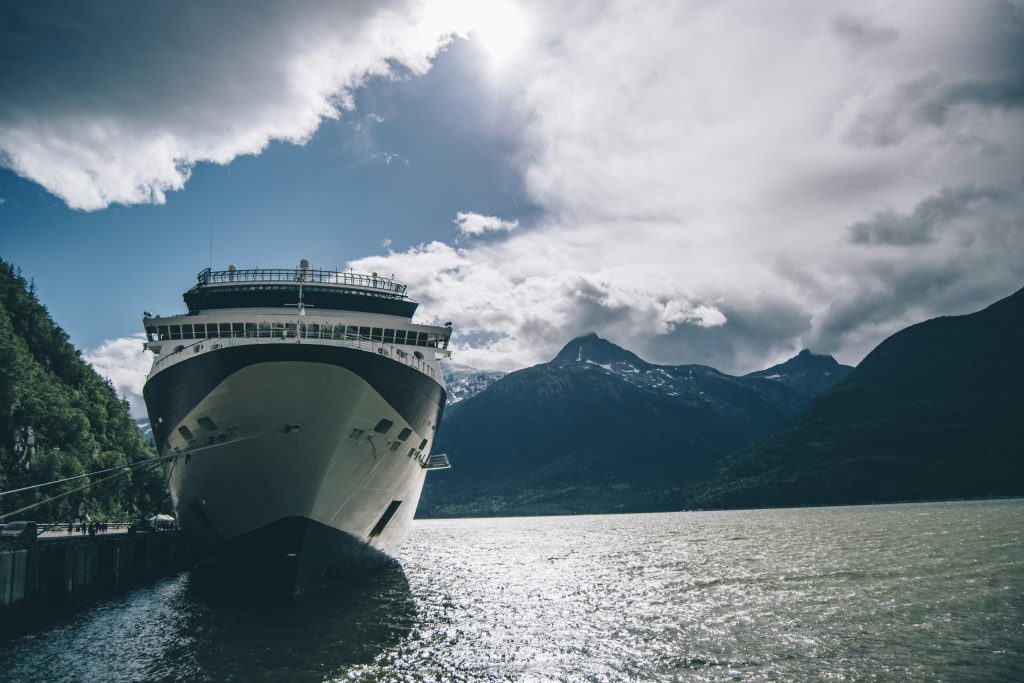
Photo: Sandra Seitamaa / Unsplash
This is the classic choice. You sail from and back to Seattle or Vancouver through the sheltered channels of coastal British Columbia and Alaska’s Southeast. A typical week includes three or four ports, often Juneau, Ketchikan and Skagway, plus a glacier-viewing day. Because of U.S. maritime rules, Seattle round-trips also stop in Victoria, British Columbia. It’s ideal for first-time cruisers and families.
The real magic of the Inside Passage happens between ports. Ships thread narrow channels lined with dark forest, snowcapped peaks and waterfalls spilling straight into the sea, and the protected water keeps the ride gentle compared with the open ocean. Keep binoculars handy: bald eagles perch on shoreline snags, harbor seals haul out on rocks, and whale spouts can appear at any moment. Many of our clients say the long, slow evenings on deck, with the light lingering past ten o’clock in midsummer, are what they remember best.
These voyages sail one way between Vancouver (sometimes Seattle) and Seward or Whittier, the cruise ports for Anchorage. You never retrace your route, so you see more coastline, often including Hubbard Glacier. You’ll fly into one city and out of another, which makes a land extension easy to add.
Gulf routes also tend to include some of the most dramatic ice on any Alaska itinerary. Beyond Hubbard Glacier, many sailings cruise Prince William Sound, where College Fjord is lined with tidewater and hanging glaciers named for East Coast universities by a scientific expedition in 1899. Because these voyages cross a stretch of open water, they can feel a little livelier than the Inside Passage, so travelers prone to seasickness should choose a midship cabin on a lower deck.
A cruisetour pairs a one-way sailing with several nights on land. Think dome-car rail journeys, wilderness lodges and time around Denali National Park. There’s more on these below.
Getting there: Plan to arrive a day early. Whittier is the closer Anchorage port and is reached through a shared road-and-rail tunnel. Seward is a longer, very scenic drive or train ride. A valid passport is essential for Vancouver departures and any Canadian port calls.
Almost every major line sails Alaska. Fleets change each season, so we’ll confirm which ships sail on your dates.
These ships come packed with dining options, entertainment and kids’ clubs. They’re great for families, groups and first-time cruisers.
Lines to know: The biggest family-friendly cruise lines all sail Alaska, so there’s plenty of choice of dates and ship size.
Expect more refined dining, quieter spaces and strong naturalist programs. A good fit for couples who want comfort without the bustle.
Lines to know: Several premium lines with long Alaska experience, plus an adults-only option.
These ships carry fewer guests and offer spacious suites and polished service. Fares often bundle drinks, gratuities and sometimes excursions. Many itineraries also include smaller ports.
Lines to know: Most of the leading luxury lines, plus newer ultra-luxury brands, sail Alaska in summer.
These intimate vessels come with naturalist guides, kayaks and inflatable-boat landings. They can reach narrow fjords and remote coves that big ships can’t. They’re best for travelers who care more about wildlife than nightlife.
Lines to know: Expedition specialists, small adventure-focused ships and US-flagged coastal lines.
Advisor tip: As independent affiliates of Fora Travel, we can often add amenities on select sailings, such as onboard credit or special experiences. You won’t get these by booking on your own.
Alaska’s capital sits between steep mountains and the Gastineau Channel, and you can only reach it by sea or air. Standout excursion: Visit Mendenhall Glacier, a short drive from downtown, then join a whale-watching cruise. Humpbacks feed in these waters all summer.
Juneau began as a gold camp in 1880, when prospectors guided by a local Tlingit leader found gold in the creeks above today’s downtown, and for decades it was home to some of the largest hard-rock mines in the world. It became the territorial capital in 1906, and it is still the only mainland U.S. state capital that cannot be reached by road. Today the compact downtown is a pleasant mix of government buildings, historic storefronts, local galleries and seafood shacks serving fresh halibut and salmon.
Above the city spreads the Juneau Icefield, a vast frozen plateau that feeds dozens of glaciers, Mendenhall among them. A trail near the visitor center leads to thundering Nugget Falls, beside the glacier’s lake, and the ice has visibly retreated over recent decades, which makes seeing it feel all the more special. For a bigger adventure, helicopter tours land on the icefield itself, and some include time with sled dog teams that train on the snow all summer. A tram from the cruise dock also climbs Mount Roberts for sweeping views over the channel.
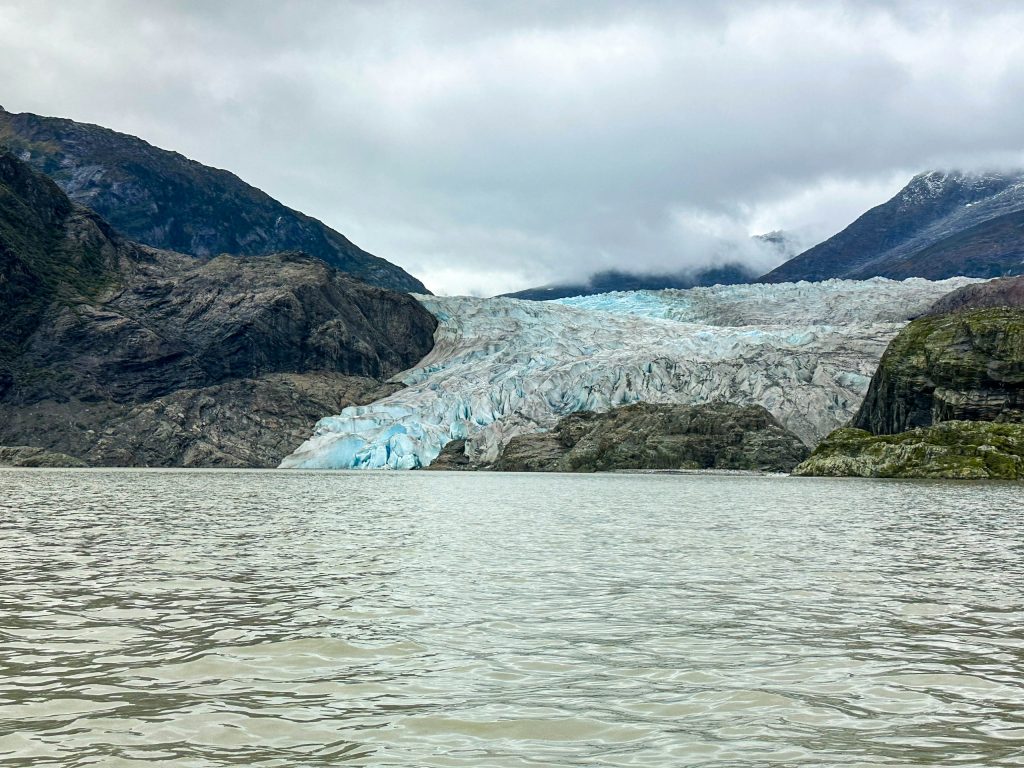
Photo: Robert Boston / Unsplash
Ketchikan is known for salmon, rain and a remarkable collection of totem poles. Historic Creek Street stands on pilings over a salmon stream. Standout excursion: Take a floatplane over Misty Fjords National Monument, or visit Saxman Native Village or Totem Bight State Historical Park.
Often the first Alaska port on northbound sailings, Ketchikan stretches along the waterfront of Revillagigedo Island and calls itself the Salmon Capital of the World. It is also one of the wettest towns in the country, with well over a hundred inches of rain in a typical year, which keeps the surrounding rainforest impossibly green. Creek Street, now lined with shops and galleries, was once the town’s red-light district. In late summer, you can stand on its boardwalk and watch salmon fight their way upstream beneath your feet.
Ketchikan is one of the best places in Alaska to understand the living cultures of the Southeast. Totem poles carved by Tlingit, Haida and Tsimshian artists record family histories, clan crests and important events, and master carvers still raise new poles today. Misty Fjords, a short flight away, is a wilderness of sheer granite cliffs rising thousands of feet above deep, glassy fjords, with waterfalls pouring down from alpine lakes. Floatplanes often land on a remote lake so you can step out onto the pontoons and take in the silence.
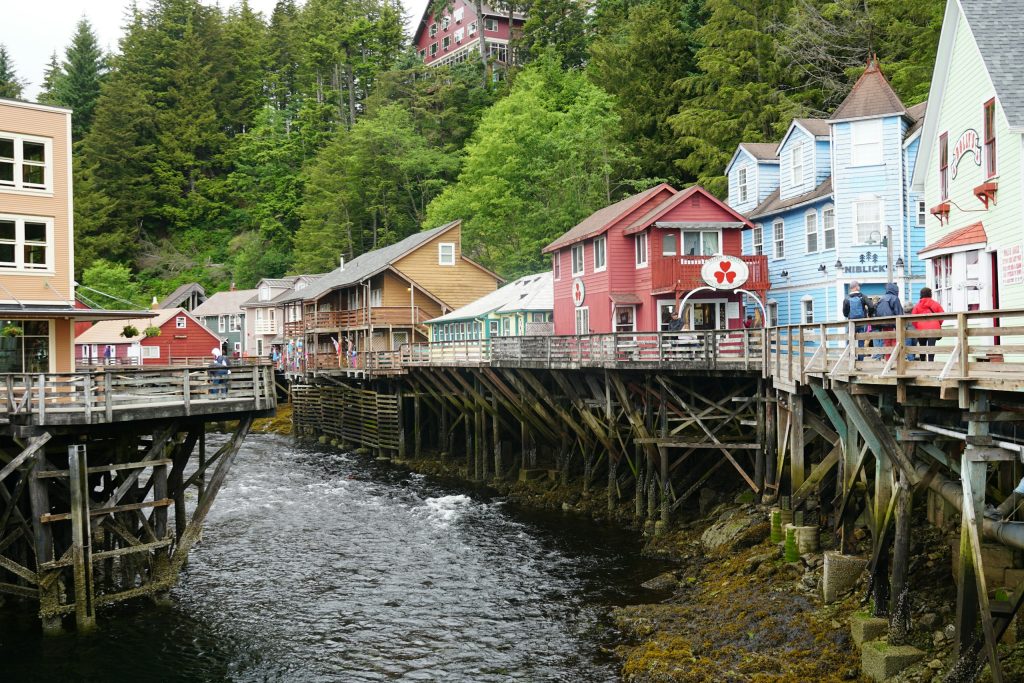
Photo: Sheila C / Unsplash
This Klondike Gold Rush boomtown still has its false-front buildings and wooden sidewalks, and much of it is a national historical park. Standout excursion: Ride the historic narrow-gauge railway from Skagway. The line, built in 1898, climbs nearly 3,000 feet in about 20 miles to White Pass summit.
When news of gold in Canada’s Klondike reached the outside world in 1897, tens of thousands of hopefuls poured through Skagway and neighboring Dyea on their way to the goldfields. Each had to haul roughly a year’s worth of supplies over the mountains, by the White Pass or the brutal Chilkoot Trail, before building boats to float down the Yukon River. Skagway grew almost overnight into a lawless town of saloons, outfitters and con men. Park rangers lead walking tours that bring those wild months vividly to life.

Photo: Timothy Nevius / Unsplash
Sitka was once the capital of Russian America and hosted the 1867 transfer of Alaska to the United States. Tlingit and Russian heritage meet here beneath the volcanic cone of Mount Edgecumbe. Standout excursion: Walk the totem-lined trails of Sitka National Historical Park, then meet rescued bald eagles at the Alaska Raptor Center.
Unlike most Inside Passage towns, Sitka faces the open Pacific, and its setting of forested islands and snowy peaks is one of the loveliest in the state. The onion-domed St. Michael’s Cathedral and the restored Russian Bishop’s House recall the decades when this was the center of a fur-trading empire, while the national historical park marks the site of an 1804 battle between the Tlingit and the Russians. Sea otters, once hunted almost to extinction here, now float in the surrounding waters in healthy numbers.
Huna Totem Corporation, an Alaska Native corporation, owns this port near the village of Hoonah. Tlingit culture and wildlife are at the heart of a visit here. Standout excursion: Go whale watching in Icy Strait or ride one of the long zip lines that drop from the mountain above the port toward the shore.
These days at sea are often the highlight of the trip. Glacier Bay National Park is part of a UNESCO World Heritage Site, and park rangers usually come aboard to narrate. Federal rules allow no more than two cruise ships a day, so only some sailings include it. If it’s a must for you, we’ll filter for it. Hubbard Glacier is one of North America’s largest tidewater glaciers and a common stop on one-way routes. Some itineraries visit Endicott Arm and Dawes Glacier instead of neighboring Tracy Arm. Many lines stopped going to Tracy Arm after a major landslide in 2025.
Glacier Bay is also one of the fastest-changing landscapes on Earth. When British explorer George Vancouver sailed past in 1794, the bay was little more than a dent in a wall of ice; since then the glaciers have retreated dozens of miles, uncovering a branching fjord system where forests, wildlife and new shorelines are still taking hold. On a good day you’ll drift near the face of a tidewater glacier and hear the deep crack known locally as white thunder as ice calves into the water.
Hubbard Glacier is equally humbling. Its face stretches roughly six miles across where it meets Disenchantment Bay, and the ice reaching the water today began its journey high in the mountains centuries ago. Unlike most Alaska glaciers, Hubbard has been advancing rather than shrinking over the past century. Ships approach as close as ice conditions allow, then pivot slowly so every side gets a view. Dress warmly, claim a spot on deck early, and give yourself time simply to watch.
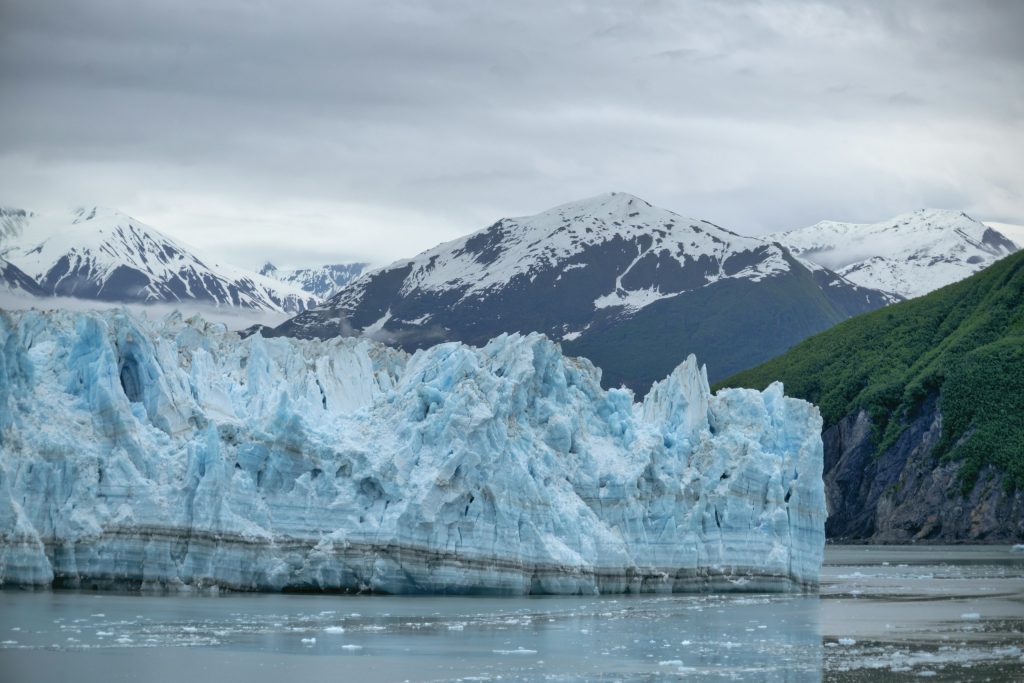
Photo: Peter Hansen / Unsplash
The Anchorage gateways are worth a visit in their own right. Standout excursion: From Seward, take a wildlife cruise into Kenai Fjords National Park, where you may spot sea otters, puffins and whales. From Whittier, day cruises head out to the glaciers of Prince William Sound.
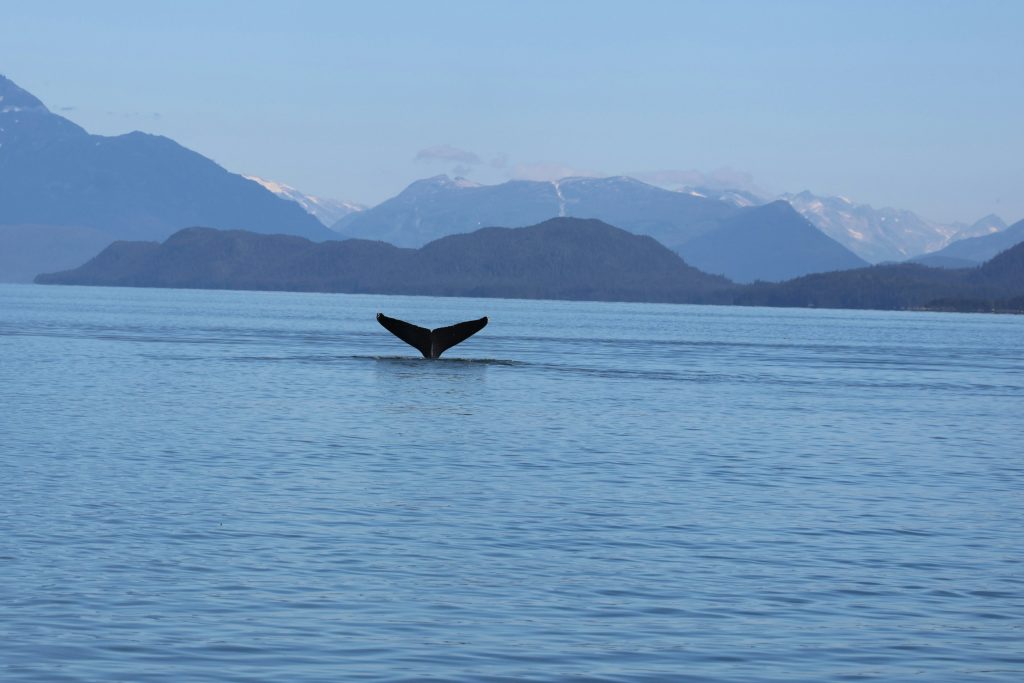
Photo: Meg von Haartman / Unsplash
Wildlife is the thread that runs through every Alaska cruise. Many of the humpbacks feeding here in summer spend their winters in Hawaii, and in Southeast Alaska some work together to blow rings of bubbles that trap schools of herring, then surge up through the middle with mouths wide open. Orcas, Dall’s porpoises, Steller sea lions and harbor seals are also regular sightings, and Alaska is home to more bald eagles than any other state. On shore excursions, brown and black bears fish the salmon streams from midsummer onward.
The coast is only half of the story. North of Anchorage, Alaska opens into a vast interior of spruce forest, tundra and braided glacial rivers under enormous skies, a landscape no ship can reach. Rail journeys in glass-domed cars follow river valleys toward the Alaska Range, and in midsummer the sun barely sets, with Fairbanks seeing nearly 22 hours of daylight around the solstice. Adding even three or four nights on land gives your cruise a completely different second act.
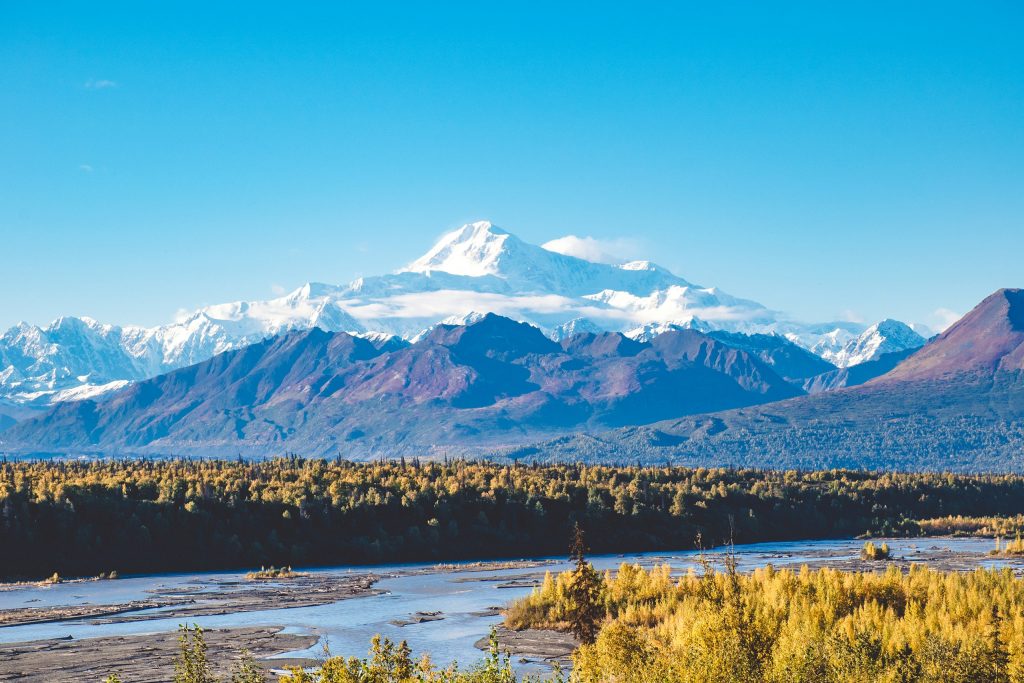
Photo: Jacob Vizek / Unsplash
Adding Alaska’s interior turns a great cruise into a once-in-a-lifetime trip. Most land extensions center on Denali National Park and Preserve, six million acres of tundra and braided rivers where you might see grizzlies, moose, caribou and Dall sheep. On a clear day you can see North America’s highest peak. It’s long known as Denali, though the federal government restored the name Mount McKinley in 2025. The park keeps its Denali name.
June through August brings the warmest weather and the most reliable wildlife viewing. May and September are quieter and cooler.
You need one if your cruise starts or ends in Canada. We recommend a passport for every Alaska cruise in case you have to leave the ship unexpectedly.
Pick a round-trip Inside Passage cruise for simple logistics. Choose a one-way Gulf of Alaska cruise to see more coastline, visit Hubbard Glacier or add Denali.
Humpbacks are commonly seen all summer, especially around Juneau and Icy Strait. A dedicated shore excursion gives you the best chance to see bears. Wildlife is never guaranteed.
Seven nights covers a classic cruise. With 10 to 14 days, you can add Denali and the interior.
The right month, ship and cabin, plus the excursions that sell out first, are what make an Alaska cruise great. Planning all that is our specialty. As independent affiliates of Fora Travel with IATAN accreditation, the Novera Travel team will match you with the right line and itinerary and look for added amenities on select sailings. We’ll handle every detail on the ground, from excursions to Denali lodges.
Novera Travel will be happy to arrange your international flights when you’re traveling first class.
Call +1 33 22 NOVERA – +1 (332) 266-8372 or email info@noveratravel.com
Prefer to reach out another way? Visit our Contact page.