Emerald rice terraces, sea temples, and a living island culture woven through every day
Photo: Tom Fisk / Pexels
Bali is an island where daily life and devotion are intertwined. Small woven offerings appear on doorsteps each morning, temple gates frame volcanic peaks, and the sound of a gamelan drifts across the rice fields at dusk. Pair that with surf beaches, dramatic cliffs, lush highlands, and a superb spa culture, and you can shape a trip that feels adventurous, restful, or both.
Here’s what we tell our clients: Bali is small on the map but slow on the roads. Choose two or three bases, such as the uplands around Ubud, a quieter corner in the east or north, and a beach to finish, and you’ll see far more than you would by racing between sights.
Bali’s culture is unlike anywhere else in Indonesia. While most of the country is Muslim, the large majority of Balinese practice their own form of Hinduism, shaped by centuries of exchange with Java. When the great Hindu-Javanese Majapahit kingdom declined in the fifteenth and sixteenth centuries, many of its priests, nobles and artists settled here, enriching Bali’s temples, dance and court arts. In the 1920s and 1930s, foreign painters and musicians drawn to Ubud helped bring Balinese art to the world, and that creative spirit still fills the island’s villages and galleries.
Bali is tropical and warm year-round, with two main seasons.
Our take: May, June, and September are hard to beat, with dry weather, green landscapes, and thinner crowds than peak summer.
Ubud is Bali’s cultural heart, with dance performances, craft villages, and rice terraces at Tegallalang. Farther west, the terraces of Jatiluwih are part of Bali’s UNESCO-listed subak landscape, a centuries-old cooperative water system linked to temple rituals.
The island itself is volcanic, a chain of peaks running east to west with Mount Agung, more than 3,000 meters high and sacred to the Balinese, at its eastern end. Rain and rich volcanic soil make the center and north startlingly green, while the south’s limestone Bukit Peninsula is drier, with white-sand coves below steep cliffs. Though Bali is small, its landscapes change quickly: within a morning’s drive you can go from surf beaches to cool highland lakes, coffee plantations and waterfalls.
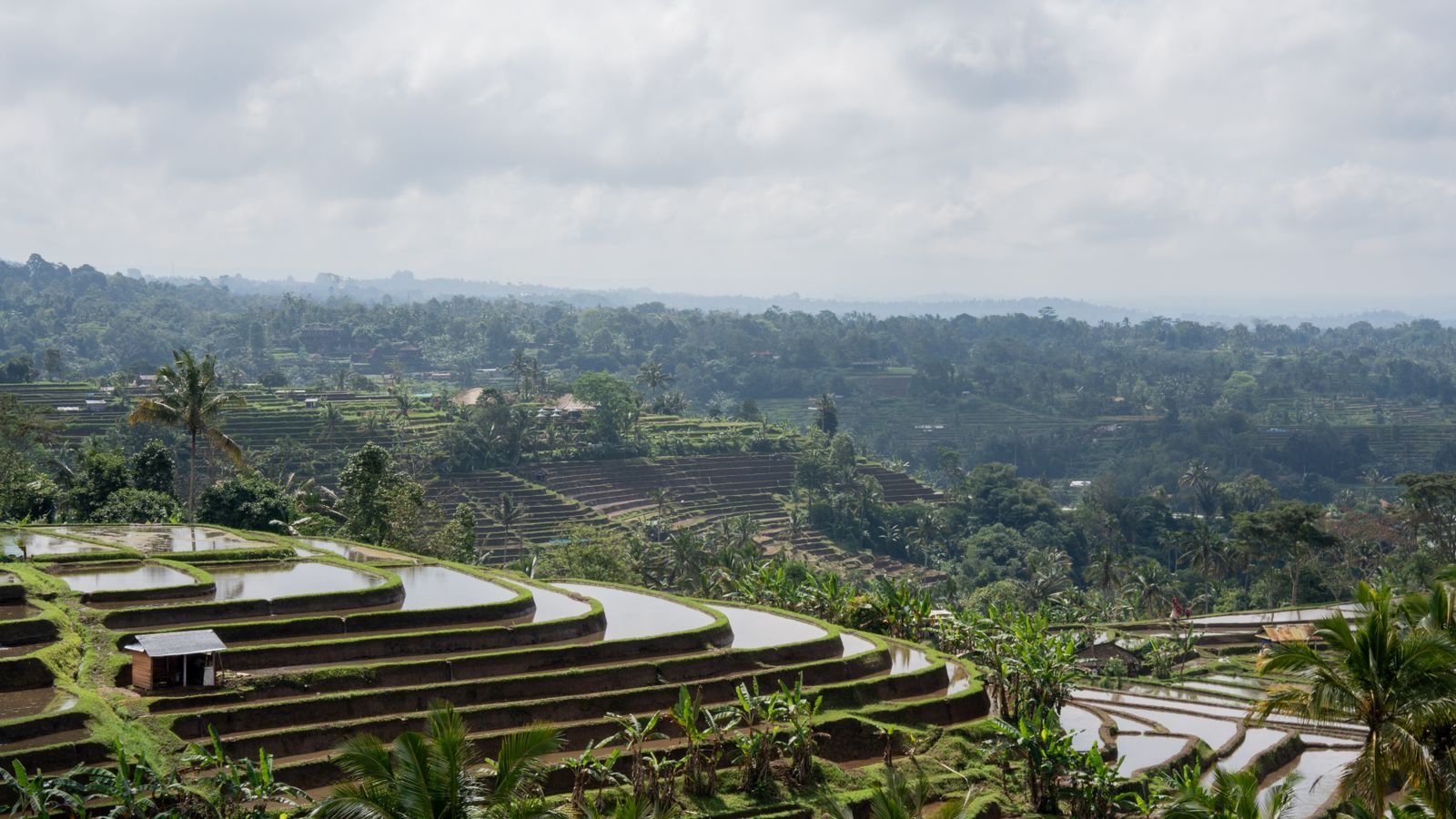
Photo: Tina P. / Pexels
The subak system dates back more than a thousand years. Water from springs and crater lakes flows through canals and tunnels to thousands of terraced fields, and farmers’ cooperatives share it fairly according to a calendar of rituals at water temples. The arrangement reflects the Balinese philosophy of Tri Hita Karana, harmony between people, nature and the divine. At Jatiluwih, the terraces sweep across a broad valley beneath Mount Batukaru, far quieter than Tegallalang, and walking trails let you wander between the paddies as farmers tend the rice.
Seminyak and Canggu offer beach clubs, cafes, and surf. Jimbaran is known for sunset seafood on the sand, Nusa Dua for calm, family-friendly resort beaches, and the Bukit Peninsula around Uluwatu for limestone cliffs and surf breaks.
Sidemen is a peaceful valley of rice fields and weaving villages beneath Mount Agung. On the coast, Amed and Tulamben are relaxed bases for diving and snorkeling. Besakih, the island’s most important temple complex, sits on Agung’s slopes.
Cool, misty Munduk is a hiking base surrounded by waterfalls, clove and coffee plantations, and the highland lakes near Bedugul.
There are no nonstop flights between the US and Bali. Most travelers connect through a hub in Asia or the Middle East, such as Singapore, Tokyo, Seoul, Taipei, Hong Kong, Doha, or Dubai, and arrive at Denpasar (DPS). If your dates are close to Nyepi, plan around the airport closure.
Entry rules (as of October 2026): US citizens can visit for tourism on a visa on arrival, either applied for online as an e-VOA before travel or obtained on arrival. It allows a 30-day stay and can usually be extended once. Use only the official Indonesian immigration eVisa website. Your passport must be valid for at least six months from your arrival date, and the US State Department advises having two blank pages. Officers may ask to see a return or onward ticket. All arriving travelers must complete the free All Indonesia arrival declaration online or in the official app, starting up to three days before arrival. Bali also charges foreign visitors a separate tourist levy, best paid in advance through the official Love Bali website or app. We recheck these rules before every departure. Also review the State Department’s Indonesia page and consider enrolling in STEP.
Ideal for most travelers. Traffic is heavy and roads are narrow, so a private driver-guide is the easiest and safest way to get around, with flexible stops and local insight.
Expert guides open doors to temple ceremonies, artisan workshops, and village life, with context that makes each visit meaningful and respectful.
Bali excels at private pool villas, cliff-top retreats, and jungle hideaways with exceptional spa and wellness programs. Pair them with private guides and a dedicated driver for an effortless stay.
Divers, hikers, and surfers can build trips around Amed, Mount Batur, and the Bukit’s breaks, with fast boats linking Bali to Nusa Penida, Lombok, and the Gili Islands.
> Advisor tip: Booking through us as a Fora advisor can unlock extra perks at many partner hotels and resorts in Bali, such as daily breakfast, a property credit, or a room upgrade when available. Benefits vary by property, so ask us what applies to your dates.
Art galleries, palace dance performances, the sacred Monkey Forest, and rice-field walks make Ubud a perfect first base.
Standout experience: A sunrise walk along the Campuhan Ridge, followed by a Balinese cooking class with a market visit.
Ubud grew around a royal palace, and the town still feels like the island’s cultural capital. Evening performances in palace and temple courtyards showcase the delicate Legong, danced by young women in gold brocade, and the Barong, a battle between good and evil told with masks and elaborate costumes. Surrounding villages specialize in wood carving, silverwork, stone carving and painting, and the forested Monkey Forest sanctuary shelters several temples alongside its resident long-tailed macaques. Keep sunglasses and snacks out of sight; the monkeys are bold.
This sea temple sits on a rocky outcrop surrounded by waves, one of Bali’s most photographed sights.
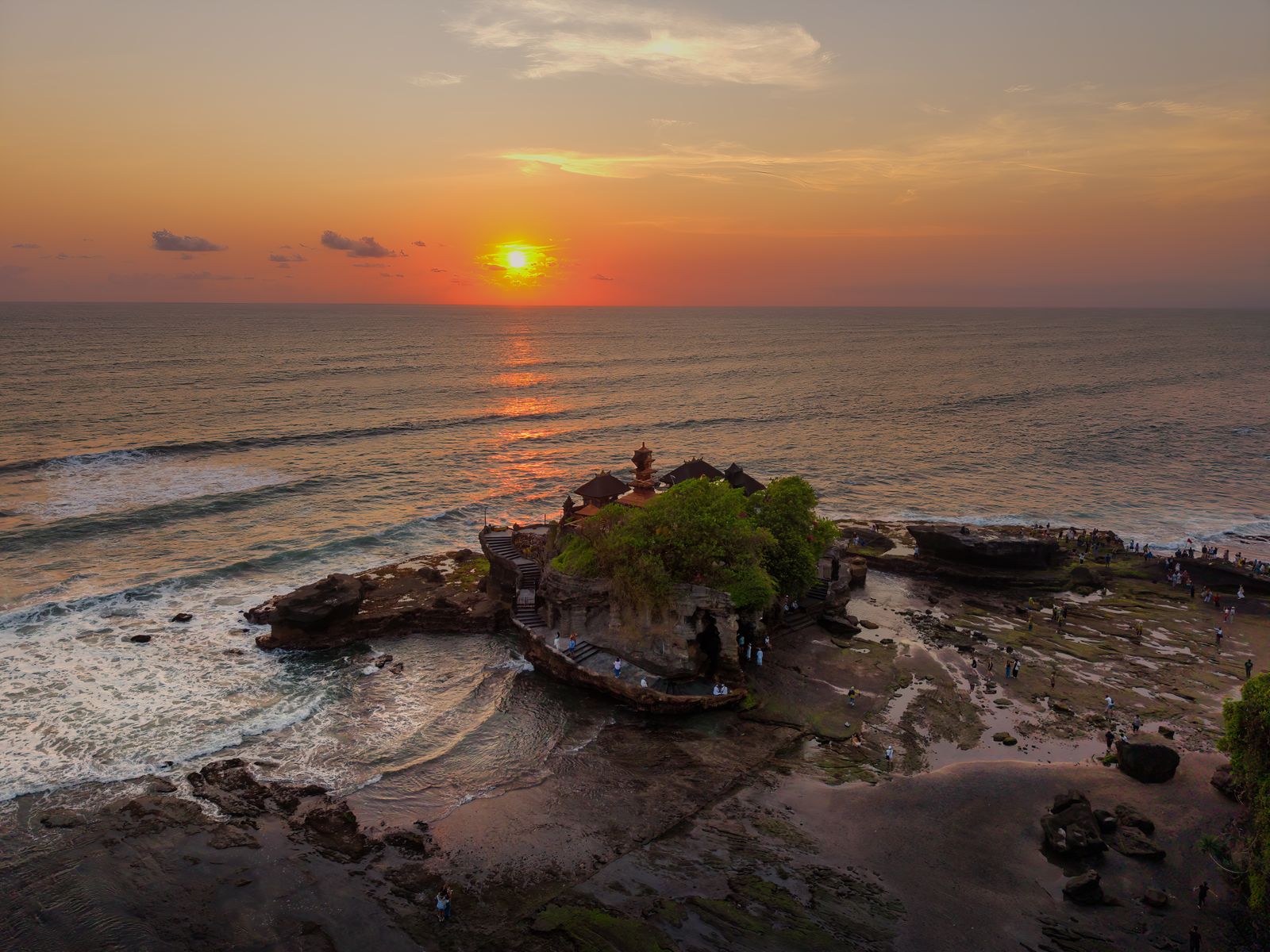
Photo: Tom Fisk / Pexels
Standout experience: Arriving in the late afternoon to watch the sun set behind the temple.
Tanah Lot is one of a chain of sea temples along Bali’s southwestern coast, traditionally linked to a revered sixteenth-century Hindu priest who journeyed from Java. At high tide, the outcrop becomes an island; at low tide, you can walk across to the base, where priests bless visitors with holy spring water. The inner temple is reserved for worshippers, but the setting is the real draw: waves breaking against black rock, the temple silhouetted against an orange sky, and the scent of incense on the sea breeze.
Perched on cliffs high above the Indian Ocean, Uluwatu Temple offers sweeping views and nightly Kecak fire dance performances.
Uluwatu Temple, one of Bali’s most important directional temples, clings to a cliff edge around 70 meters above the waves. The Kecak performance staged nearby was developed in the 1930s and retells an episode from the Hindu epic the Ramayana, with dozens of bare-chested men chanting in hypnotic, interlocking rhythms as the sun sinks into the ocean. The Bukit Peninsula around it has some of the world’s most celebrated surf breaks, best in the dry season, along with hidden beaches reached by steep stairways through the cliffs.
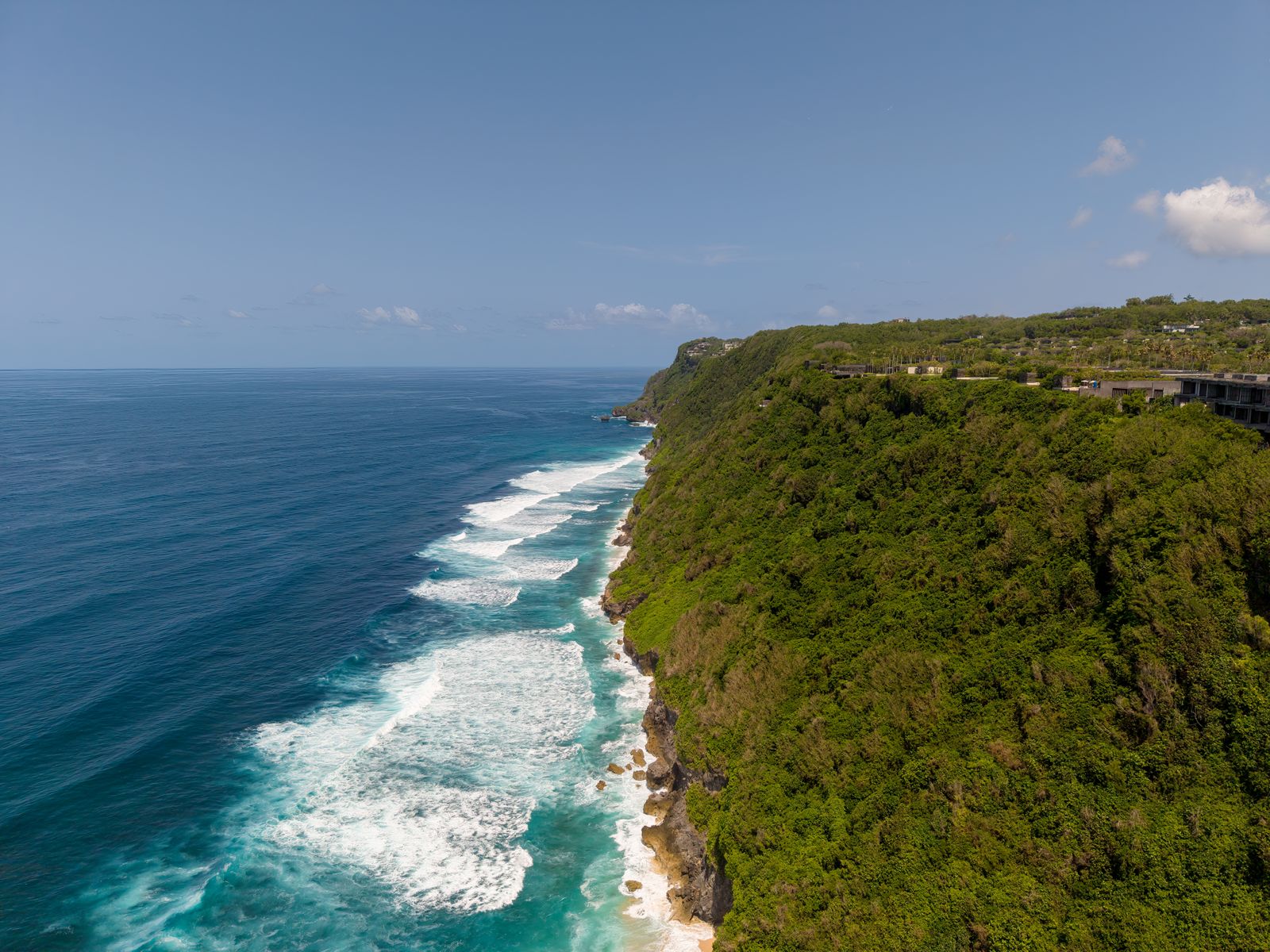
Photo: Tom Fisk / Pexels
Standout experience: Watching the Kecak dance at sunset on the clifftop.
At Tirta Empul, Balinese Hindus come to bathe in the holy spring water as part of a purification ritual. Besakih, the “Mother Temple,” is a vast complex of shrines on Mount Agung.
Standout experience: Visiting Tirta Empul with a local guide who explains the ritual and its etiquette.
Tirta Empul’s spring has been honored for more than a thousand years, and its pools are lined with carved spouts where worshippers pray and bathe beneath each stream in a set order. Visitors may join respectfully when guided, wearing a sarong. Besakih, high on the slopes of Mount Agung, is not a single temple but a complex of more than twenty, rising in terraces up the mountainside. Its location on the sacred volcano makes it the spiritual center of Balinese Hinduism, and major ceremonies draw pilgrims from across the island.
Climbers set out before dawn to reach the rim of this active volcano for sunrise views over Lake Batur and Mount Agung. Climbs are usually done with a local guide.
Standout experience: A sunrise trek, followed by breakfast overlooking the caldera.
Batur sits inside a vast ancient caldera, with a crescent-shaped lake at its foot, and the whole area is part of a UNESCO Global Geopark. The trek to the rim usually starts in darkness and takes around two hours up, rewarding you with a glowing sunrise over Mount Agung and, on clear days, Lombok’s Mount Rinjani in the distance. Afterward, soak tired legs in the natural hot springs on the lakeshore. The ridge-top villages of Kintamani are also lovely for lunch with a view of the volcano.
The highlands offer waterfall hikes and a lakeside temple that seems to float on Lake Beratan.
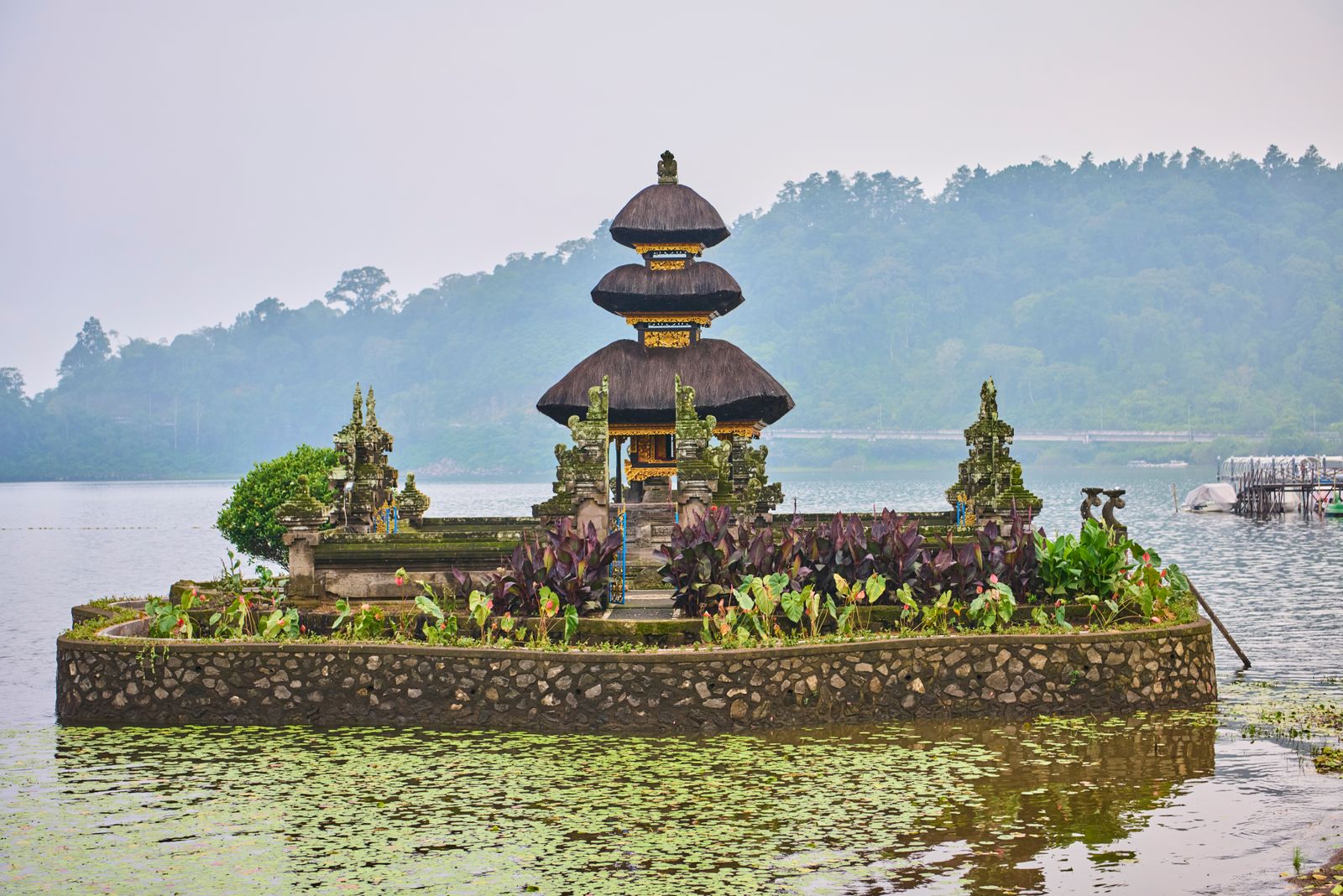
Photo: Tri Warno / Pexels
Standout experience: An early visit to Ulun Danu Beratan before the crowds, then a waterfall hike near Munduk.
Ulun Danu Beratan, founded in the seventeenth century, honors the goddess of the lake whose waters feed farmland across central Bali. Its tall, thatched meru shrines stand on small islands at the water’s edge, so they appear to float when the lake is full and calm. At around 1,200 meters, the highlands here are refreshingly cool, often wrapped in mist. Strawberries and vegetables grow on the surrounding hillsides, and the colorful market at Bedugul sells fruit, spices and flowers.
This rugged island is known for dramatic cliffs, manta rays, and Kelingking Beach.
Nusa Penida lies a fast-boat ride from Bali’s southeastern coast, and its wild, cliff-ringed coastline feels a world apart. Beyond Kelingking’s famous headland, the island’s highlights include the natural arch of Broken Beach and the white sand of Diamond Beach. Underwater, reef manta rays gather year-round at cleaning stations, and from roughly July to October divers hope to spot the giant oceanic sunfish. Roads on the island are rough and steep, so we arrange a driver and recommend an overnight stay to enjoy it at an easy pace.
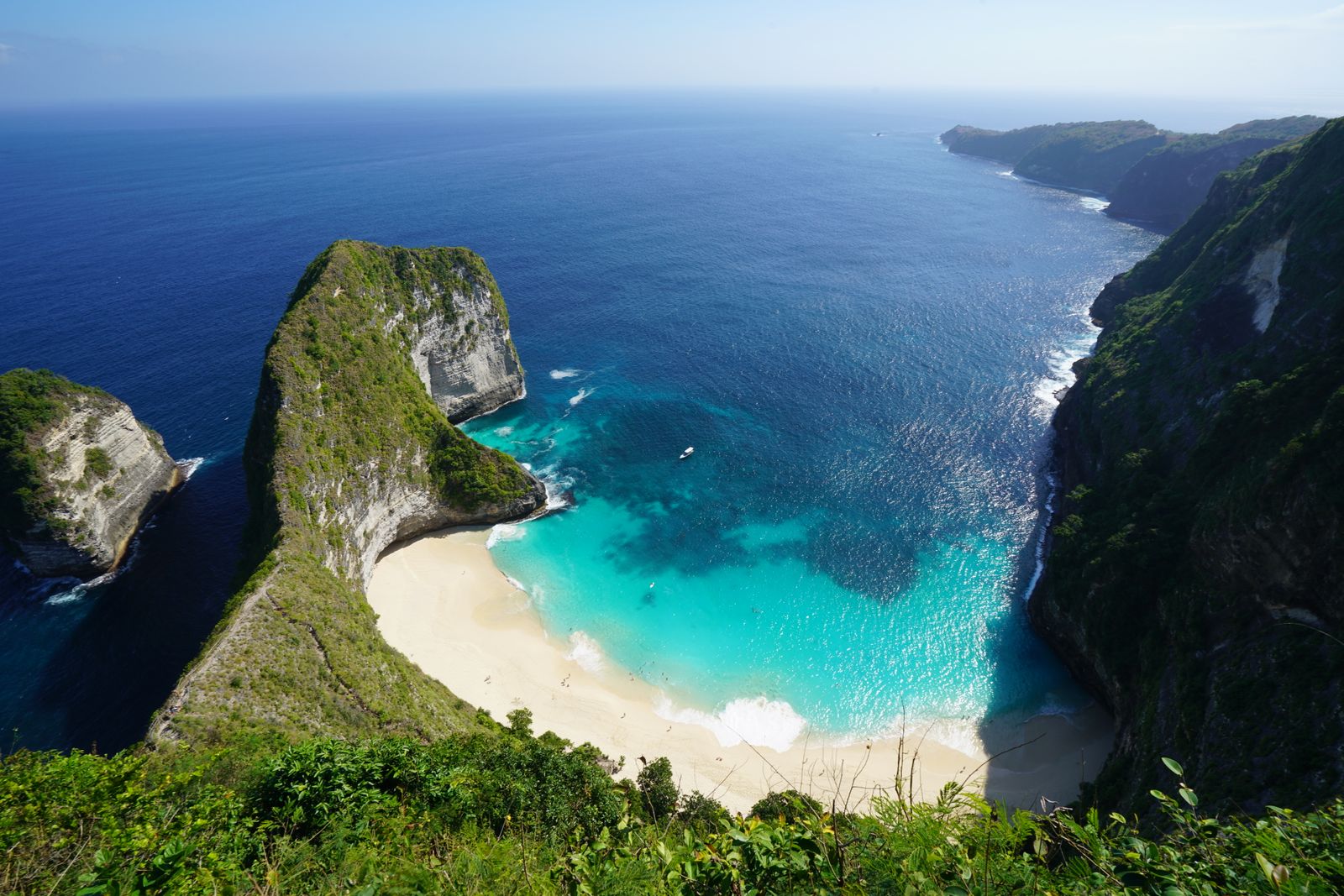
Photo: Phonsay Phothisomphane / Pexels
Standout experience: Snorkeling with manta rays when sea conditions allow.
These quiet coastal villages offer black-sand beaches, coral gardens, and a famous shipwreck dive.
Standout experience: Diving or snorkeling the Second World War cargo-ship wreck at Tulamben.
The wreck has a remarkable story. Torpedoed in 1942, the ship was beached at Tulamben, and the 1963 eruption of Mount Agung later shifted it into the sea, where it now lies just offshore in shallow water, covered in corals and sponges and alive with fish. Beginners can snorkel over the top while divers explore its hull. Along the coast, Amed’s string of fishing villages offers calm bays and sunrise views of Agung, with traditional outrigger boats pulled up on the black sand.
Most Balinese practice a distinctive form of Hinduism, and ceremonies fill the calendar, from temple anniversaries to Galungan. At temples, wear a sarong and sash (often provided at the entrance), cover your shoulders, follow posted guidance, and never climb on shrines or step on offerings. Ask before photographing people, especially during ceremonies, and give processions space. Food highlights include babi guling, bebek betutu (slow-cooked duck), lawar, sate lilit, nasi campur, and fresh tropical fruit. Spa culture is part of island life, from traditional Balinese massage to flower baths.
Life in Bali follows several calendars at once, including a 210-day ritual cycle, so ceremonies seem to happen almost daily. During Galungan, when ancestral spirits are believed to visit, tall bamboo poles called penjor arch over village streets, hung with woven palm decorations. Even names reflect tradition: many Balinese are named by birth order, so you will meet a great many people called Wayan, Made, Nyoman and Ketut. Joining a guided village visit or temple festival, dressed appropriately, is one of the most rewarding things you can do here.
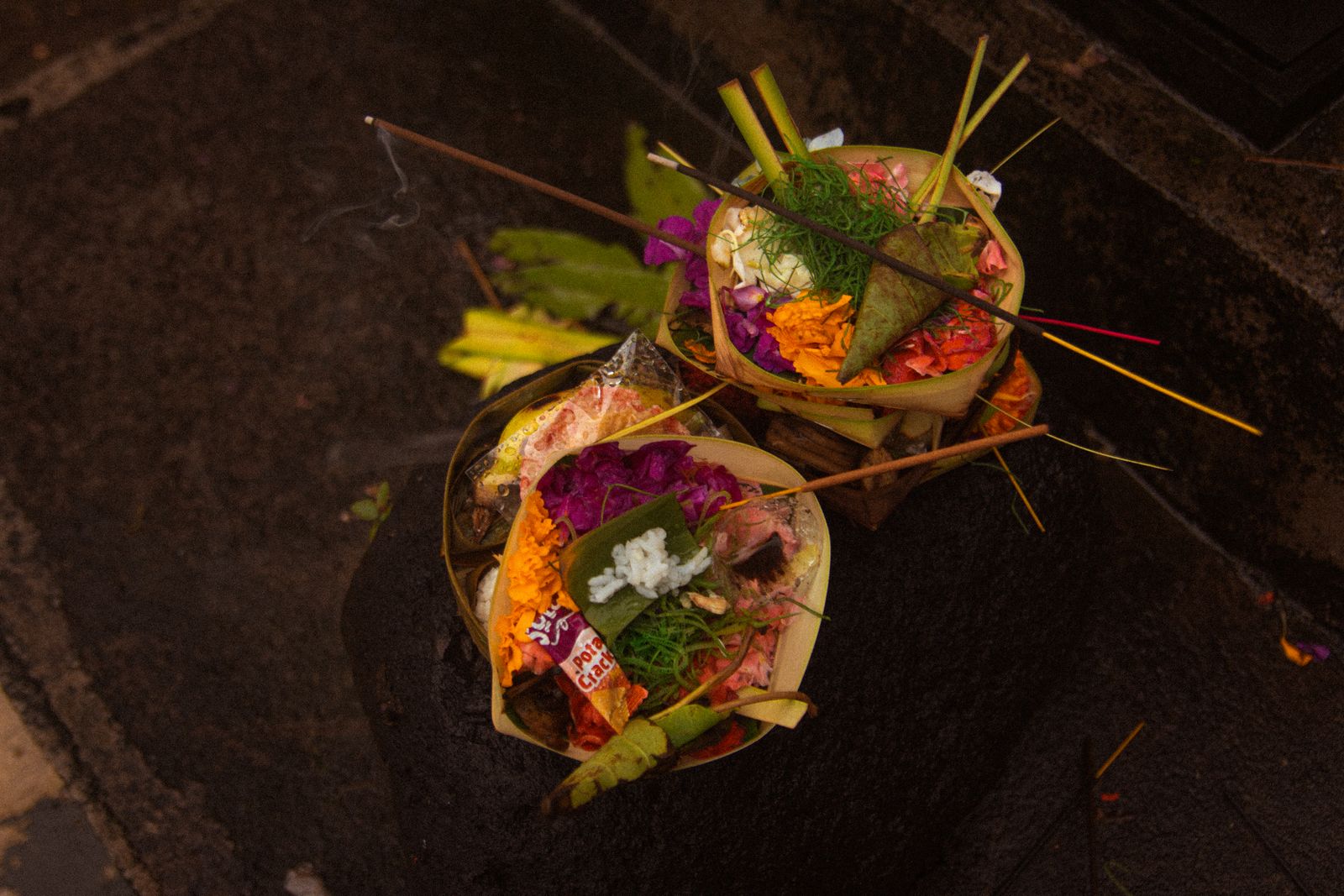
Photo: Didi Lecatompessy / Pexels
Yes. US citizens can get a visa on arrival, applied for online as an e-VOA or at the airport, for stays of up to 30 days.
April through October, with May, June, and September offering the best balance of weather and crowds.
Yes. Nusa Dua and Sanur have calmer beaches, and Ubud offers cultural activities children enjoy.
A sarong and sash, with your shoulders covered. Many temples lend or rent sarongs at the entrance.
Absolutely. Lombok, the Gilis, Komodo, Singapore, Thailand, and Australia all pair well.
As Fora advisors, we take care of the details for you: the right season and bases, hand-picked hotels and villas with added amenities at select properties, trusted drivers and guides, and a pace that leaves room for the unexpected.
Novera Travel will be happy to arrange your international flights when you’re traveling first class.
Call +1 33 22 NOVERA – +1 (332) 266-8372 or email info@noveratravel.com
Prefer to reach out another way? Visit our Contact page.