Jungle temples, gilded monasteries, and slow days on the Mekong
Photo: Serg Alesenko / Pexels
Cambodia and Laos share the Mekong, a deep Buddhist heritage, and a gentle pace. In Cambodia, the temples of Angkor rank among the world’s great archaeological wonders, while Phnom Penh tells a story of remarkable resilience. In Laos, gilded monasteries, misty mountains, and riverside villages invite you to slow down.
Here’s what we tell our clients: give Angkor at least three full days, and give Laos time to work its quiet magic. The best trips pair early temple visits with long lunches and unscheduled afternoons.
Both countries follow a tropical monsoon pattern with three broad seasons.
Our take: November through February is ideal for a first visit. If you don’t mind showers, the green season is magical at Angkor and Kuang Si Falls.
Most journeys pair Siem Reap and Phnom Penh, then fly to Luang Prabang and perhaps Vientiane.
With more time, travel north to south through Laos: Luang Prabang, Vang Vieng, and Vientiane, then south to the islands of Si Phan Don.
Add Battambang’s colonial streets, or finish on the southern coast in Kampot and Kep for pepper farms, river sunsets, and seafood.
There are no nonstop flights from the US to Cambodia or Laos. Most travelers connect through regional hubs such as Bangkok, Singapore, Seoul, Taipei, Tokyo, Hong Kong, or Doha. Regional flights link the two countries, sometimes via Bangkok. Phnom Penh’s Techo International Airport replaced the city’s previous airport in 2025. Within Laos, the Laos–China railway links Vientiane, Vang Vieng, and Luang Prabang.
Entry rules (as of October 2026): US citizens need a visa for both countries. For Cambodia, apply for an e-Visa on the official government website before you go, or obtain a visa on arrival; a tourist visa allows a 30-day stay. All air arrivals must also complete Cambodia’s free e-Arrival card within seven days before arrival, through the official app or website, even if you already hold a visa. Look-alike sites may charge. For Laos, a 30-day tourist visa is available as an e-Visa through the official portal (valid only at designated entry points) or on arrival at international airports and most land crossings. Your passport must be valid for at least six months after arrival. Cambodia requires one blank page, while the State Department advises two blank visa pages for Laos. US dollars are widely used in Cambodia alongside the riel. In Laos, the kip is the main currency. The State Department advises against travel within 50 kilometers of the Cambodia–Thailand border because of armed conflict there, which can affect overland crossings. We recheck these rules before every departure. Also review the State Department’s Cambodia and Laos pages and consider enrolling in STEP.
A private guide and driver in each destination,, balancing headline sights with free time.
Pair expert-led Angkor touring with a Mekong river journey.
Choose heritage residences, spa retreats near the temples, and private sunset boat rides.
Cycle between lesser-known temples, kayak near Vang Vieng, or explore the Plain of Jars.
> Advisor tip: Booking through us as a Fora advisor can unlock extra perks at many partner hotels in Cambodia and Laos, such as daily breakfast, a hotel credit, or a room upgrade when available. Benefits vary by property, so ask us what applies to your dates.
Built in the 12th century, Angkor Wat is the largest temple in the vast Angkor Archaeological Park, a UNESCO World Heritage Site. Nearby Siem Reap offers markets and excellent Khmer dining. Angkor passes are sold for one, three, or seven days, must be bought at the official ticket office, and include a photo for multi-day passes. Some outlying temples require separate tickets.
Standout experience: Sunrise over Angkor Wat, then exploring its galleries once the crowds leave for breakfast.
The walled city of Angkor Thom holds the Bayon, crowned with more than 200 serene stone faces. Nearby, Ta Prohm has been left largely to the jungle, with giant tree roots pouring over its walls.
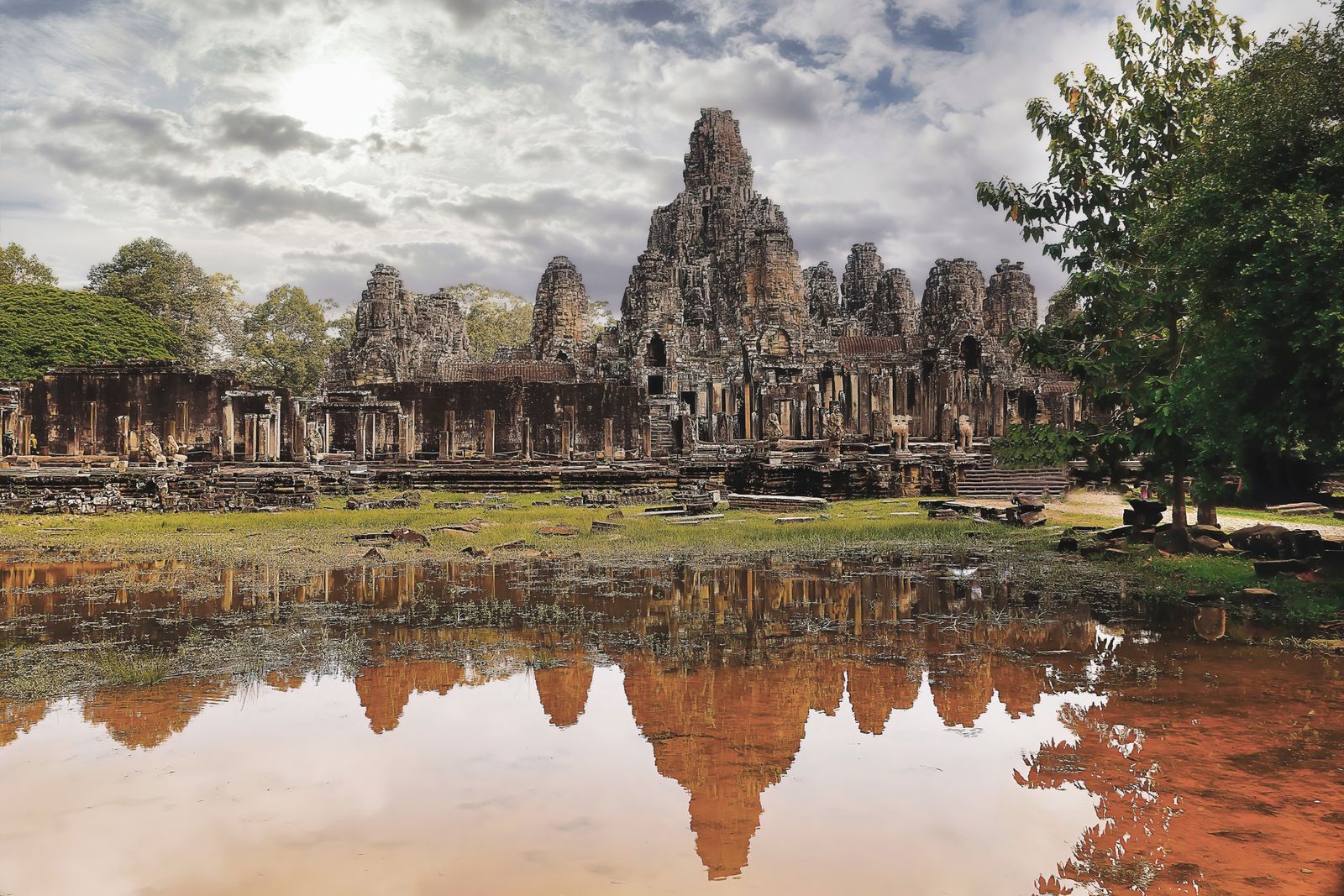
Photo: Alberto Capparelli / Pexels
Walking the Bayon rewards patience. Circling the upper terraces, you meet those carved faces again and again, each catching the light differently as clouds move. Guides help you read the bas-reliefs along the lower galleries, where carved battle scenes and everyday market life give the stone a human scale. Shade is thin, so early morning or late afternoon visits feel kinder, and the pools below the towers make a quiet pause between climbs.
A short drive away, the forest closes in. Ta Prohm was never fully cleared of the jungle that reclaimed it, and that decision is part of its power. Silk-cotton and strangler fig roots spill over doorways and galleries like living architecture, and the play of light through leaves changes hour by hour. Stay on the marked paths, give yourself time to wander the quieter courtyards, and let the contrast with Angkor Wat’s open grandeur sink in.
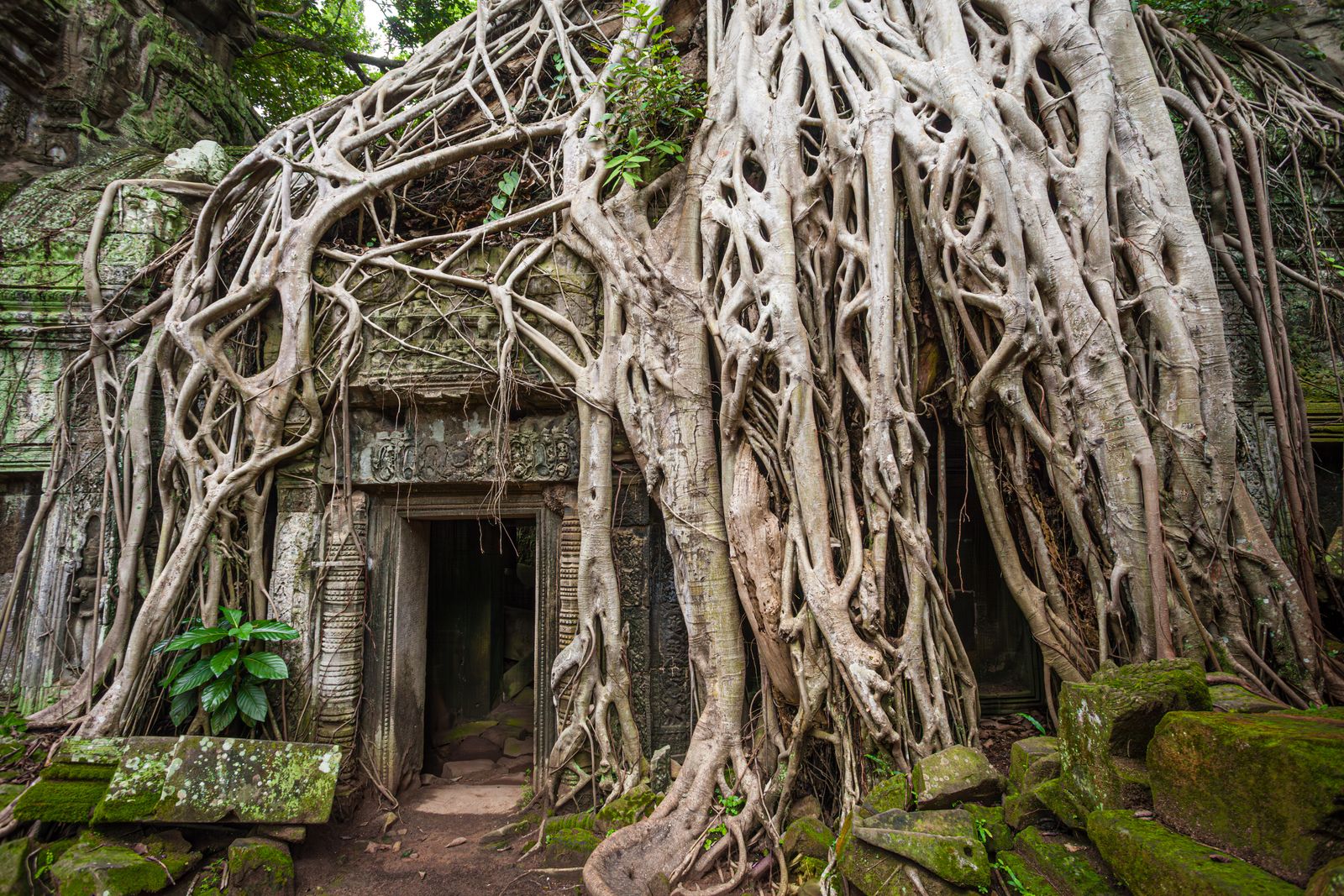
Photo: Daniel Lienert / Pexels
Standout experience: Exploring Ta Prohm early in the day with a guide who knows its quiet corners.
The wider Angkor circuit is best tasted in layers rather than rushed checklists. After the Bayon and Ta Prohm, many travelers feel temple fatigue if they try to see everything at once. Building in a long lunch, a pool break, or a market stroll in Siem Reap keeps the afternoon temples vivid instead of blurred. Your guide can adjust the order when heat or crowds spike, and that flexibility is one of the quiet advantages of private touring here.
About an hour north of Siem Reap, this small 10th-century temple is carved from rose-pink sandstone and famed for the region’s finest stonework. Unlike the monumental scale of Angkor Wat, Banteay Srei rewards close looking: lintels crowded with dancers, guardians, and floral scrolls so fine they look almost like wood carving. The rose color deepens toward late day, so many travelers time this stop for afternoon light and pair it with a countryside drive past rice fields and villages.
That shorter scale also makes Banteay Srei a gentler interlude for travelers traveling with older relatives or anyone who wants depth without another long climb of temple stairs. Bring water, a hat, and the same modest dress you wear at the larger temples. The site is compact, so you can linger on a single pediment without feeling you are missing a whole city beyond the walls.
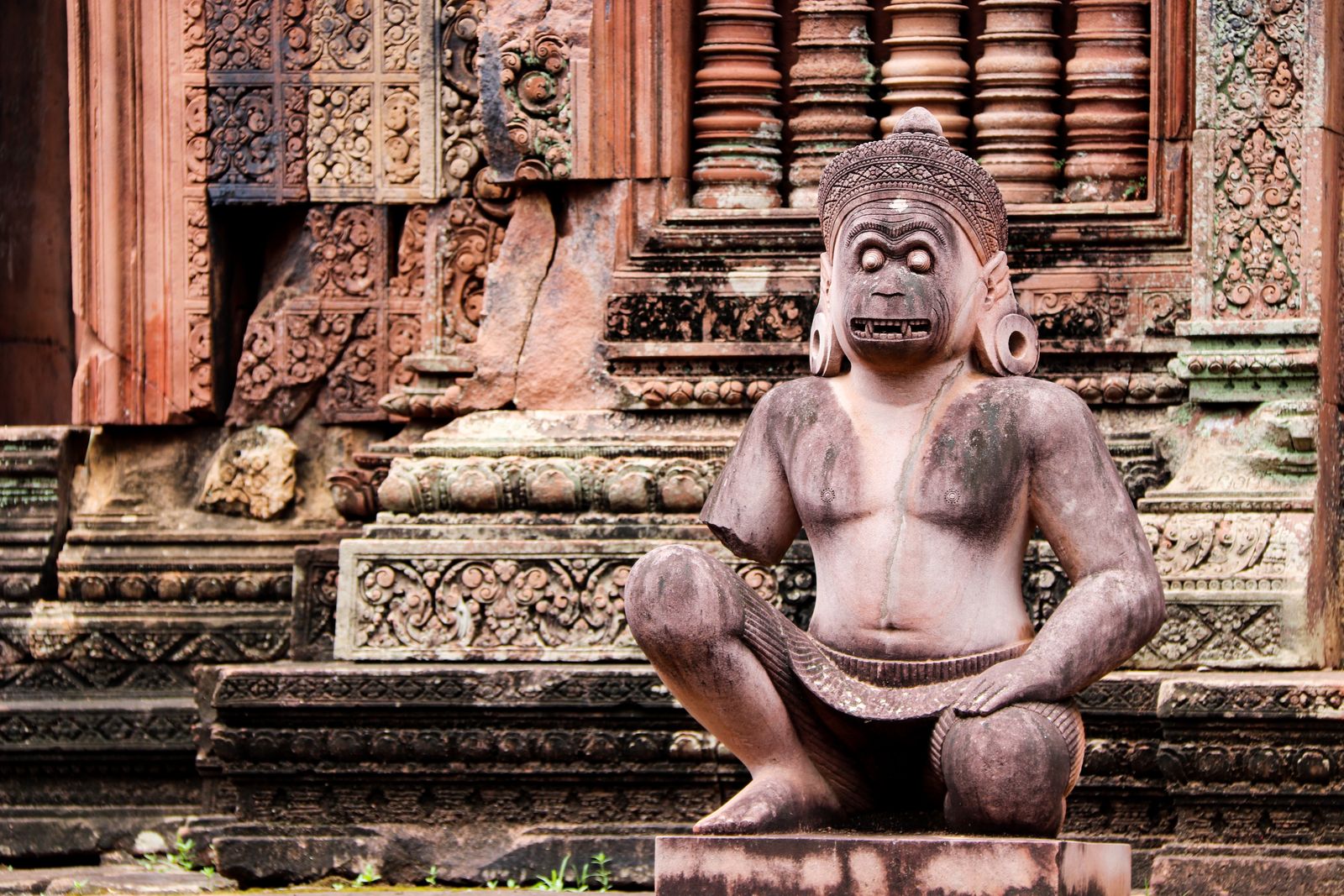
Photo: Patrick Gamelkoorn / Pexels
Standout experience: Visiting in the late afternoon, when the sandstone glows warm red.
Leaving the temple plain for Phnom Penh shifts the trip’s tone. Where Angkor asks you to imagine an empire in stone, the capital asks you to meet a living city: motorbikes along the riverside, cafes in restored shophouses, and the Royal Palace’s gleaming roofs against the sky. Plan at least one unhurried evening along the riverfront, when families gather and the heat finally softens.
Cambodia’s capital sits at the meeting of the Mekong and Tonlé Sap rivers. Visit the Royal Palace and Silver Pagoda, the National Museum, and the riverside for a sense of ceremony and everyday life side by side. The palace compound rewards slow walking between gilded halls, while the National Museum’s sandstone sculptures connect what you saw at Angkor to the artisans who shaped them centuries ago.
To understand the country’s recent history, many travelers visit the Tuol Sleng Genocide Museum and the Choeung Ek memorial. Both honor the victims of the Khmer Rouge era with quiet gravity. Visit with a guide, dress modestly, speak softly, and give yourself space afterward rather than rushing straight into nightlife. Pairing those sites with a palace morning or a Mekong sunset helps the day feel balanced instead of overwhelming.
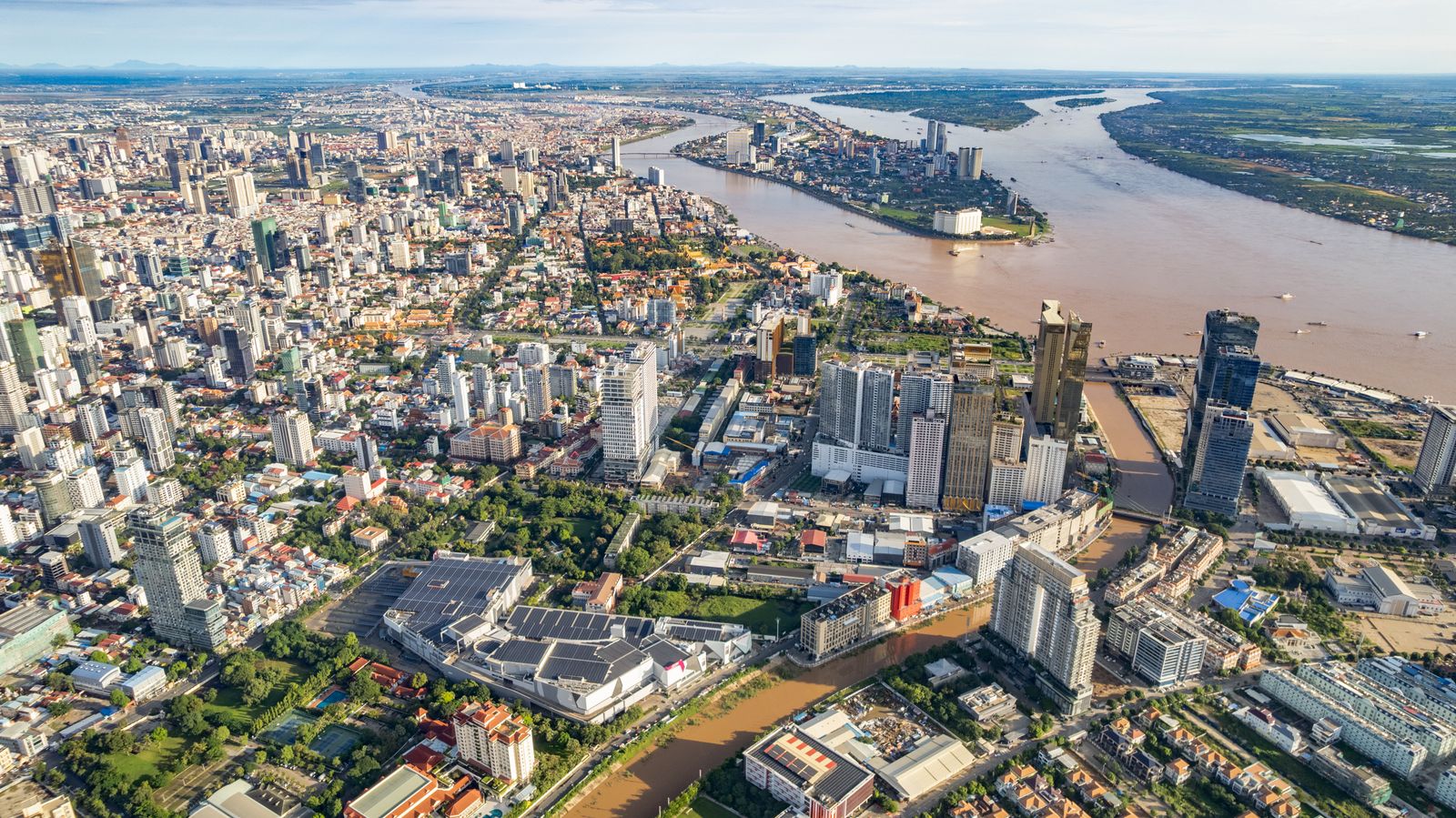
Photo: Nara Tsitra / Pexels
Standout experience: A sunset cruise on the Mekong after a day of history and palaces.
Battambang charms with colonial architecture and an arts scene, though parts of the province lie near the Thai border, so we check current guidance before planning. Kampot is known for pepper farms, and seaside Kep for its crab market. On the Tonlé Sap, Southeast Asia’s largest freshwater lake, floating and stilted villages follow the rhythms of the water. Visit with community-based programs, ask before photographing people, and don’t give money directly to children.
Standout experience: A morning on the Tonlé Sap with a local guide, followed by lunch with a Kampot pepper farmer.
This UNESCO-listed town sits where the Nam Khan meets the Mekong, filled with gilded monasteries, French colonial houses, and a lively night market. Climb Mount Phousi at sunset, and visit Wat Xieng Thong and the Royal Palace Museum. At dawn, monks walk the streets to receive alms. If you watch, stay quietly at a distance, never use flash, dress modestly, and don’t treat the ceremony as a show.
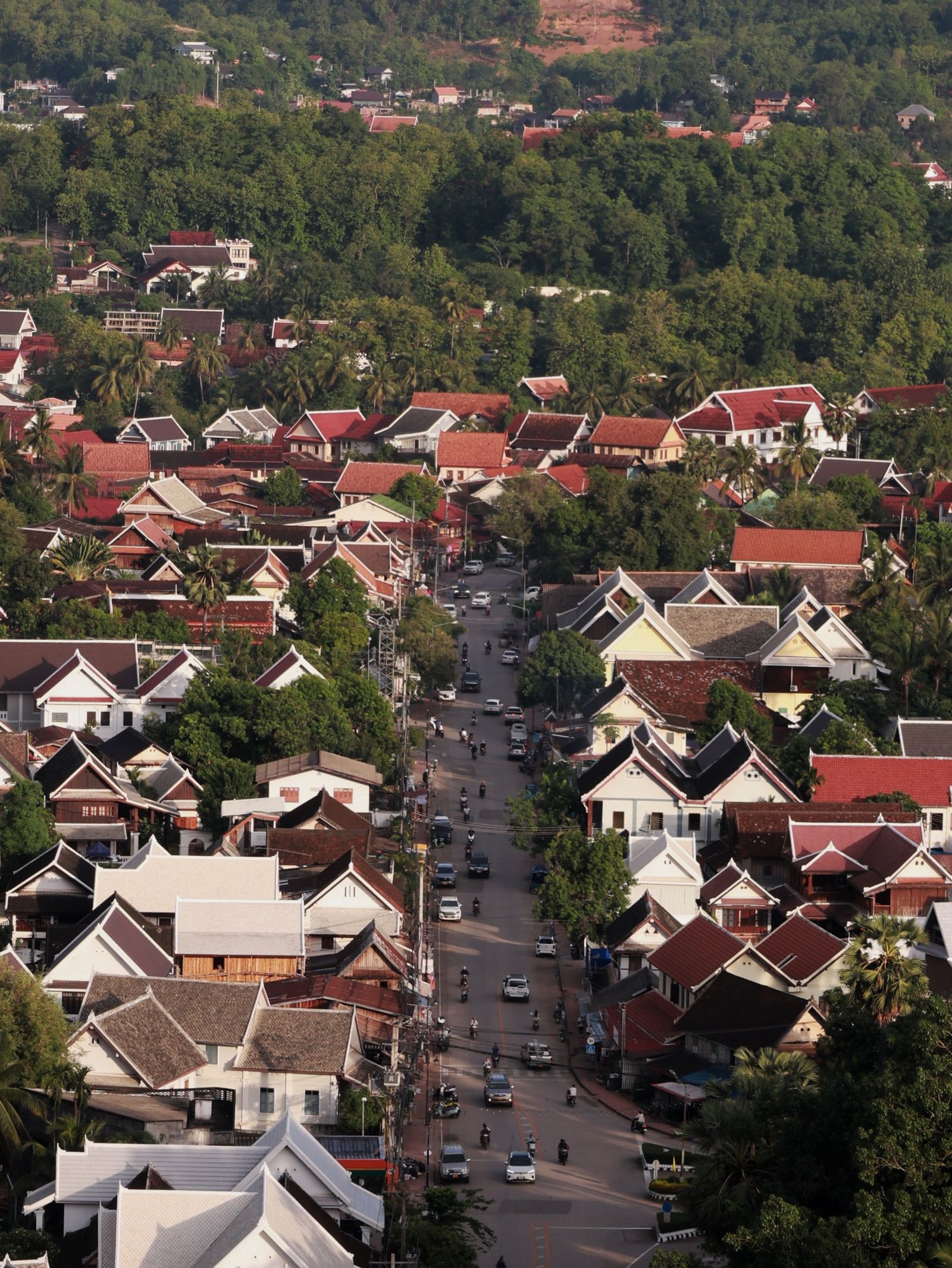
Photo: Jess Chen / Pexels
Luang Prabang’s charm is as much about rhythm as sightseeing. Mornings begin with temple bells and the soft shuffle of monks collecting alms; evenings settle into the night market’s lantern glow and the smell of grilled fish and herbs. Between those bookends, colonial-era villas, riverside cafes, and quiet wats invite wandering without a checklist. Climbing Mount Phousi for sunset is popular for a reason, yet the view from a simple Mekong cafe can feel just as memorable if you give it time.
South of town, Kuang Si Falls offers a different kind of Laos: forest paths, tiered turquoise pools, and the cool shock of water after humid temple days. Go earlier to beat the midday crowds, wear shoes with grip for wet stone, and bring a swimsuit if you want to swim in the designated pools. The surrounding reserve also shelters a bear rescue center that many travelers visit with respect and without treating the animals as entertainment.
Standout experience: A swim in the turquoise pools of Kuang Si Falls, south of town.
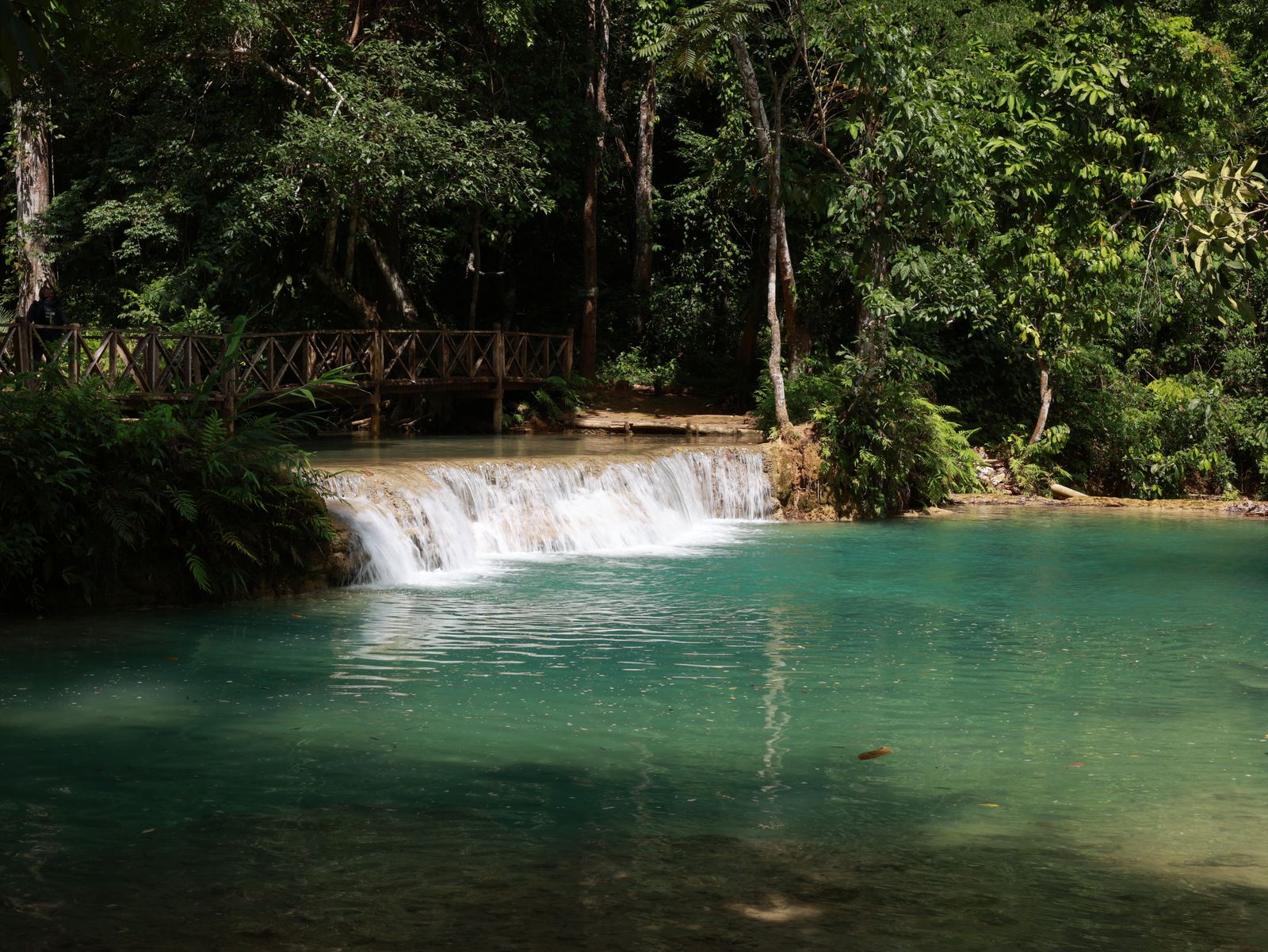
Photo: Jess Chen / Pexels
The Mekong is the thread that ties much of this itinerary together. Slow boats travel between the Thai border and Luang Prabang over two days, with simple overnight stops in riverside villages and long hours of watching limestone cliffs and fishing skiffs slide by. It is not a luxury cruise; it is a deliberate change of pace that many travelers remember as the moment Laos finally felt unhurried.
Vang Vieng offers dramatic karst scenery and gentle river adventures for those who want a more active chapter, while Vientiane adds capital-city energy around the golden Pha That Luang stupa and Patuxai monument. In the far south, Si Phan Don, the “4,000 Islands,” offers hammock days and the thundering Khone Phapheng Falls. The Plain of Jars, a UNESCO site of ancient stone jars, lies in a region heavily bombed during the Vietnam War era. Unexploded ordnance remains, so stay on cleared, marked paths and follow your guide without improvising shortcuts through fields.
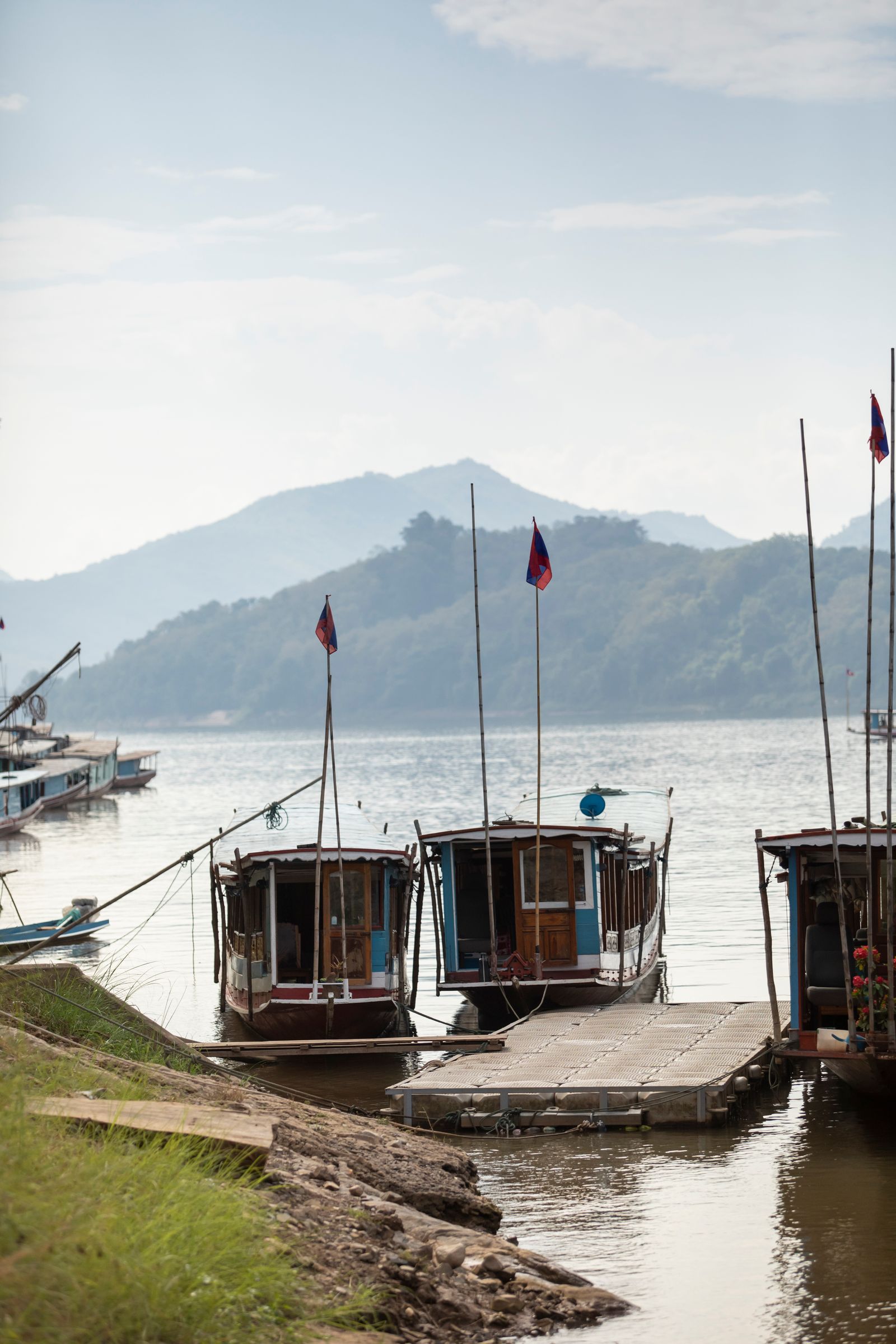
Photo: Stephen Leonardi / Pexels
Standout experience: A sunset boat ride on the Mekong in Luang Prabang.
Buddhism shapes daily life in both countries. At temples, cover your shoulders and knees, remove your shoes before entering shrines, and never point your feet at a Buddha image. Women shouldn’t touch monks. Avoid touching anyone’s head,. Try Cambodian fish amok, beef lok lak, and pepper crab in Kep. In Laos, sample sticky rice, laap (a herb-filled minced meat salad), noodle soups, and fresh baguettes, a legacy of the French era.
Yes. Both countries offer e-Visas and visas on arrival. Cambodia also requires a free e-Arrival card for air arrivals.
Three days covers the highlights at a relaxed pace.
November through February offers the most comfortable weather.
Most visits are trouble-free. Follow State Department advice, avoid border areas under advisory, and stay on marked rural paths.
Cover your shoulders and knees, and bring shoes you can remove easily.
As Fora advisors, we take care of the details for you: the right season and route, hand-picked hotels with added amenities at select properties, trusted guides, and a pace that leaves room for the unexpected.
Novera Travel will be happy to arrange your international flights when you’re traveling first class.
Call +1 33 22 NOVERA – +1 (332) 266-8372 or email info@noveratravel.com
Prefer to reach out another way? Visit our Contact page.