Turquoise lakes, glacier valleys, and wildlife-rich parkways—how we plan Banff, Lake Louise, Jasper, and daylight rail through Canada’s most iconic mountains.
Photo: James Wheeler / Unsplash
The Canadian Rockies are the postcard Canada many travelers picture first: glacier-carved valleys, lakes that look almost unreal, and elk wandering through town streets at dawn. Banff, Lake Louise, and Jasper sit inside a chain of national parks that form a UNESCO World Heritage Site, and the Icefields Parkway between them is one of the great mountain drives on the continent. Our Canada travel guide covers the whole country; this deep dive is for travelers who want the Rockies as the main event, not a single chapter.
What makes a Rockies trip feel effortless is sequencing: the right park bases, timed shuttle seats for Moraine Lake, and enough open days to wait out a cloudy morning. Summer brings long light and full trail access; late September turns subalpine slopes gold with larches; winter swaps hiking for skiing and frozen lakes. We match the season to how you like to move—by car, by public rail, or with a private driver—so the scenery stays the story.
Our take: For a first Rockies trip focused on lakes and the Icefields Parkway, aim for July through mid-September. Book late September if golden larches are the priority, and keep one flexible day for the clearest weather.
Many travelers spend several nights in Banff for restaurants and town energy, then move to Lake Louise for quieter mornings beside the water. That split keeps driving days short and lets you catch sunrise light without rushing.
A classic one-way drive links Lake Louise with Jasper through Peyto Lake viewpoints and the Columbia Icefield area. Plan a full day with frequent stops rather than treating it as a transfer.
A luxury daylight train through the Rockies travels only by day so you never miss the scenery, with an overnight hotel stay at the route midpoint. VIA Rail’s The Canadian is the classic cross-country sleeper linking Toronto and Vancouver via Jasper. We help you decide whether rail is the journey itself or a scenic chapter around park days.
A private driver makes wildlife pulls and viewpoint timing easier, especially if you prefer not to drive mountain roads yourself. Guided walks and interpretive stops deepen the parks without turning the trip into a hardcore trek.
Most US travelers fly into Calgary and drive or transfer west to Banff. Nonstop flights connect several US cities with Calgary year-round. Banff is roughly a 90-minute drive from the airport in normal conditions. At Canada’s largest airports, including Calgary, you often clear US customs before flying home, so you land in the United States as a domestic arrival.
Entry rules: US citizens do not need a visa for short tourist visits to Canada. Bring a valid passport booklet; passport cards are not accepted for air travel. We confirm documentary requirements for every trip with official sources before you depart.
Travel advisory: As of October 2026, the U.S. Department of State rates Canada at Level 1: Exercise Normal Precautions, last issued June 5, 2026. Read the full advisory on travel.state.gov and enroll in the Smart Traveler Enrollment Program (STEP) so the embassy can reach you in an emergency.
Parks Canada: A valid Parks Canada pass is required to stop in Banff, Jasper, and neighboring national parks (admission is free for youth 17 and under). Private cars cannot use Moraine Lake Road at any time of year; access is by Parks Canada shuttle, Roam public transit from Banff, or a licensed tour. Shuttle seats sell out—book the moment reservations open.
Grand railway-era properties anchor Banff and Lake Louise with lake or peak views. They suit special occasions and travelers who want history with their scenery.
Newer lodges and inns emphasize floor-to-ceiling windows, spa facilities, and easy trail access. Ideal if you want modern comfort without a downtown setting.
Staying in Banff puts restaurants, galleries, and Roam transit within walking distance. Good when you want evenings with options after full park days.
Bases nearer Lake Louise trade nightlife for quieter mornings and shorter hops to Moraine Lake shuttles and high trailheads.
Jasper townsite and nearby park lodgings put you at the north end of the Icefields Parkway with a more low-key feel than Banff.
Advisor tip: When you book through Novera Travel, we can often add amenities at select partner properties—daily breakfast, room upgrades when available, property credits, and welcome amenities. Ask us which partners fit your dates.
Banff became Canada’s first national park in 1885 after railway workers found hot springs on Sulphur Mountain, and the town still sits in a bowl of peaks that feel close enough to touch. Mornings often start with elk grazing near the river; evenings bring a walkable main street of cafés and galleries. Vermilion Lakes, just west of town, are a favorite calm-water reflection of Mount Rundle at sunrise or dusk when the wind drops.
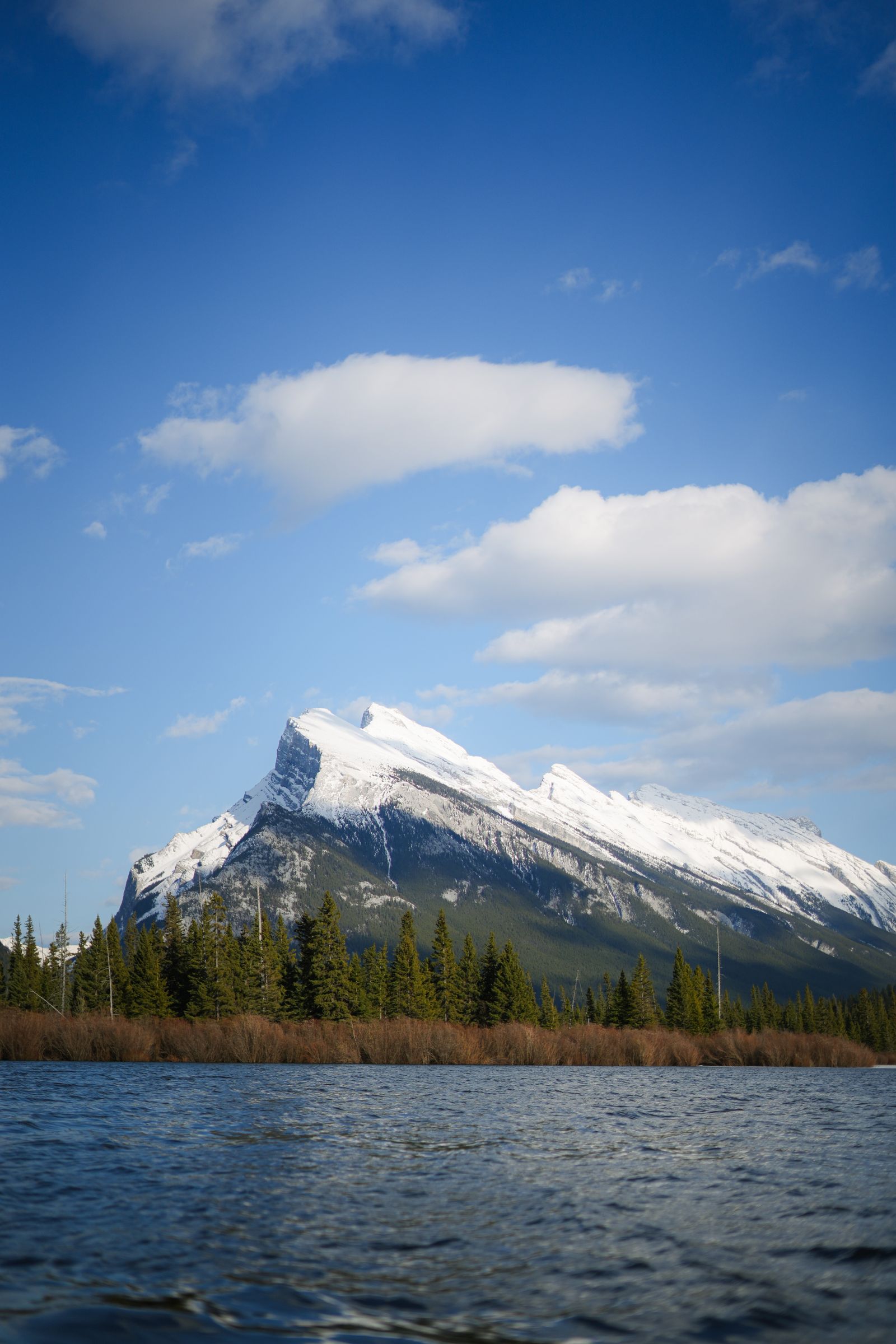
The town works as a hub because Roam public buses, walking paths, and short drives reach trailheads without forcing every day into a long transfer. Ride the Sulphur Mountain gondola for a panorama, or soak in the historic hot springs after a hike. Wildlife is part of daily life here—keep distance, never feed animals, and pull fully off the road if you stop for photos. Banff rewards lingering: one day for town and lakes, another for a longer trail such as Johnston Canyon or a meadows walk when snow has melted.
We usually suggest at least three nights if Banff is your first Rockies base, so you have a weather buffer and time for both popular viewpoints and quieter hours. Summer evenings stay bright late; winter evenings invite a slow dinner after a ski day. Either way, treat Banff as a living mountain town rather than a single postcard stop, and the rest of the parks will feel less rushed.
Lake Louise is the Rockies’ most famous shoreline: a turquoise basin backed by Victoria Glacier and a ring of peaks that change color with the light. The lakeside path is gentle enough for almost any traveler, while steeper trails climb to teahouse viewpoints above the valley. Arrive early in summer; the parking and path fill quickly once tour buses arrive.
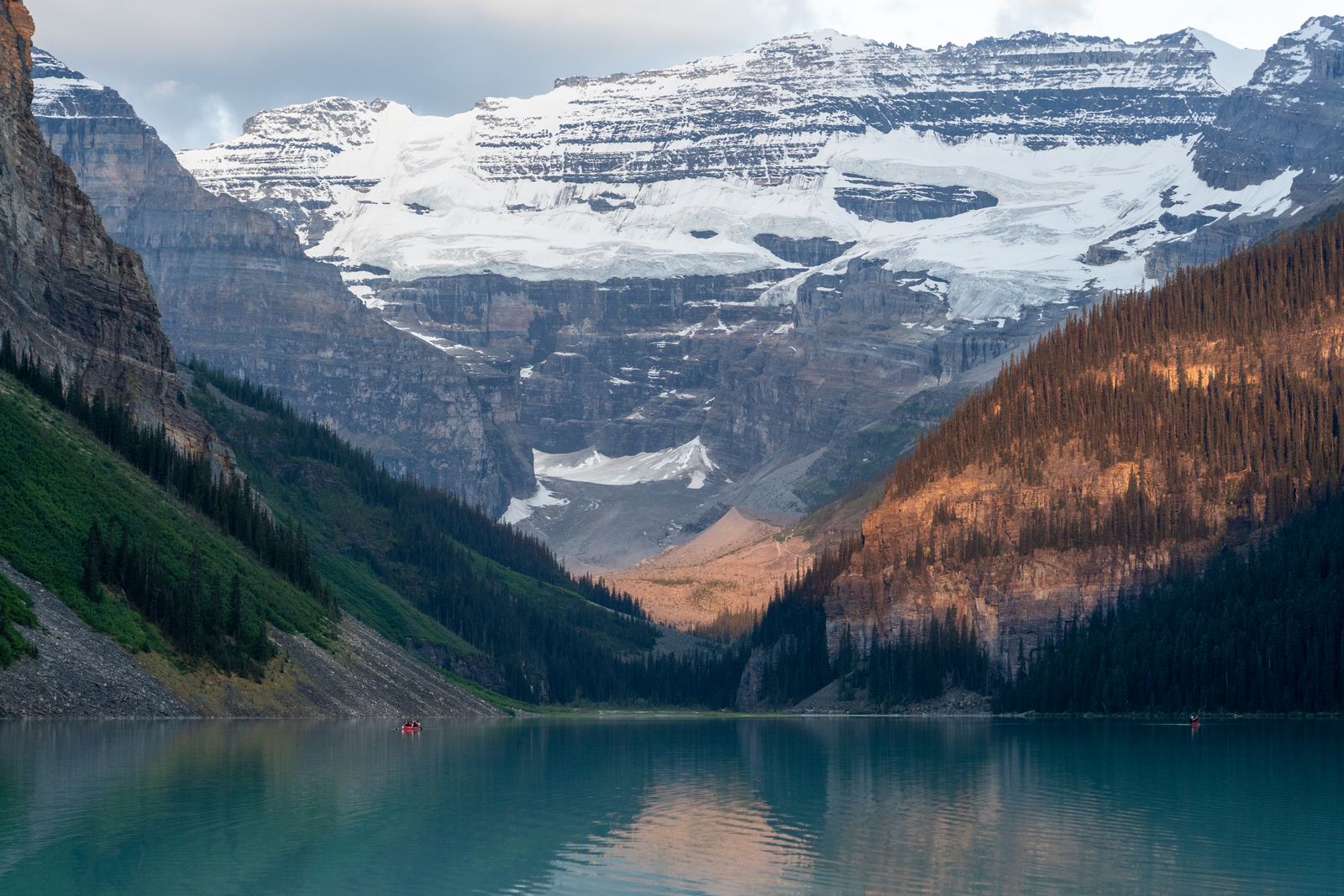
The color comes from rock flour—fine silt ground by glaciers that suspends in the water and reflects blue and green wavelengths. That same geology shapes Moraine Lake and Peyto Lake farther along the parkway. In shoulder season, mornings can be glassy and almost empty; in peak summer, plan shuttles and timed arrivals so the experience stays serene. Pair Lake Louise with a canoe paddle on a calm afternoon if conditions allow, or simply sit with coffee and watch the light move across the cliffs.
Food and lodging cluster near the lake and along the access road, so you can spend a full day without returning to Banff. Photographers chase blue-hour reflections; hikers head for Lake Agnes or the Plain of Six Glaciers. However you use the day, build in time to simply look—Lake Louise earns its reputation when you are not racing the next stop.
Moraine Lake, in the Valley of the Ten Peaks, is a tighter, more dramatic bowl a short hop from Lake Louise. The rockpile viewpoint looks across a string of summits that have defined Canadian tourism posters for generations. Private vehicles cannot drive Moraine Lake Road year-round, so access depends on Parks Canada shuttles, Roam service from Banff, or licensed tours—book early and treat the reservation like a flight. Even with the logistics, the deeper turquoise water and short shore trails make it worth the planning. We coordinate shuttle timing with your base so you are not left waiting for the last bus, and if seats are scarce we arrange licensed alternatives or other alpine lakes so the trip never hinges on a single shoreline.
The Icefields Parkway between Lake Louise and Jasper is roughly 230 kilometers of continuous mountain theater: hanging glaciers, roadside waterfalls, and pullouts that beg for unscheduled stops. Peyto Lake’s crow’s-nest viewpoint is a classic early stop, with a glacier-blue bowl that photographs beautifully on clear mornings. Farther north, the Columbia Icefield area brings the Athabasca Glacier close to the highway. Plan a full day, pack snacks, and never rush wildlife crossings.

Photo: Paul Crook / Unsplash
Driving the parkway yourself gives maximum flexibility for lingering at Peyto and unnamed pullouts when the light is right. A private driver removes the stress of mountain traffic and parking at popular viewpoints while you watch for bighorn sheep on the cliffs. Cell service drops out in stretches, so download maps offline and fuel up before you leave Lake Louise or Jasper. Summer brings the most open services; winter and early spring can close sections after storms—always check Parks Canada road conditions the morning you depart.
Peyto’s overlook can feel crowded at midday in July, so we aim for an early arrival when the water still holds a deep cobalt tone and the boardwalk is quieter. Bring a wind layer even on sunny days; the exposed viewpoint catches cold air sliding off the icefield. Families appreciate that the walk from the parking pullout is short, while photographers linger for cloud breaks that suddenly light the peaks. It is a small stop on the map and a lasting memory once you have stood above that improbable blue.
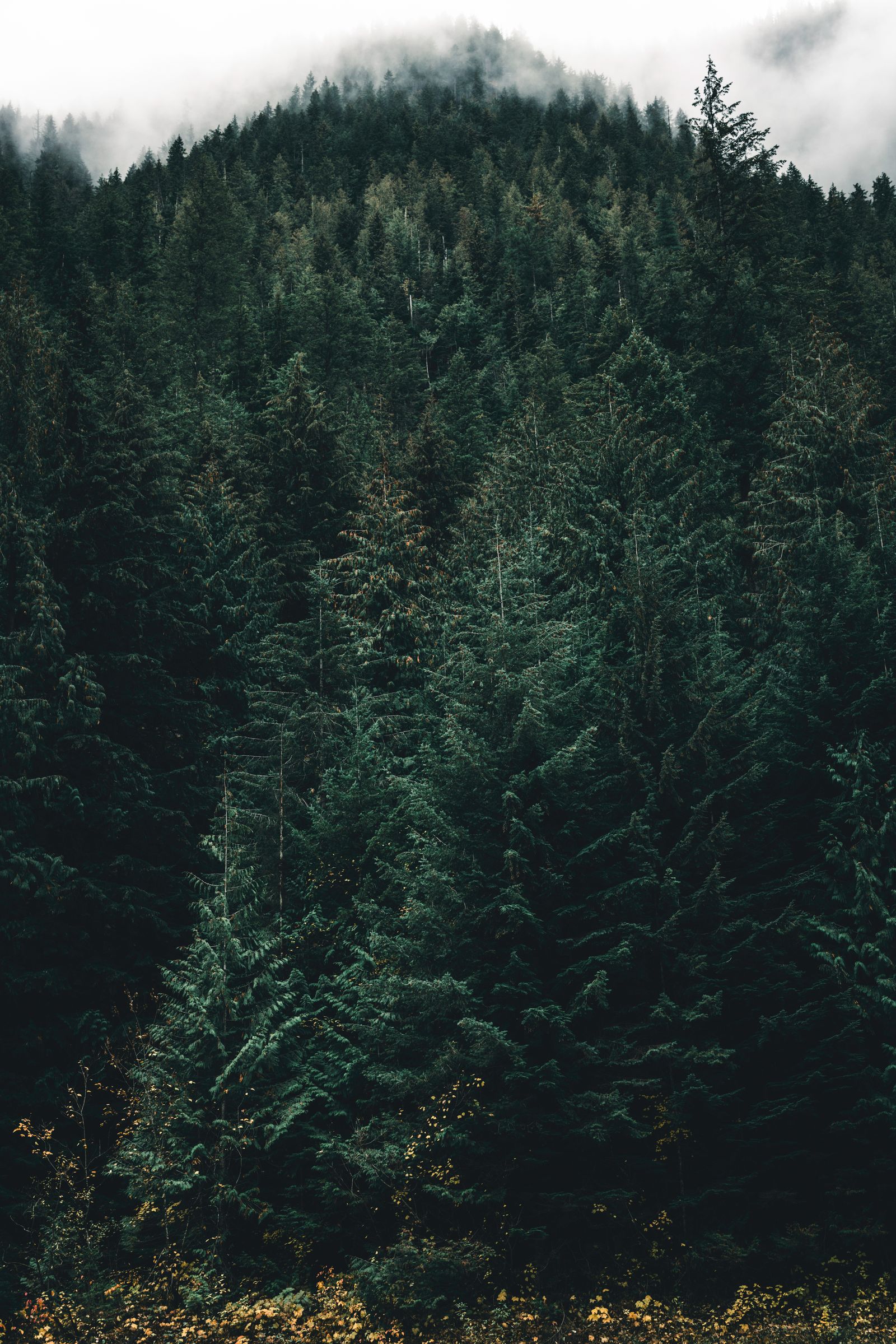
The highway itself is part of the show: every few kilometers the geology shifts from hanging ice to braided river flats to avalanche paths that remind you how alive these slopes are. Pullouts appear often enough that you can stop without blocking traffic, yet not so often that the drive fragments into a checklist. Bring a simple lunch, fill the tank before you leave, and keep conversations soft when you step out near sheep or goats on the cliffs. The best parkway days feel unhurried even when the itinerary looks long on paper.
We usually overnight in Jasper after a south-to-north run so you arrive with daylight to spare for a short town walk or a late viewpoint. Heading northbound often puts afternoon light on east-facing walls; starting early from Jasper and running south can be just as beautiful when morning mist sits on the lakes. Either direction, treat the parkway as a destination day rather than a hotel transfer, and the Rockies will reward the slower pace.
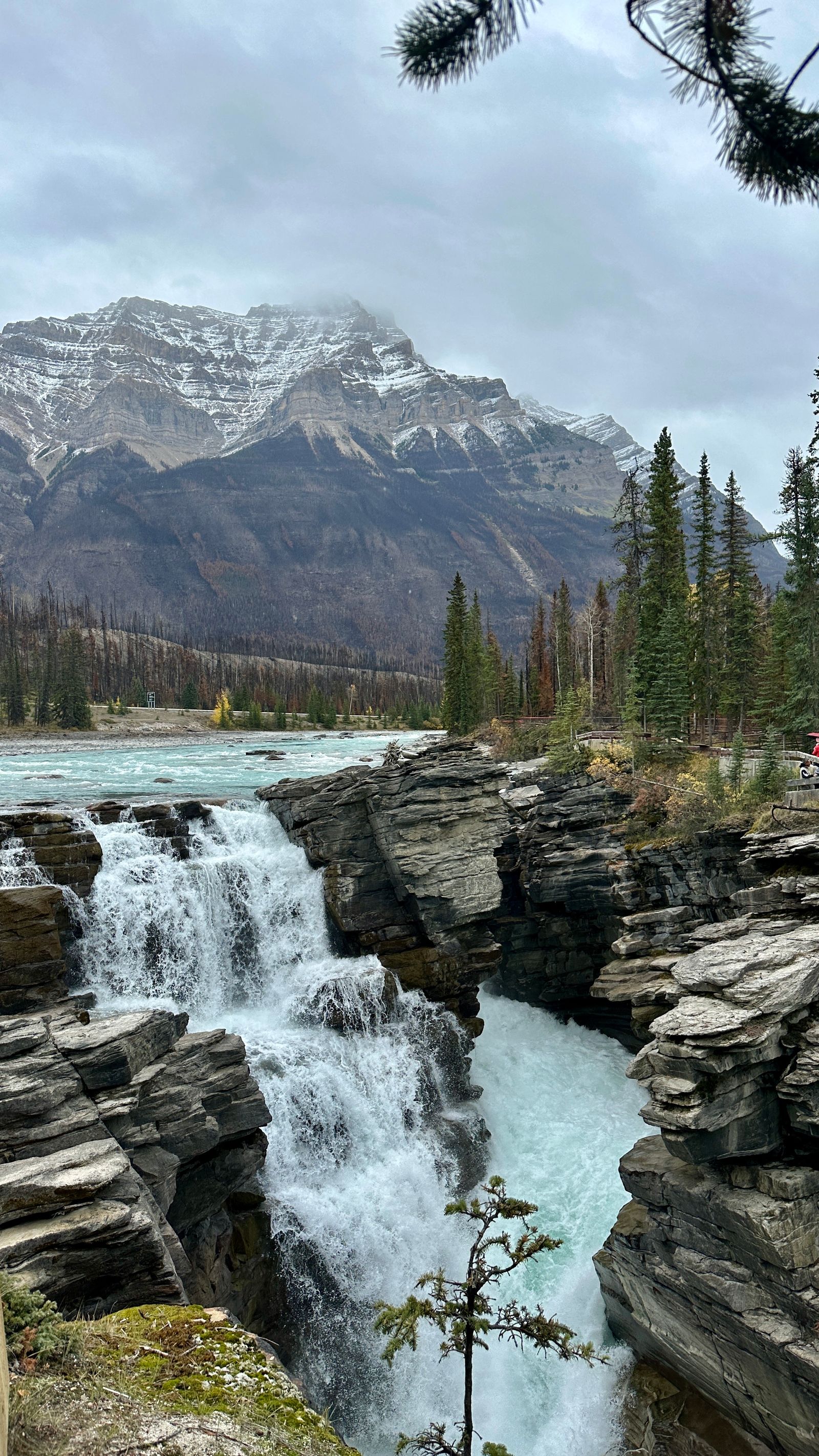
Jasper feels larger and quieter than Banff, with a smaller townsite and wide valleys that open toward the north. Maligne Lake, with its mountain reflections and boat access toward Spirit Island viewpoints, is a signature day. Athabasca Falls thunders through a narrow canyon of limestone a short drive from town, and the surrounding forest walks are gentle enough after a long parkway drive.
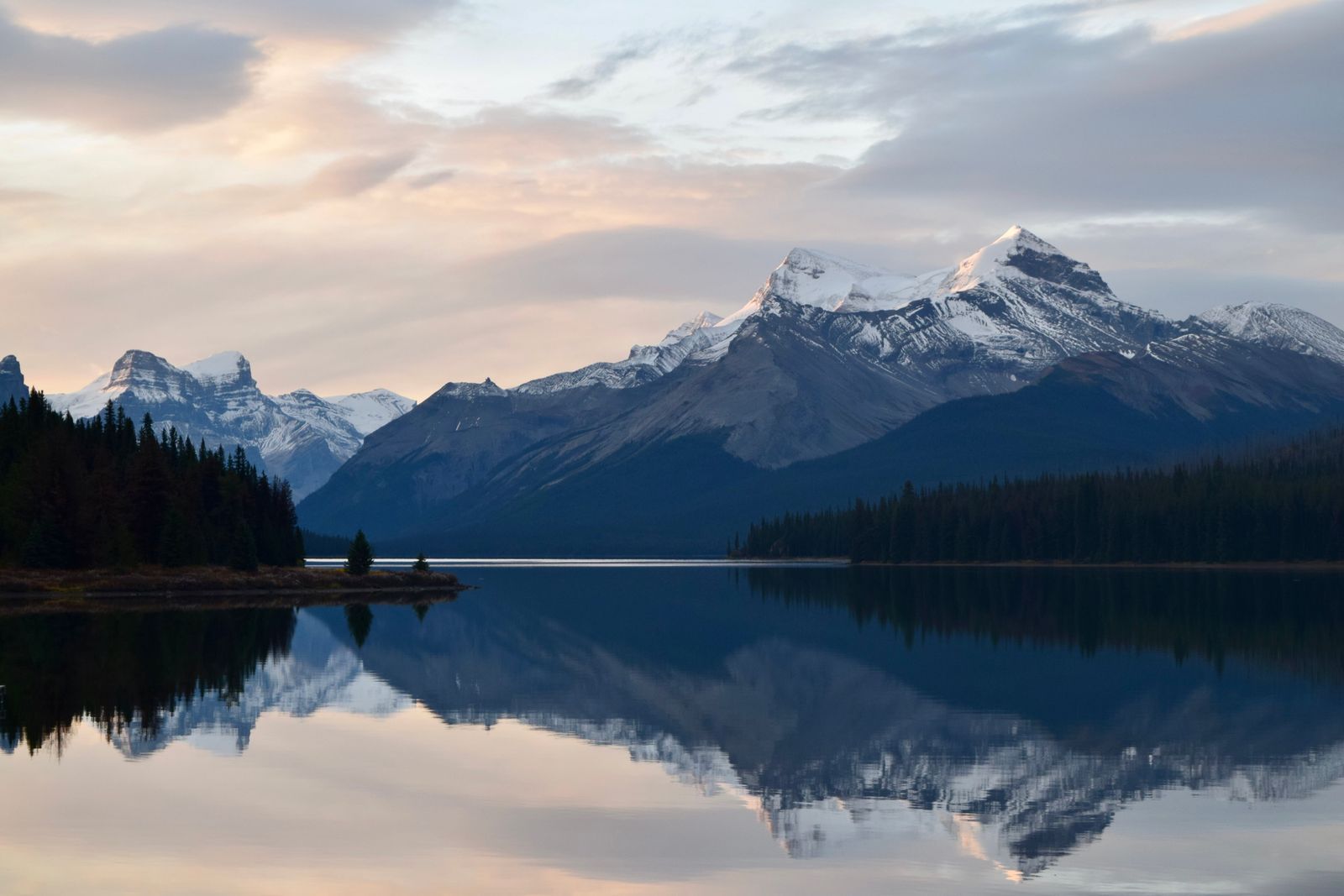
Photo: Léa Mei Chicoine / Pexels
Jasper’s townsite reopened after the 2024 wildfire, and most of the park is open again, though some areas may remain closed seasonally—we verify current closures when we build your dates. Evenings here are low-key: a walk along the river, a simple dinner, and a dark sky if you stay up for stars. Wildlife viewing can be excellent along Maligne Road at dawn and dusk; keep binoculars ready and stay in your vehicle when animals are near the shoulder. The quieter pace is deliberate: after Banff’s bustle, Jasper is where many travelers finally feel the Rockies’ scale without watching the clock.
Athabasca Falls sits a short drive south of town, where the Athabasca River funnels into a narrow limestone canyon with spray that hangs in the air on cool mornings. Boardwalks and viewpoints make the power of the water easy to appreciate without a technical hike, and snowcapped peaks often frame the upper valley beyond the gorge. Pair the falls with a gentle forest walk or a picnic pullout on the return toward town. It is a perfect half-day when you want drama without another long transfer, and it rounds out a Jasper stay after Maligne Lake’s calmer reflections.
Two or three nights in Jasper balance Banff’s busier energy and give you time for Maligne Lake, Athabasca Falls, and a recovery morning after the parkway. If you arrive by VIA Rail, Jasper is a natural Rockies gateway before or after a park road trip. Either way, Jasper is where the Rockies stretch out and breathe, with evenings that invite a slow river walk instead of another packed schedule. We like leaving one unscripted afternoon here so you can revisit a favorite pullout or simply watch the weather move across the ridges.
Larches are conifers that drop their needles after a brief golden blaze each autumn, unlike the evergreens that stay dark all year. In the high meadows around Banff and Lake Louise—Larch Valley above Moraine Lake and Sunshine Meadows among them—that color show often lasts only a couple of weeks, usually peaking in late September. Photographers and hikers plan entire trips around those days, treating the gold slopes as the reason to choose shoulder season over peak summer crowds.

Photo: Nunzio Guerrera / Unsplash
Because peak color depends on elevation and overnight temperatures, we keep late-September itineraries flexible: an early start on the clearest morning, warm layers, and a backup lower-elevation walk if cloud sits on the summits. Trails can be icy in the shade even when valleys feel mild. If larches are your priority, say so when we plan—dates, shuttle capacity, and lodging demand all tighten in that short window, and a well-timed trip is dramatically better than a near miss.
Layers are everything: a waterproof shell, insulating midlayer, and moisture-wicking base, even in July. Sturdy walking shoes or light hikers with grip, sun protection for glacier glare, a refillable bottle, and a compact daypack for parkway stops. In fall and winter, add insulated gloves, a warm hat, and traction aids for icy paths. Binoculars enrich wildlife watches; a dry bag protects camera gear in spray near falls.
Late June through mid-September for open lakes and hiking; late September for golden larches; winter for skiing and quieter towns.
No visa is required for short tourist visits. Bring a valid passport booklet for air travel. Confirm current rules before you go.
Five to seven days cover Banff and Lake Louise well. Allow eight to twelve to add Jasper and the Icefields Parkway, longer if you include rail.
As of October 2026, the U.S. State Department advisory for Canada is Level 1: Exercise Normal Precautions (issued June 5, 2026). Read the full advisory on travel.state.gov and enroll in STEP. Mountain weather, wildlife, and road conditions are the practical risks we plan around.
No. Private vehicles are not allowed on Moraine Lake Road year-round. Use a Parks Canada shuttle, Roam transit, or a licensed tour, and reserve early.
Both if you can. Banff and Lake Louise are more iconic and busier; Jasper is quieter and pairs naturally with the Icefields Parkway.
Yes if you enjoy scenery without driving. Daylight mountain trains maximize views; VIA Rail’s The Canadian suits travelers who want overnight rail as part of a longer Canada itinerary.
The right park bases, shuttle timing, and a route matched to the season—planning all that is our specialty. As independent affiliates of Fora Travel with IATAN accreditation, the Novera Travel team will match you with the right lodges and itinerary, look for added amenities at select properties, and arrange park logistics, private guides, and rail segments that fit how you like to travel.
Novera Travel will be happy to arrange your international flights when you’re traveling first class.
Call +1 33 22 NOVERA – +1 (332) 266-8372 or email info@noveratravel.com
Novera Travel is an independent travel advisor of Fora Travel.