Turquoise lagoons, volcanic peaks, overwater stays and the living heritage of Polynesian culture.
Photo: Damien Chaudet / Unsplash
Few places live up to the picture in your mind the way French Polynesia does. Its islands and atolls are scattered across a stretch of the South Pacific roughly the size of Western Europe, grouped into five archipelagos: the Society Islands, the Tuamotus, the Marquesas, the Australs and the Gambier. They range from the soaring green peaks of Moorea and Bora Bora to low coral rings where the lagoon seems to glow from within. Add a culture rich in music, dance, tattoo art and hospitality, and you have one of the world’s great romantic escapes.
What we tell our clients is that French Polynesia rewards thoughtful planning. The islands are far apart, each has its own personality, and the right combination makes all the difference. A honeymoon might pair Moorea’s hiking and lagoon life with the overwater calm of Bora Bora, while divers head for the great passes of the Tuamotu atolls and culture lovers make the long journey to the Marquesas. Whatever the style, the pace slows the moment you step off the plane into the warm, flower-scented air.
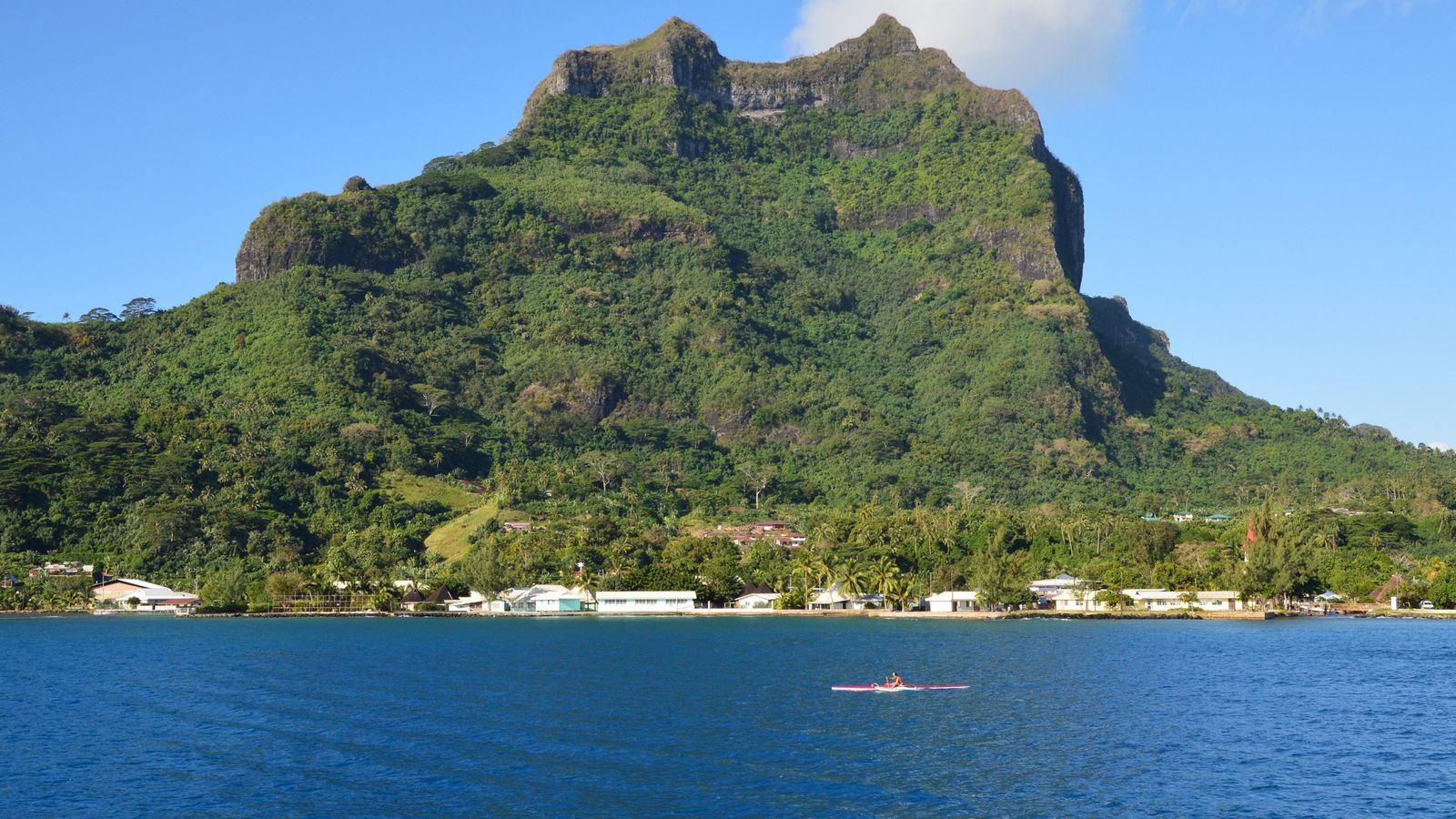
Photo: Sergey Guk / Pexels
French Polynesia is an overseas collectivity of France, and that dual identity shapes everyday life. Baguettes arrive at village shops each morning, gendarmes keep order and French is the language of school and government, yet Tahitian and the other Polynesian languages are heard everywhere, from church choirs to market stalls. Families gather on Sundays for long meals, outrigger canoe crews train at dawn in the lagoons, and the rhythm of island life follows the weather and the sea far more than the clock.
The landscapes divide neatly into two types. The high islands, such as Tahiti, Moorea, Bora Bora, Raiatea and the Marquesas, are the eroded tops of ancient volcanoes, cloaked in rainforest and cut by waterfalls. The atolls, most of them in the Tuamotus, are what remains when a volcano has sunk away entirely, leaving a ring of coral islets around a shimmering lagoon. Most memorable trips include at least one of each, because the contrast between jungle-clad peaks and flat, endless blue is part of the magic.
French Polynesia is warm all year, so the real question is how much rain and humidity you are happy to trade for quieter islands. The dry season runs roughly from May to October, when trade winds keep evenings comfortable, skies are mostly clear and the lagoons are at their most photogenic. July and August are the busiest months, partly because of European and North American school holidays and partly because of the Heiva, so the most sought-after overwater rooms and inter-island seats go early.
The wet season, from about November to April, is hotter and more humid, with heavy tropical showers that often pass within an hour or two. The islands are at their most lush, waterfalls run strong on Tahiti and Moorea, and there is more breathing room on the beaches. This is also the period when tropical storms are possible, so we build some flexibility into wet-season itineraries, especially for travelers combining several islands with tight connections.
Whale season is one of the most moving reasons to choose your dates carefully. Humpback whales migrate north from Antarctic waters to mate and give birth in the sheltered lagoons and coastal waters, typically arriving around July and staying until about November. Mothers and calves are often seen off Moorea and Tahiti, while the remote island of Rurutu in the Australs is especially known for encounters. The whole territory is a protected sanctuary for marine mammals, and approaches are regulated, so always go out with a licensed local guide.
Our take: May, June, September and October are our favorite months. You get dry-season weather with a little more breathing room than midsummer, and in September and October you may share the lagoon with whales.
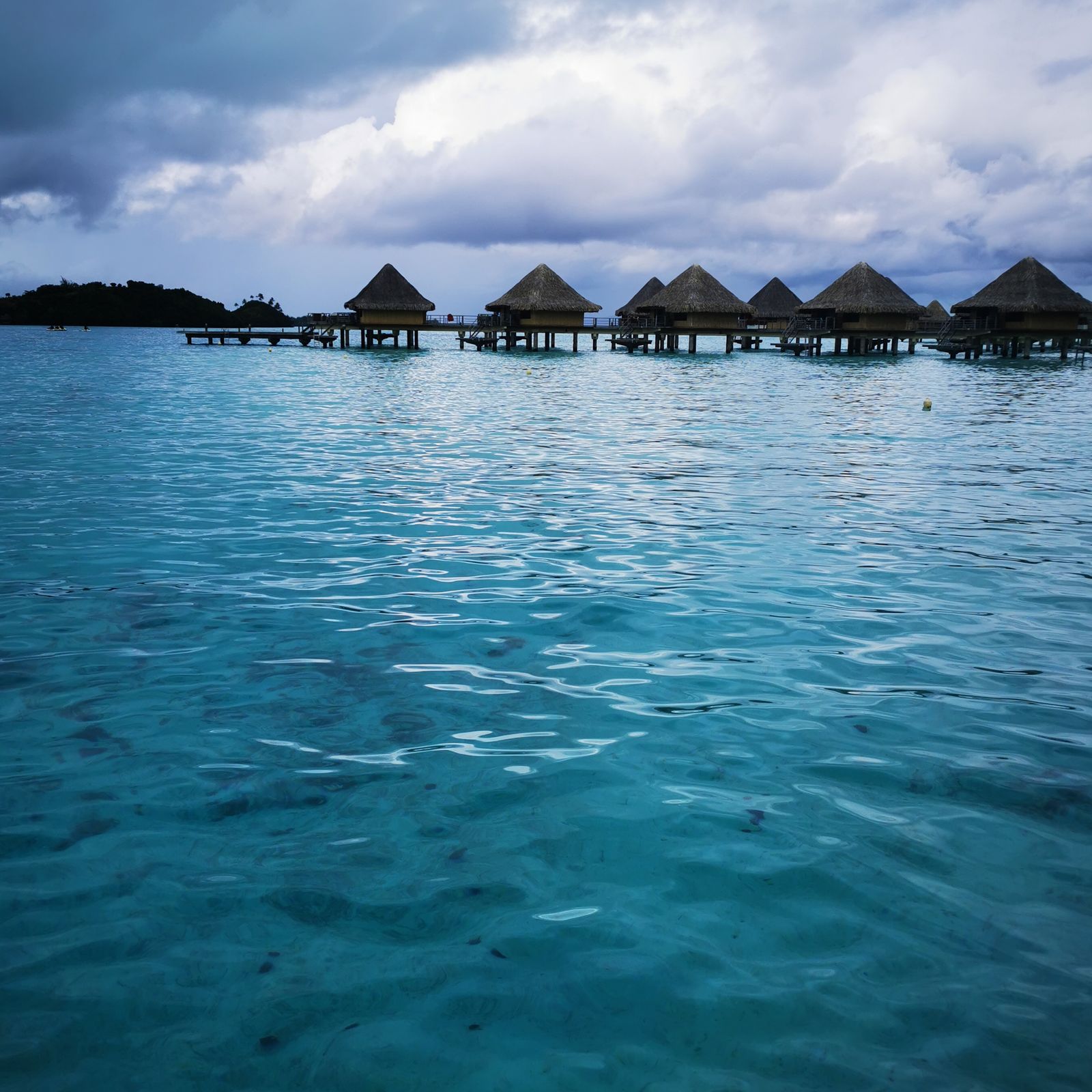
Photo: Ye-on Vaitia / Pexels
Island-hopping is the classic approach. Most travelers fly into Papeete, spend a night or two on Tahiti, then continue to two or three more islands with three to five nights on each. Moorea is a short ferry crossing or quick flight away, while Bora Bora, Raiatea, Taha’a, Huahine and the atolls are linked by a network of inter-island flights. A popular honeymoon route runs Tahiti, Moorea, then Bora Bora, ending with the most dramatic lagoon of all, while divers often swap one of the high islands for Rangiroa or Fakarava.
Sailing is the other great way to experience the Society Islands. Raiatea and Taha’a share a single protected lagoon, which makes them a natural base for crewed or bareboat catamaran charters that continue on to Huahine and Bora Bora. Small expedition-style ships and passenger-carrying supply vessels also cruise the Society Islands, the Tuamotus and the Marquesas, letting you unpack once while waking up somewhere new. For dedicated divers, liveaboard boats in the Tuamotus are built around the tides and the famous passes.
Most travelers arrive at Faa’a International Airport on Tahiti, just outside Papeete, which has nonstop service from the U.S. West Coast. From there, Moorea is reached by ferry or a short hop, and every other island is reached by inter-island flight or by sea. Inter-island aircraft are small and baggage allowances are often stricter than on long-haul flights, so we plan routings that keep connections easy and luggage light. Remember that the islands sit in different time zones from the mainland United States, and the Marquesas run half an hour ahead of Tahiti.
Although French Polynesia belongs to France, its entry rules differ from those of mainland France and the Schengen area. The territory’s own State services note that residence permits issued outside French Polynesia do not grant the right to enter, and that visa-exempt visitors may stay up to three months in any six-month period. U.S. citizens do not need a visa for a short tourist stay, but passport and document requirements can change, so confirm the current rules for your trip on travel.state.gov before you go. There is no U.S. embassy in the islands; a U.S. consular agent in Punaauia on Tahiti assists citizens, with the U.S. Embassy in Suva, Fiji, responsible for the territory.
Travel advisory: The U.S. State Department publishes a separate advisory for French Polynesia, currently Level 1: Exercise Normal Precautions, reissued on December 2, 2024 after a periodic review without changes. Mainland France carries its own Level 2 advisory, last issued May 28, 2025, for terrorism and civil unrest; that advisory does not name French Polynesia. Read the full advisory on travel.state.gov and enroll in the Smart Traveler Enrollment Program (STEP) before you travel.
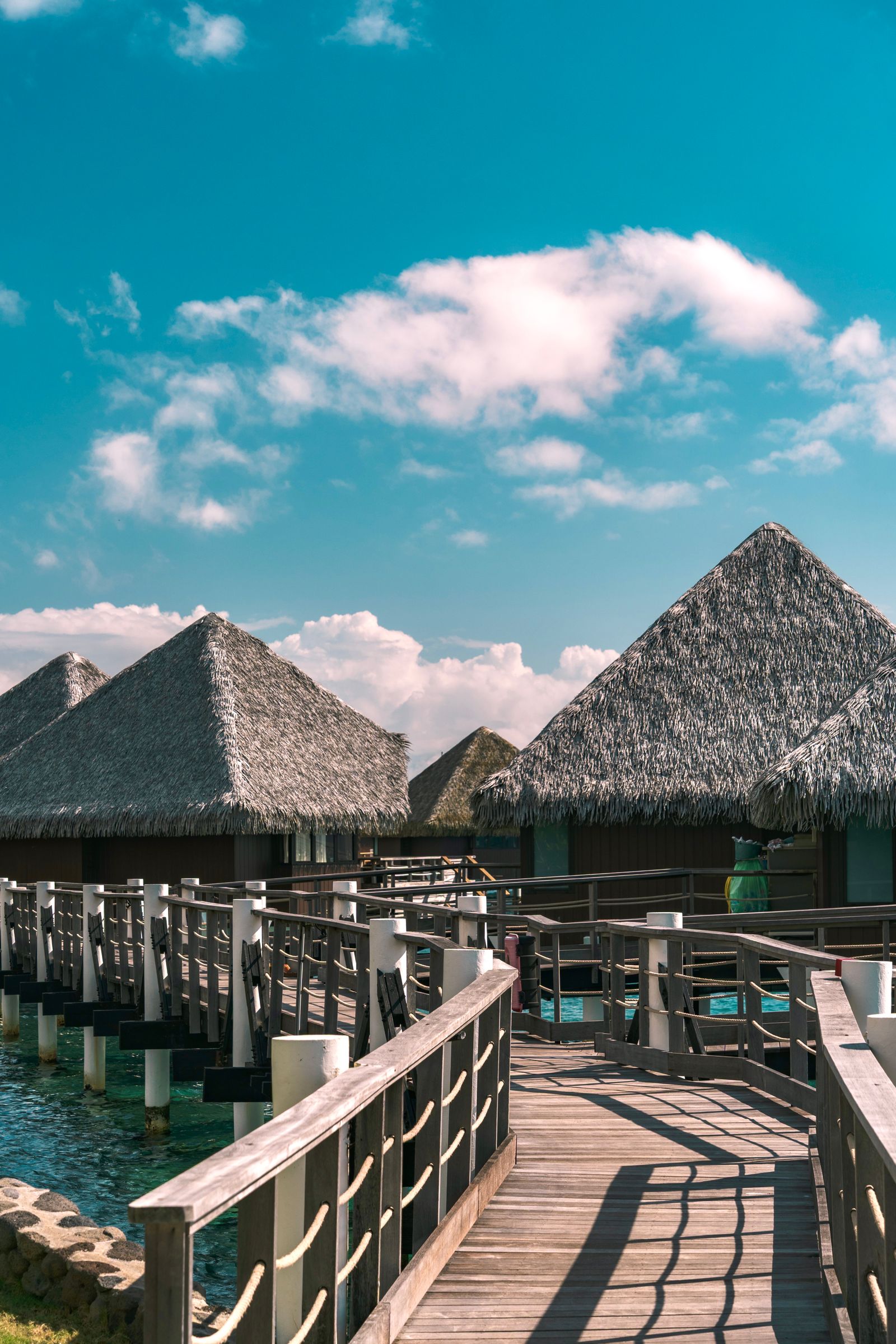
Photo: Adrien Daurenjou / Pexels
The overwater bungalow was popularized in French Polynesia, and staying in one remains the signature experience. Picture a thatched room on stilts above the lagoon, often with a glass floor panel for watching fish, a private deck with a ladder straight into the water, and sunrise light bouncing off the ceiling. Bora Bora and Moorea have the widest choice, while Taha’a, Tikehau and Rangiroa offer quieter versions. We match clients to the right category, since lagoon-facing, mountain-view and end-of-pontoon positions can feel very different.
Not every night needs to be over the water. Beach and garden villas with plunge pools suit families and travelers who want more space, and some of the most memorable stays are on private motus reached only by boat. For a more personal side of the islands, family-run guesthouses, known locally as pensions, offer home cooking and genuine hospitality on Huahine, the Tuamotus and the Marquesas. On the remote islands, simple lodges are often the only option, and their warmth more than makes up for any lack of polish.
Tahiti is the largest island and the cultural heart of the territory, so give it at least a night rather than treating it as a transit stop. Papeete, the capital, is a lively harbor town best explored on foot in the early morning. The covered central market, busiest early on weekend mornings, overflows with tropical fruit, fresh fish, vanilla pods, flower garlands, woven hats and pareos. As evening falls, food trucks known as roulottes gather on the waterfront, serving everything from poisson cru to crêpes.
Every July, Papeete hosts the Heiva, a festival with roots in nineteenth-century celebrations that has become a showcase for Polynesian culture. Dance troupes spend months rehearsing thundering drum performances and elaborate costumes of feathers, shells and plant fibers, while traditional sports include outrigger canoe racing, fruit-carrier races and stone lifting. Beyond town, the island loops around rugged black-sand coasts to Teahupo’o, whose famously heavy reef wave hosted Olympic surfing in 2024, and inland to the deep Papenoo Valley, best explored on a guided four-wheel-drive excursion past waterfalls and ancient marae.
Tahiti is also where Paul Gauguin’s Polynesian story began. The painter arrived in 1891 hoping to find an unspoiled paradise and spent most of the following decade on the island, creating the vivid canvases of island life that made him famous long after his death. His romantic vision was partly invented, and today historians view his time here with a more critical eye, but standing on the south coast at sunset it is easy to understand why the light and color captivated him.

Photo: Justin Hu / Unsplash
Just across the channel from Papeete, Moorea feels wilder and more relaxed than its busy neighbor. Its heart-shaped outline is dominated by jagged volcanic peaks and two deep bays, Cook’s Bay and Opunohu Bay, separated by the sharp ridge of Mount Rotui. Drive or hike up to the Belvedere lookout for the classic view over both bays, then wander through the Opunohu Valley, where pineapple fields give way to forest and restored stone marae. The island’s one coastal road makes it easy to explore by car, scooter or electric bike.
The lagoon is the other half of Moorea’s appeal. Outrigger canoes glide over shallow sandbars where rays gather and black-tip reef sharks cruise harmlessly past snorkelers, and boat trips stop at small motus for a picnic and a swim. From roughly July to November, licensed guides head out to look for humpback whales along the outer reef, a highlight that leaves many travelers speechless. Because the island is so close to Tahiti, it also makes a great first stop to shake off jet lag before continuing to the Leeward Islands.

Photo: Remy Hellequin / Unsplash
Bora Bora’s lagoon is the stuff of legend, with layers of blue from pale aquamarine to deep sapphire wrapped around the twin summits of Mount Otemanu and Mount Pahia. A barrier reef dotted with motus encircles the main island, and that ring of islets is where most overwater stays are found, gazing back across the water at the mountain. The main village, Vaitape, has a handful of shops, pearl boutiques and churches, while a coastal road circles the island past beaches and quiet villages.
The best way to understand Bora Bora is from the water. A private lagoon tour by small boat might combine snorkeling in a coral garden, swimming with rays over white sand, and a picnic lunch on a motu with the mountain as your backdrop. Back on land, a guided four-wheel-drive excursion climbs to old lookouts and relics from the Second World War, when American forces built a supply base here and the first airstrip on a northern motu. Sunset cruises and outrigger paddling round out lazy days spent between deck, lagoon and spa.

Photo: François Balédent / Pexels
Lagoons are the beating heart of island life in French Polynesia. Sheltered by the reef from the ocean swell, they form warm, shallow nurseries where coral heads rise like underwater gardens and parrotfish, butterflyfish, triggerfish and giant clams go about their business in water clear enough to see from the surface. Families fish from small boats, children learn to paddle almost as soon as they can walk, and outrigger canoe racing is followed with the kind of passion other places reserve for football.
The best way to enjoy the lagoon is gently. Drift-snorkel with a guide over coral gardens, paddle a clear kayak along the reef, or visit a pearl farm to see how black-lip oysters produce the dark, lustrous Tahitian pearls the islands are known for. Wear reef-safe sunscreen, never stand on coral and keep a respectful distance from rays, sharks and turtles. Our advisors can arrange private lagoon days with local guides who share the legends, place names and fishing traditions behind every motu.
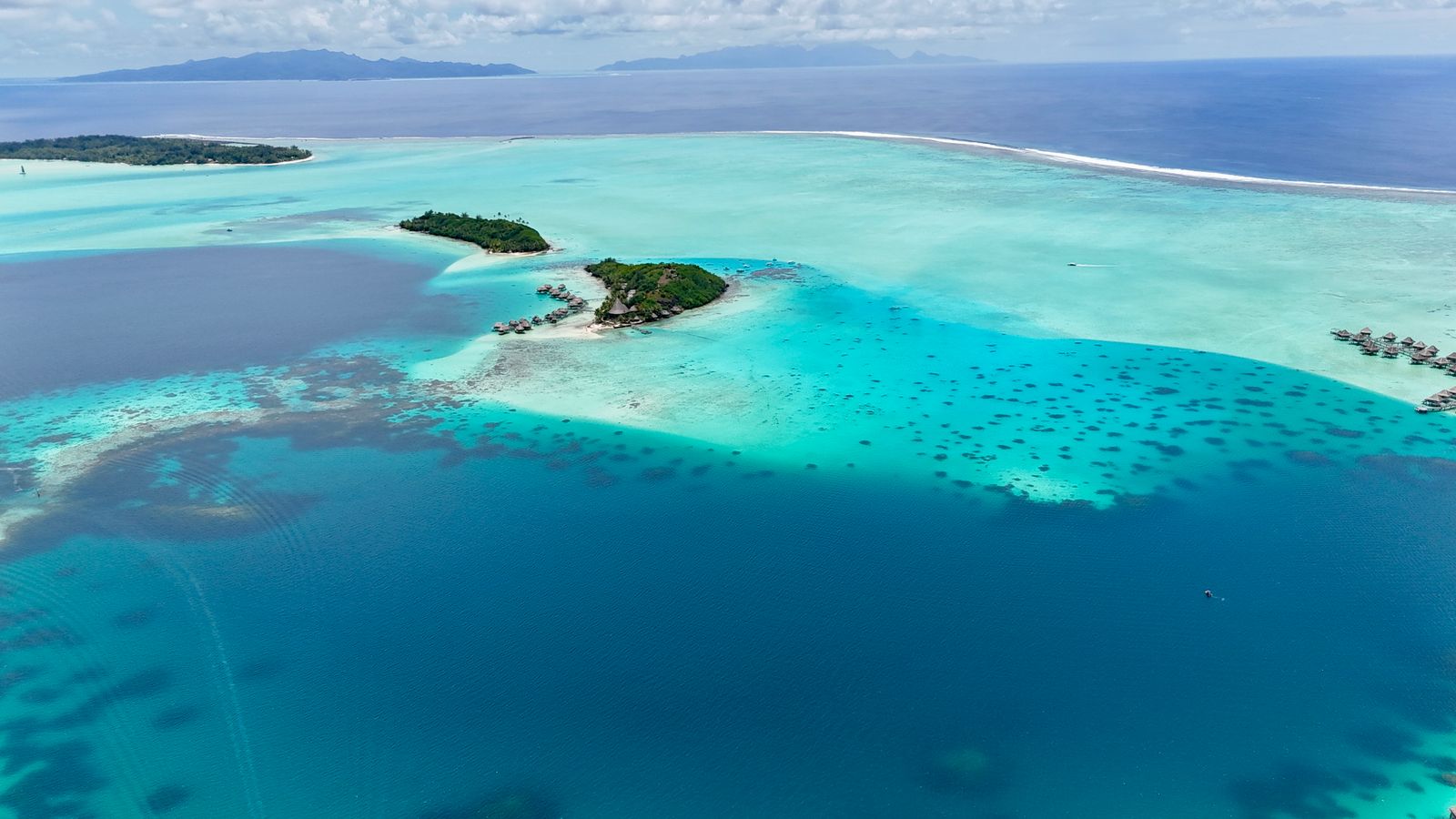
Photo: François Balédent / Pexels
The quieter Leeward Islands are where many travelers fall hardest for French Polynesia. Raiatea is considered the ancestral homeland of Polynesian culture, and its Taputapuātea marae complex, a vast ceremonial site of stone platforms facing the sea, was inscribed as a UNESCO World Heritage site in 2017. Voyaging canoes once set out from here for distant islands, and the site remains deeply sacred, so visit with a local guide who can explain its meaning and the protocols that go with it.
Taha’a, which shares a lagoon with Raiatea, is known as the vanilla island, and the scent of curing pods drifts from family plantations along its coastal road. Visit a vanilla farm and a pearl farm, then drift-snorkel the coral garden between two motus as the current carries you over shoals of fish. Huahine, often described as the most authentic of the Society Islands, has small villages, the restored marae of Maeva beside a tranquil lake, sacred blue-eyed eels in the stream at Faie, and long, empty beaches.
The Tuamotus are a chain of low coral atolls stretching across the ocean northeast of Tahiti, and they feel like a different world from the mountainous Society Islands. Rangiroa is one of the largest atolls on Earth, its lagoon so vast that the far side disappears over the horizon. Dolphins are frequently seen at the Tiputa Pass, where the incoming tide funnels ocean water into the lagoon, and a boat trip to the Blue Lagoon reveals shallow turquoise pools edged by pink and white sand.
Fakarava lies within a UNESCO biosphere reserve and is renowned among divers for its passes, especially the remote south pass, known for large gatherings of grey reef sharks alongside clouds of reef fish. Topside, life on the atolls is simple and peaceful: a single road, a few villages, coconut groves and family guesthouses where dinner is often the day’s catch. Tikehau, nearby, is another favorite for its pink-sand motus and easygoing feel. Plan atoll stays around tides and flight schedules, and bring a sense of adventure.
Far to the northeast, the Marquesas are rugged, cloud-capped islands with few beaches but extraordinary drama: knife-edge ridges, plunging valleys and cliffs falling straight into the sea. This is the birthplace of much of Polynesian art, and stone tiki statues, carved wooden bowls and intricate tattoo motifs remain central to local identity. On Hiva Oa, the village of Atuona is where Paul Gauguin spent his final years and died in 1903; he is buried in the hillside cemetery, not far from the Belgian singer Jacques Brel.
Getting to the Marquesas takes time, whether by inter-island flight or aboard a passenger-carrying supply ship that calls at the islands’ villages, but the reward is a side of French Polynesia few visitors see. Nuku Hiva and Hiva Oa offer hikes to waterfalls and archaeological sites, horseback rides through the valleys and visits to carvers’ workshops. Every few years, the Marquesas Arts Festival brings together dance groups from across the archipelago, an unforgettable celebration if your dates align.
Polynesian navigators were among the greatest seafarers in history. Centuries before European ships arrived, they sailed double-hulled voyaging canoes across thousands of miles of open ocean, reading the stars, the shape of swells, cloud formations and the flight of seabirds to find islands far below the horizon. That knowledge was nearly lost during the colonial era, but a celebrated 1976 voyage from Hawaii to Tahiti, guided entirely without instruments, helped spark a revival of traditional wayfinding that continues across the Pacific today.
Tattooing is another living tradition with deep roots. The English word tattoo comes from the Tahitian tatau, recorded by European voyagers in the eighteenth century. Traditional designs told of lineage, rank and personal history, and patterns from the Marquesas are among the most intricate in the Pacific. Missionaries suppressed the practice in the nineteenth century, but it has made a powerful comeback since the late twentieth century, and today you will see tattoos everywhere. If you are considering one, choose an artist who explains the meaning of each motif.
The food blends French technique with island ingredients. Don’t miss poisson cru, raw tuna marinated in lime and coconut milk, as well as grilled mahi-mahi, breadfruit, taro and sweet po’e, a pudding of fruit and starch baked with coconut cream. A traditional ahima’a, a feast slow-cooked in an earth oven lined with hot stones and banana leaves, is a highlight of any visit. Greet people with “ia ora na” (hello) and say “mauruuru” (thank you), and expect a fresh flower garland or a tiare blossom as a welcome. Tipping is not customary, though it is appreciated for exceptional service.
Order matters when you combine islands. We like to start on a high island such as Tahiti or Moorea, where there is plenty to explore, and finish on Bora Bora or an atoll, so the trip ends with long, slow days on the lagoon. Leave a buffer night on Tahiti before your international departure if your final island is far away, because inter-island schedules can shift with the weather, and pack light so you stay within the smaller planes’ baggage limits.
Cash and patience go a long way on the smaller islands. Card acceptance can be limited at family-run guesthouses, roulottes and market stalls, and shops often close in the middle of the day and on Sunday afternoons. Novera works with world-leading travel insurance providers. A credit card’s complimentary coverage is usually limited, so consider a purpose-built plan from a company whose primary focus is travel insurance, and take any coverage questions to a licensed seller of insurance.
1. Don’t skip Moorea. It’s close to Tahiti and offers wonderful variety in a short time.
2. Respect the reef. Use reef-safe sunscreen and never touch or stand on coral.
3. Plan around the Heiva. If you visit in July, book early and catch a dance performance in Papeete.
4. Time your whale encounters. Go with a licensed guide who follows the sanctuary’s rules on distance.
5. Ask before photographing people or sacred sites. Marae are still places of great spiritual significance.
May to October brings drier, sunnier weather, with peak demand in July and August. The wet season, from November to April, is warmer and greener, with passing showers and fewer visitors.
Not for a short tourist stay. French Polynesia sets its own entry rules, separate from mainland France and the Schengen area, and visa-exempt visitors may stay up to three months in any six-month period. Check current passport and document requirements on travel.state.gov before you travel.
The U.S. State Department rates French Polynesia Level 1: Exercise Normal Precautions, in an advisory reissued December 2, 2024; mainland France has a separate Level 2 advisory. Read the full advisory on travel.state.gov and enroll in STEP before you go.
Two or three is ideal for most trips. A classic combination is Moorea and Bora Bora, with an atoll such as Rangiroa or Fakarava added for divers.
Humpbacks typically visit from around July to November. Moorea, Tahiti and Rurutu in the Australs are well-known areas, and outings should always be with a licensed local guide.
Yes, especially on Tahiti and Moorea, with gentle lagoons, snorkeling, cultural experiences and beach villas that give families extra space.
No. English is widely spoken in tourist areas, though a few words of French or Tahitian are warmly received.
French Polynesia is a place where the right island, room and timing make all the difference. As Fora advisors with IATAN credentials and Virtuoso affiliations, we design your island combination, coordinate transfers and inter-island routing, arrange private lagoon days and cultural experiences, and secure exclusive amenities at select properties along the way.
Novera Travel will be happy to arrange your international flights when you’re traveling first class.
Call +1 33 22 NOVERA – +1 (332) 266-8372 or email info@noveratravel.com