Where giant tortoises roam highland pastures, marine iguanas bask on black lava, and blue-footed boobies dance on volcanic shores—an Ecuadorian archipelago that still feels like discovery.
Photo: Abigail Ramirez / Pexels
The Galapagos Islands lie about six hundred miles off Ecuador’s Pacific coast, a volcanic archipelago where animals evolved in isolation and still show little fear of people. In a single week you can snorkel with sea lions, walk among nesting seabirds, and watch a giant tortoise graze nearby—always at the respectful distance the park requires. We love these islands for their quiet drama: unhurried encounters shaped by currents, seasons, and careful conservation.
At a Glance
There is no wrong month in the Galapagos—only different moods of ocean and sky.
Our take: For warm water and calmer crossings, aim for December through May. For seabird spectacle and richer marine action, June through November is superb. May and November are lovely transition months.
The archipelago’s hub, with Puerto Ayora as the main town. Highlands hold wild giant tortoises; the coast offers Tortuga Bay’s pale sand and easy day trips to nearby islets.
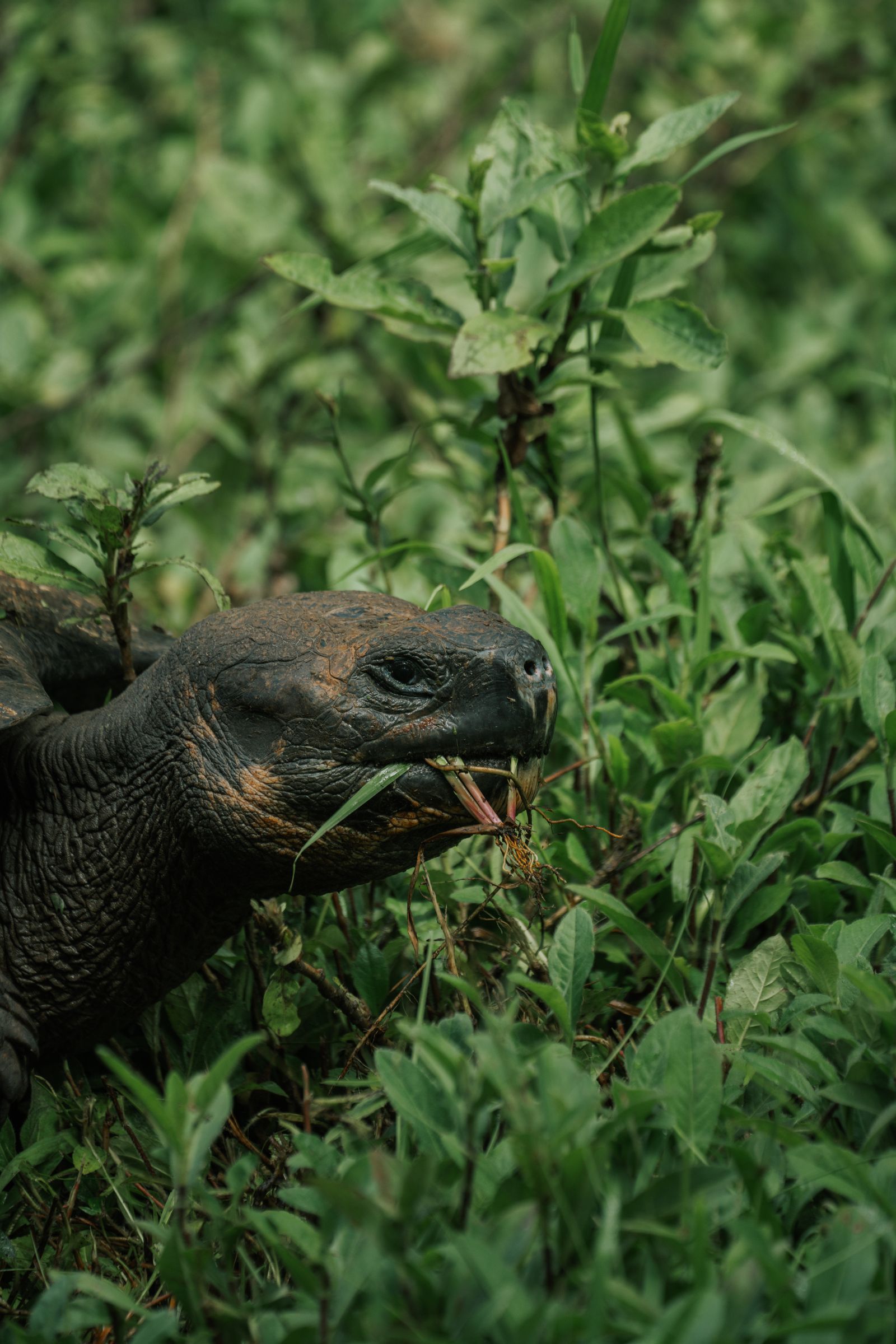
Photo: Alex Ning / Pexels
The provincial capital at Puerto Baquerizo Moreno, with an airport, friendly sea lion colonies along the waterfront, and boat access to Kicker Rock (León Dormido) for dramatic snorkeling.
The largest island, shaped like a seahorse of volcanoes. Expect penguin sightings along the western coast, mangrove lagoons, and a quieter pace centered on Puerto Villamil.
A storied, lightly populated island of pioneer history, flamingo lagoons, and intimate visitor sites reached mainly by ship or organized day programs.
Fernandina and the western flanks of Isabela reward expedition itineraries with pristine lava fields, flightless cormorants, and dense marine life. Genovesa, far to the north, is a seabird sanctuary of red-footed boobies, frigatebirds, and storm petrels—reachable by ship on permitted routes.
Most North American travelers fly into Quito (UIO) or Guayaquil (GYE), then continue on a domestic flight to Baltra (GPS)—linked by ferry and road to Santa Cruz—or San Cristóbal (SCY). We help you sequence mainland nights so island arrival feels unhurried.
Entry rules: As of October 2026, U.S. citizens generally do not need a visa for tourist stays in Ecuador of up to 90 days within any consecutive 12-month period. Your passport should be valid for at least six months beyond arrival, and officials may ask for proof of onward travel. Galapagos visits add province-specific steps: an online Transit Control Card (TCT) via the Galapagos Government Council (CGREG), which records itinerary and lodging or cruise details before or at the Quito or Guayaquil counters; a national park entrance fee paid on arrival at Baltra or San Cristóbal (we confirm current figures before you travel, without listing them here); a digital biosecurity declaration and luggage inspection by the Agency for Biosecurity and Quarantine Regulation for Galapagos (ABG); and a return ticket between the mainland and the islands. Tourist stays in the province are limited (commonly up to 60 days within a year). Rules can change, so we reconfirm them for every trip against travel.state.gov, CGREG, and the Galapagos National Park Directorate.
Live-aboard itineraries reach remote visitor sites on a rotating park schedule, with daily wet and dry landings led by certified naturalists—ideal for maximum island variety.
Base yourself on Santa Cruz, San Cristóbal, or Isabela and take day boats or inter-island flights if you prefer sleeping on land and a flexible rhythm.
Approachable wildlife delights children. We mix short walks, snorkeling, and downtime, and we mind choppier crossings.
Intimate yachts and refined land lodges pair polished service with park-compliant guiding, thoughtful dining, and space to linger with a camera.
Advisor tip: When you book through Novera Travel, we can often add Fora and Virtuoso perks at select partners—welcome amenities, room or cabin upgrades when available, and property credits. Ask us which options fit your style.
Misty Scalesia forests and pastures where free-roaming giant tortoises graze. Standout experience: Walk a farm or reserve trail at tortoise pace.
A trail from Puerto Ayora leads to pale sand, marine iguanas, and turquoise shallows. Standout experience: Stroll at quieter hours, then cool off in the calmer cove beyond the surf.
Tortuga Bay is reached on foot along a stone-paved trail of roughly two and a half kilometers from the edge of Puerto Ayora, winding through dry forest studded with tree-sized prickly pear cactus. The first beach you meet, Playa Brava, is a long arc of fine white sand pounded by surf and known for strong currents, so it is for walking and watching rather than swimming. Keep going to the far end, where mangroves shelter the calm, shallow lagoon of Playa Mansa.
The bay takes its name from the sea turtles that come ashore here to nest, and the dunes above the tide line are protected for them. On the sand and rocks you will find dark marine iguanas warming themselves in rows, their tracks crossing the beach like stitched seams, while brown pelicans and lava herons fish the shallows. It is one of the easiest places in the islands to enjoy real wilderness without a boat, which makes it a favorite free afternoon for land-based travelers.
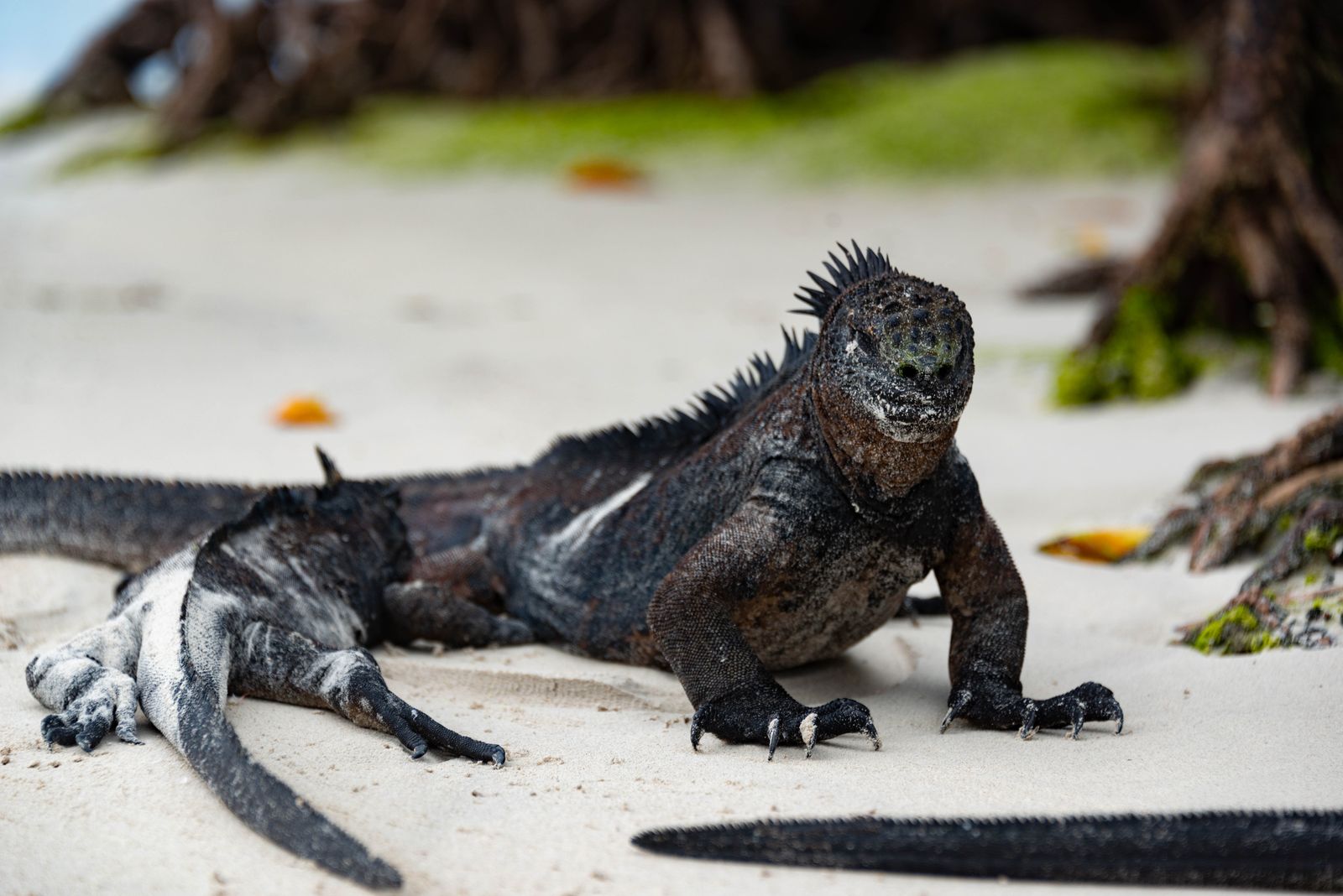
Photo: Diego F. Parra / Pexels
Puerto Ayora’s conservation hub, with exhibits on evolution, invasive species, and tortoise rearing. Standout experience: Visit with a certified guide to see how breeding programs return juveniles to their home islands.
A split volcanic tuff cone off San Cristóbal, famed for deep-water snorkeling. Standout experience: Drift the channel as turtles and fish pass through shafts of light.
A short summit climb frames one of the archipelago’s most photographed skylines. Standout experience: Snorkel beneath Pinnacle Rock, watching for penguins along the reef edge.
Bartolomé is small and nearly bare, and that is its magic. A boardwalk and wooden staircase climb past spatter cones, lava tubes, and pioneer plants clinging to fresh-looking cinder, reaching a summit viewpoint over twin crescent bays and the eroded spire of Pinnacle Rock. Across the narrow channel, Santiago’s Sullivan Bay shows a vast field of ropy pahoehoe lava from an eruption in the late nineteenth century, so smooth and swirled it looks as if it cooled only yesterday.
In the water below, the scene changes completely. The Galapagos penguin, the only penguin that lives naturally as far north as the equator, survives here because cold, nutrient-rich currents sweep up from the deep and from the south. Snorkelers along the rocky edge of Pinnacle Rock may see these small penguins darting after fish, along with white-tipped reef sharks resting on the sand, sea turtles, and schools of brightly patterned reef fish. Sites like this are visited on ship routes or permitted day trips from Santa Cruz.
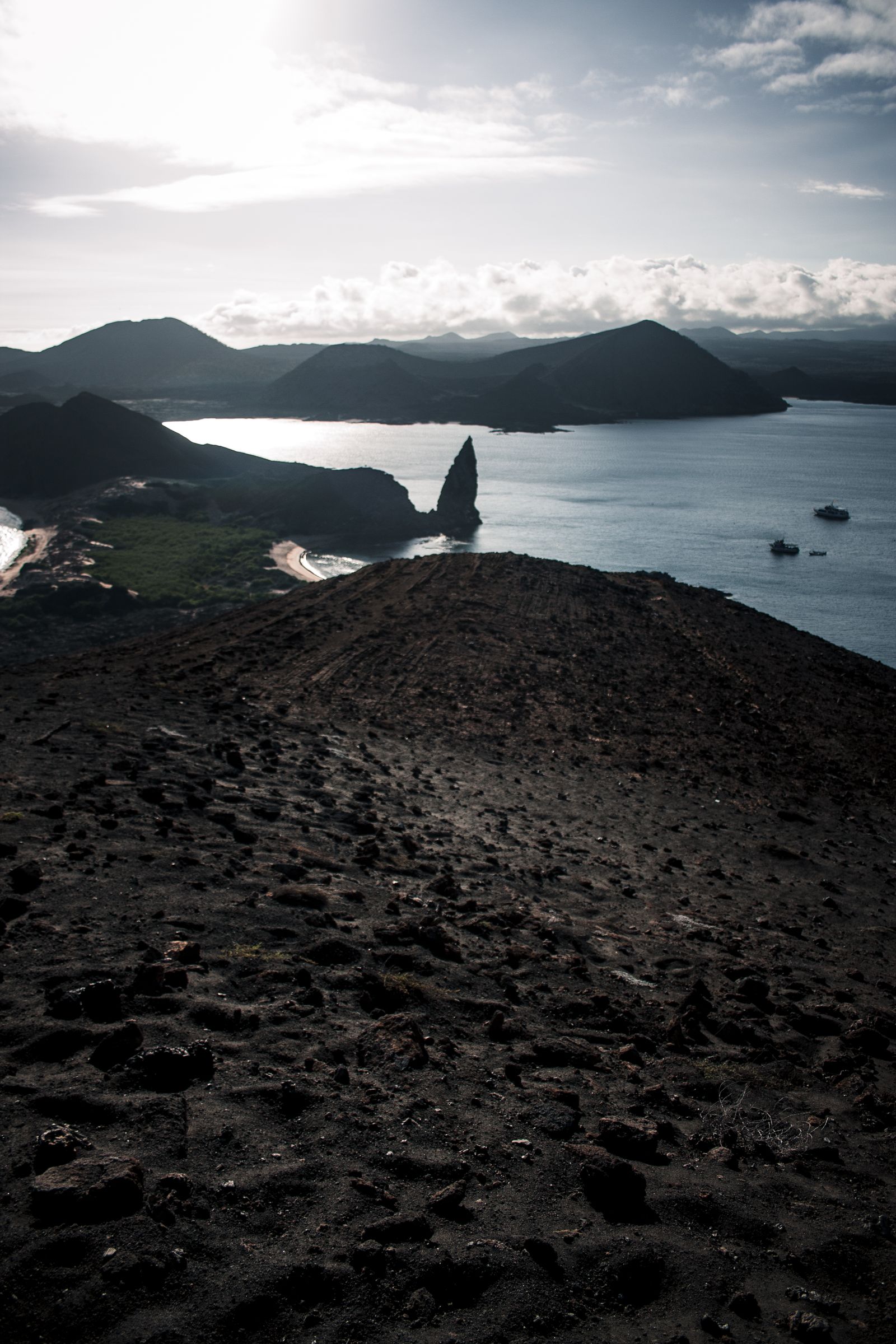
Photo: Lloyd Douglas / Pexels
The world’s only sea-going lizard drapes black lava like living sculpture. Standout experience: Watch from the required distance as an iguana sneezes salt and warms for the next dive.
Charles Darwin was famously unimpressed by marine iguanas, calling them imps of darkness, yet few animals tell the story of these islands better. Their ancestors are thought to have drifted from the mainland, and over time they adapted to a land with little to eat by learning to graze on algae in the surf. Flattened tails drive them through the water, sharp claws grip wave-washed rock, and special glands let them expel excess salt with that comical sneeze.
Because the Pacific here is cool, iguanas must bask before and after feeding, which is why you find them heaped on warm lava, sometimes dozens deep. Each island population has its own look: on Española, breeding males flush red and green, while those on Fernandina and Isabela tend to be larger and darker. Researchers have even recorded adults shrinking in length during lean El Niño years, then regaining size when food returns, a vivid example of evolution’s quiet ingenuity.
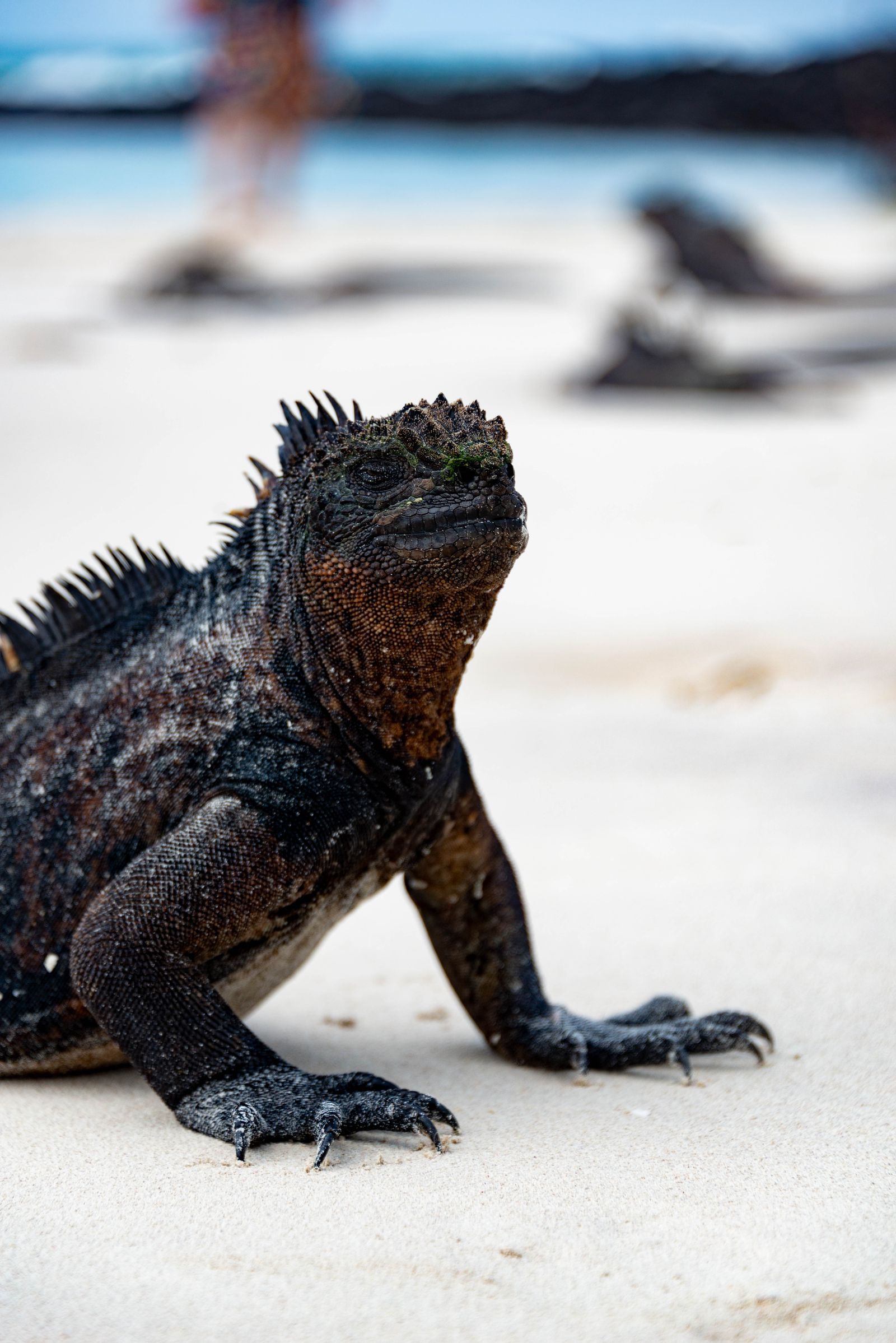
Photo: Diego F. Parra / Pexels
Iconic turquoise feet and an earnest courtship dance. Standout experience: Watch a pair stamp and sky-point while frigatebirds soar overhead.
The booby’s name is thought to come from the Spanish word bobo, meaning foolish, a nod to how calmly these birds sit while people pass by. That bright blue comes from pigments in the fresh fish they eat, and the color matters: brighter feet signal a well-fed bird, and females pay attention. During courtship the male lifts each foot in turn, points his bill and wingtips to the sky, and whistles, while the female answers with a lower honking call.
Watch the sea and you may see boobies hunting, folding their wings and plunging from height into schools of sardines and anchovies. They nest right on the ground, marking a ring of white guano around eggs or chicks, so trails sometimes pass within a few feet of a nest. North Seymour and Española are classic sites, and the islands also host Nazca boobies with masked faces and red-footed boobies that nest in shrubs and trees, especially on Genovesa.
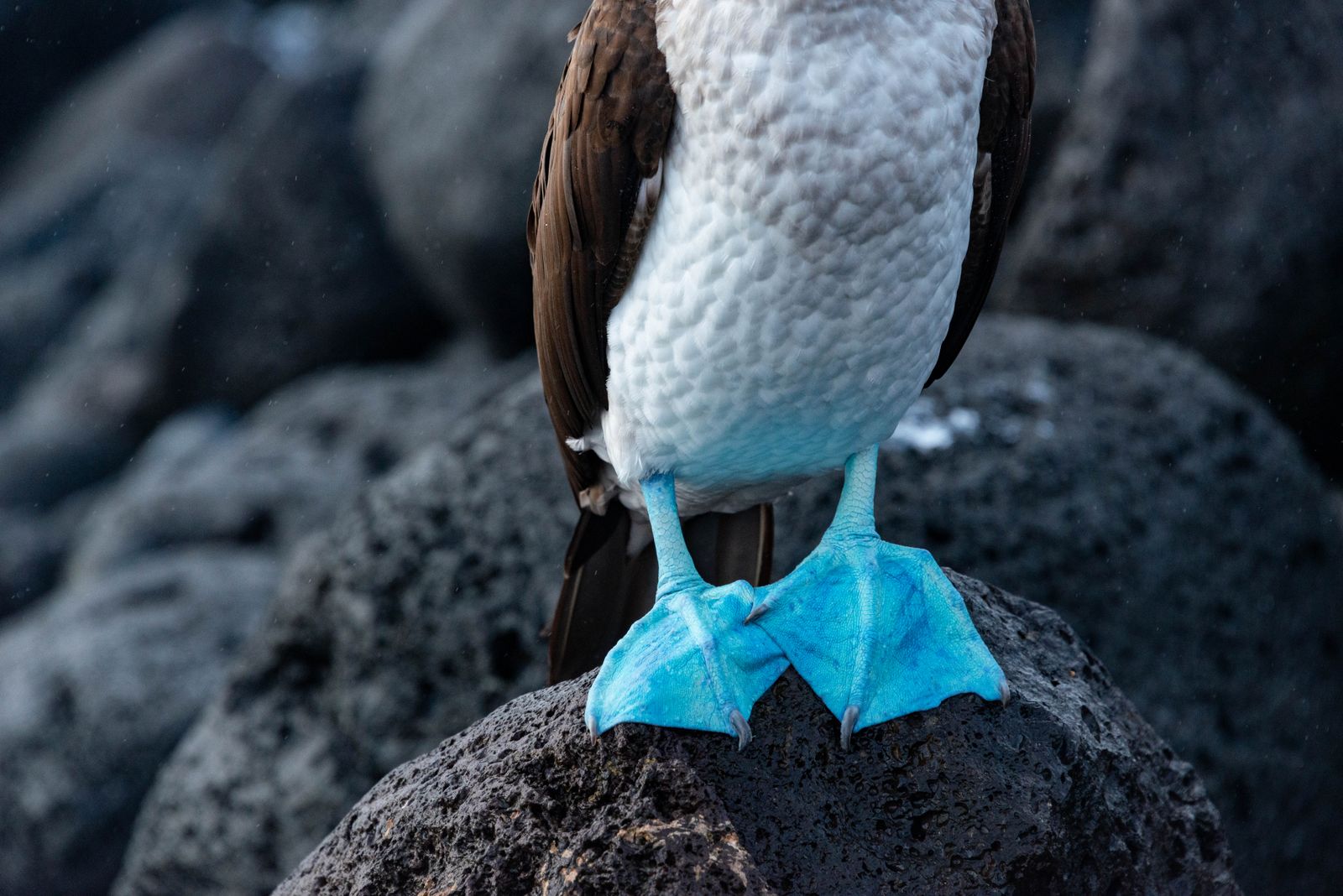
Photo: Diego F. Parra / Pexels
Playful, vocal, and often curious in the water. Standout experience: Snorkel as juveniles loop nearby—never chase; let them set the distance.
Galapagos sea lions are found nowhere else in the world, and they seem to treat the islands as their living room. They sprawl on beaches, benches, and boat landings, and in Puerto Baquerizo Moreno on San Cristóbal they doze along the waterfront promenade in the middle of town. Pups nurse for many months, so nursery beaches stay lively for much of the year, and the barking of territorial males patrolling the shoreline becomes part of the soundtrack of every visit.
In the water, young sea lions are the archipelago’s great entertainers, spiraling around snorkelers, blowing bubbles, and darting away just before contact. Give the large bulls plenty of room, since they guard their stretch of beach with real conviction. Look too for the Galapagos fur seal, a smaller, thicker-furred cousin with a pointed face and large eyes, which prefers shaded, rocky ledges and is most often seen on western and northern islands such as Santiago and Genovesa.
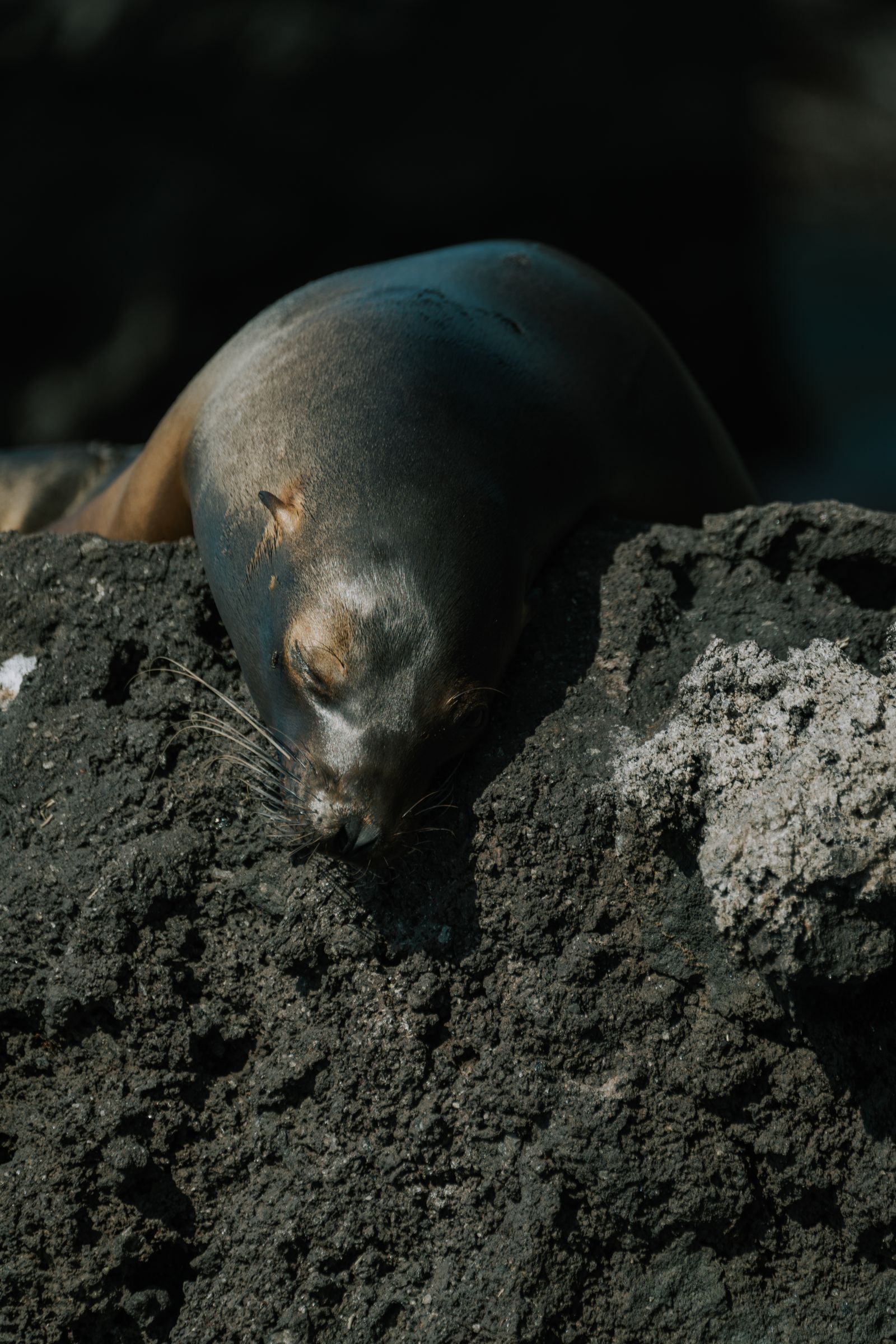
Photo: Alex Ning / Pexels
Conservation is everyday culture here. Most of the land is national park, visitor sites are timed and guided, and communities take biosecurity seriously. The Charles Darwin Research Station and the Galapagos National Park Directorate anchor the science and stewardship you will hear about on almost every outing.
Flavors to try:
Bring reef-safe sunscreen, a wide-brim hat, and polarized sunglasses for strong equatorial light. Pack wet-landing footwear plus sturdy closed-toe shoes for rocky trails. Layers matter: a light rain jacket for garúa mist, a warm layer for breezy decks, and a quick-dry cover-up. If you are prone to motion discomfort, pack whatever seasickness preparation you normally use—crossings can be choppy, especially in the cooler season. A dry bag, binoculars, and a zoom lens cover most days.
Both seasons shine. December to May brings warmer water and calmer seas; June to November brings cooler air, richer marine life, and intense seabird activity.
As of October 2026, U.S. citizens generally may visit Ecuador for up to 90 days in any 12-month period without a visa. The Galapagos also requires the Transit Control Card, park entrance procedures, and biosecurity steps. Check before you travel.
A week covers a satisfying circuit; eight to ten days feels ideal. Add mainland time for Quito, cloud forest, Amazon, or Peru.
Ships reach remote sites efficiently; land-based trips suit travelers who prefer hotels and a slower pace. Many clients combine both.
No, but it is one of the great joys here. Walks and inflatable-boat rides are equally memorable if you prefer to stay dry.
Whether you dream of locking eyes with a giant tortoise in the highlands, snorkeling past sea lions, or watching blue-footed boobies dance on black lava, we will design a Galapagos journey around your pace and curiosity.
Novera Travel will be happy to arrange your international flights when you’re traveling first class.
Call +1 33 22 NOVERA – +1 (332) 266-8372 or email info@noveratravel.com
Prefer to reach out another way? Visit our Contact page.