Waterfalls, glaciers, black-sand beaches, and the Northern Lights, on an island still being shaped by fire and ice
Photo: X1ntao ZHOU / Pexels
Few places make you feel the planet at work quite like Iceland. In a single day, you can stand between two tectonic plates, feel the spray of a thundering waterfall, and walk across a black beach scattered with glacier ice. Long summer days make for endless road trips, and winter nights bring the chance to see the aurora dancing overhead.
Here’s what we tell our clients: Iceland is compact, but its weather and distances are not to be underestimated. Plan fewer stops, build in flexibility, and let the landscape set the pace. That’s when the magic happens.
Iceland was among the last places in Europe to be settled. According to tradition, Norse chieftain Ingólfur Arnarson made his home at Reykjavík in 874, and the settlers who followed brought a language that has changed so little that Icelanders can still read the medieval sagas. Today fewer than half a million people live here, most of them in and around the capital, which leaves vast stretches of lava, moss, mountain and glacier where you may drive for long periods without passing another car.
Our take: For a first trip, we love late May to mid-June or early September: long days, open roads, and (in September) a real shot at the aurora. If the Northern Lights are your top priority, aim for winter and stay somewhere dark, outside Reykjavík.
The colorful capital has a lively food scene, design shops, and the soaring Hallgrímskirkja church. Just inland, the Golden Circle links Þingvellir National Park, the Geysir geothermal area, and Gullfoss waterfall.
Iceland’s most popular stretch is lined with waterfalls (Seljalandsfoss and Skógafoss), glacier tongues, and the black-sand beach of Reynisfjara near Vík.
Seljalandsfoss drops about sixty meters from an old sea cliff, and a path loops behind the curtain of water, so bring waterproofs and expect slippery steps. A short walk north, Gljúfrabúi hides inside a narrow canyon you enter by stepping along a stream. Above the farmland rises Eyjafjallajökull, the ice-capped volcano whose 2010 eruption sent an ash cloud across European skies. Farther east near Vík, the basalt sea stacks of Reynisdrangar are said in folklore to be trolls caught by the dawn and turned to stone.
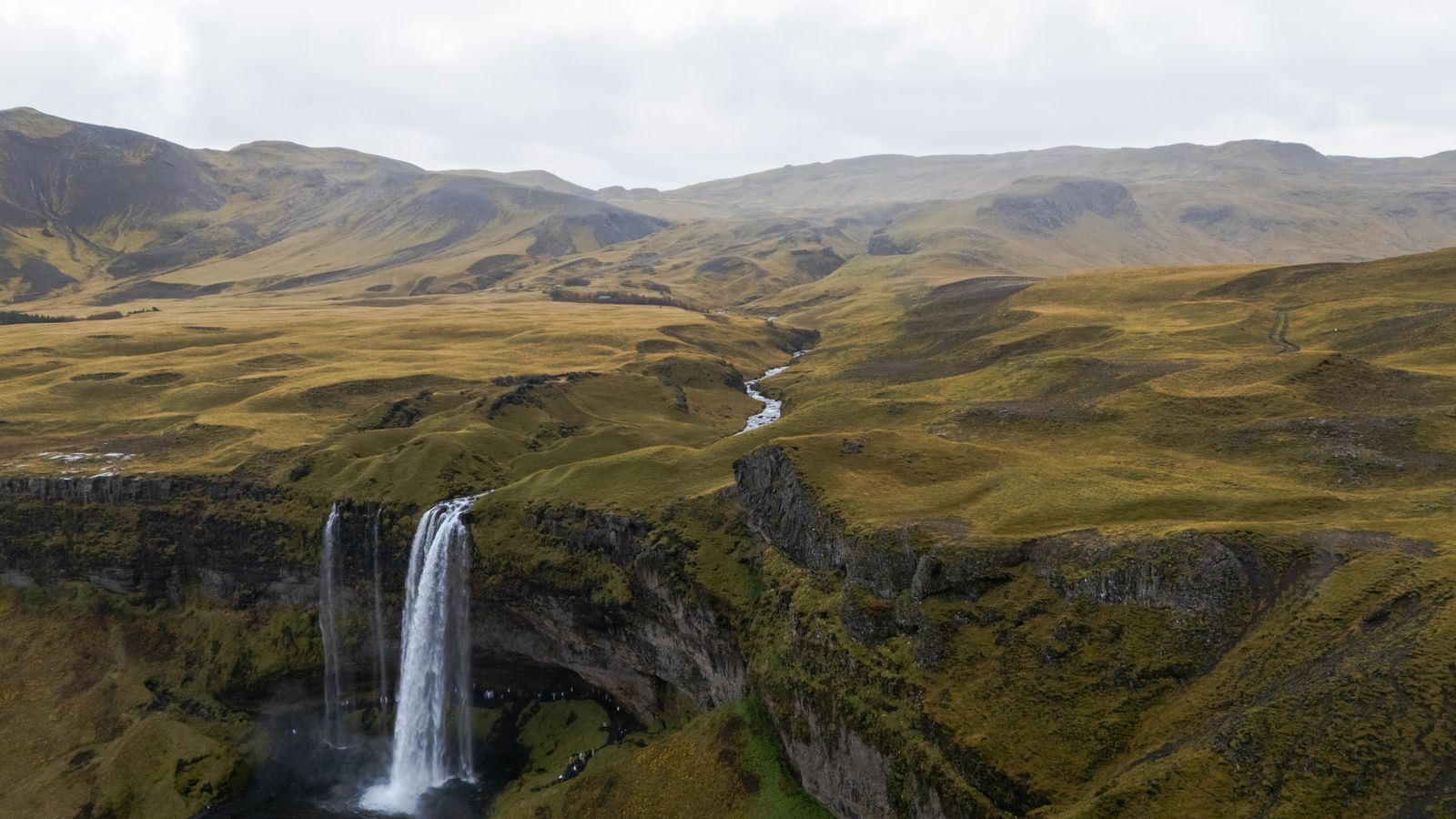
Photo: Veronika Benz / Pexels
Icebergs calved from Breiðamerkurjökull drift across the Jökulsárlón lagoon before washing up on nearby Diamond Beach. This is also the base for glacier hikes and winter ice caves in Vatnajökull National Park.
Often called “Iceland in miniature,” Snæfellsnes packs in the iconic Kirkjufell mountain, lava fields, fishing villages, and the glacier-capped Snæfellsjökull volcano.
Akureyri, the north’s charming hub, is close to Goðafoss waterfall, the volcanic landscapes around Lake Mývatn, and Húsavík, Iceland’s whale-watching capital.
Remote, dramatic, and far less visited, the Westfjords reward travelers with Dynjandi waterfall, steep fjords, and some of Europe’s largest bird cliffs.
Close to the airport, Reykjanes has lava fields, geothermal sites, and several of Iceland’s well-known lagoons. The area has seen repeated volcanic eruptions since late 2023, and some sites and roads may close at short notice. Check the Icelandic Met Office (vedur.is) and safetravel.is for the latest before you go.
Keflavík (KEF) is Iceland’s main international airport. Nonstop flights reach Keflavík from many US cities, with extra seasonal nonstops, mostly in summer. Many travelers also use Iceland as a stopover on the way to Europe. In Iceland, you’ll get around by rental car, private driver, small-group tour, or domestic flights to Akureyri and Egilsstaðir.
Entry rules (as of October 2026): Iceland is part of the Schengen Area. US citizens can visit visa-free for up to 90 days within any 180-day period across Schengen countries. Your passport should be valid for at least three months beyond your planned departure from the Schengen Area and issued within the past 10 years. The EU’s Entry/Exit System (EES) is fully in operation, so expect to register your fingerprints and a photo at passport control on your first entry. ETIAS, the EU’s planned travel authorization, is not yet operating and has no confirmed start date. Don’t apply through unofficial websites. We recheck rules before every departure. Also review the US State Department’s Iceland page and consider enrolling in STEP.
The Ring Road (Route 1) circles the island and is ideal for confident drivers in summer. Mountain “F-roads” require a 4×4, open only for part of the summer, and can involve unbridged river crossings. Check road.is and safetravel.is daily.
A private driver-guide handles winter roads and changing weather while sharing local knowledge. This is our favorite way to travel in the cold months.
Think design-forward lodges with geothermal pools, heli-skiing and fishing estates, and spa retreats on the lava fields. We’ll match you with the right property for your season and style.
Small-group tours make winter travel simple and social. Expedition ships also circle the island in summer, visiting remote fjords and villages that are hard to reach by road. Fleets and itineraries change each season, so we confirm current departures.
> Advisor tip: Booking through us as a Fora advisor can unlock extra perks at many partner hotels in Iceland, such as daily breakfast, a property credit, or a room upgrade when available. Benefits vary by property, so ask us what applies to your dates.
Walk through the rift valley at Þingvellir, watch Strokkur geyser erupt every few minutes, and feel the roar of Gullfoss.
Þingvellir is the heart of Icelandic history as well as geology. In 930 the island’s chieftains founded the Althing here, one of the world’s oldest parliaments, meeting each summer in the open air beside the Law Rock. The site sits in a rift valley where the North American and Eurasian plates are drifting apart by roughly two centimeters a year, and you can walk along the cliffs of the Almannagjá fault. Þingvellir is a UNESCO World Heritage Site and a national park.
The Great Geysir gave its name to geysers everywhere, though today it erupts only rarely. Its neighbor Strokkur performs every few minutes, a swelling blue dome that bursts into a column of steam and water. Gullfoss, meaning golden falls, tumbles in two broad steps into the canyon of the Hvítá river. In the early twentieth century, plans to harness it for hydropower were resisted, and a local farmer’s daughter, Sigríður Tómasdóttir, is remembered for her fight to protect it.
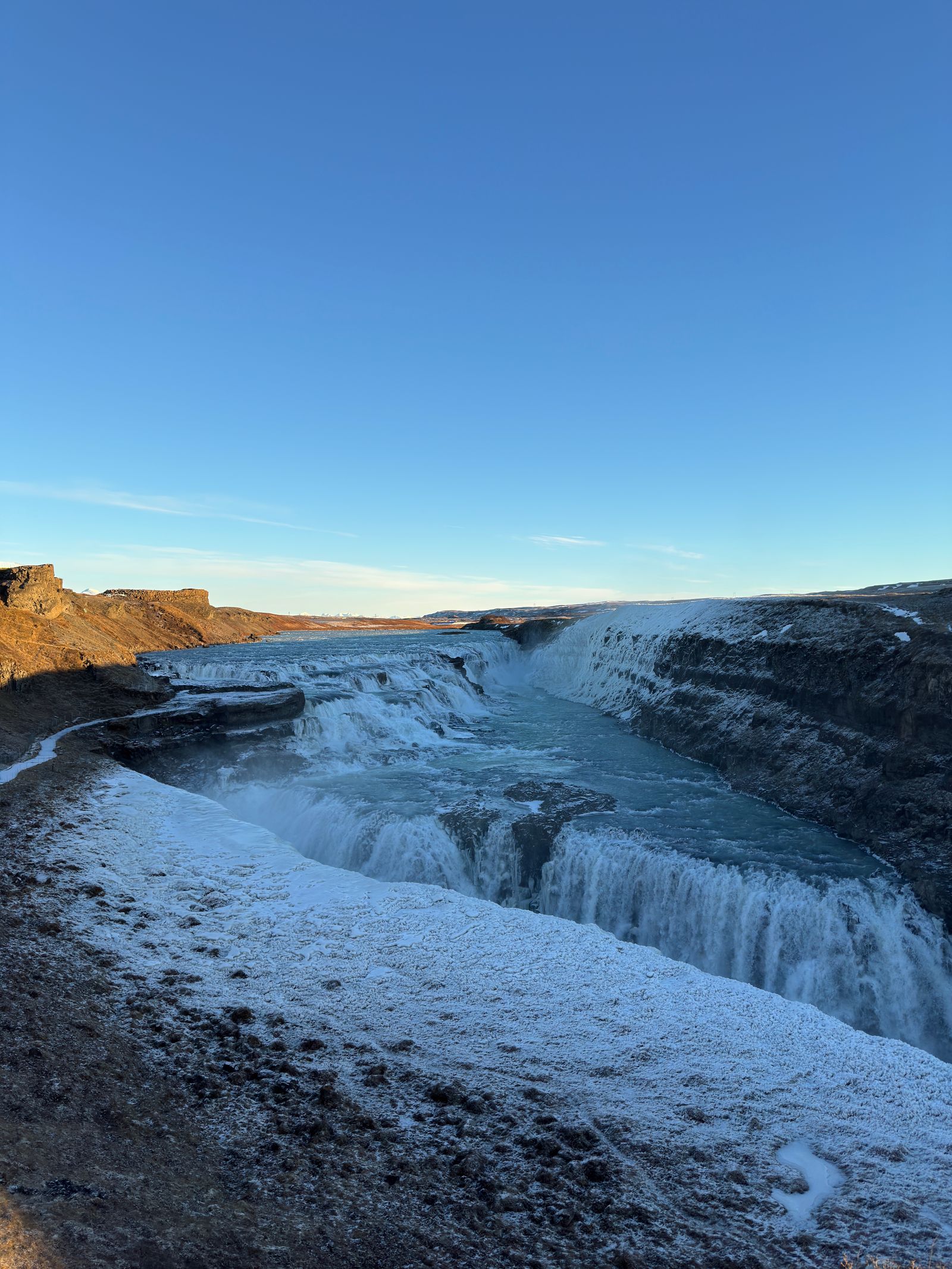
Photo: Matteo Sassola / Pexels
Standout experience: Snorkeling in the crystal-clear Silfra fissure at Þingvellir with a certified operator.
Silfra is a fissure filled with glacial meltwater that has filtered for many years through porous lava rock before seeping in from the lake. The result is water so clear that visibility often extends well beyond a hundred meters, with blue depths and bright green algae on the walls. The water stays just above freezing all year, so snorkelers and divers wear drysuits, and minimum age and experience requirements apply. It is a truly unusual way to float between two continental plates.
Skógafoss drops in a single, wide curtain, and a staircase beside it leads to a hiking trail above the falls. Farther east, Reynisfjara’s basalt columns are breathtaking, but the beach is known for powerful, unpredictable “sneaker waves.” Follow the posted warning system and any closures, and stay well back from the water.
Skógafoss is about sixty meters high and some twenty-five meters wide, and on sunny days its spray throws rainbows across the gravel plain below. Local legend says a Viking settler named Þrasi hid a chest of gold behind the falls. From the top, the Fimmvörðuháls trail climbs between two glaciers toward the green valley of Þórsmörk, a demanding full-day hike in summer, while the nearby Skógar Museum preserves turf houses, fishing boats and everyday objects from rural Icelandic life.
A little farther along the coast, the Sólheimajökull glacier tongue offers some of the most accessible glacier walks in Iceland, with crampons, ice axes and certified guides. The promontory of Dyrhólaey has a great natural sea arch and sweeping views over the black beaches, and in summer puffins nest on its grassy slopes. Beyond Vík, the road crosses Eldhraun, a vast lava field from the Laki eruption of 1783, now blanketed in thick, spongy moss that must not be walked on.
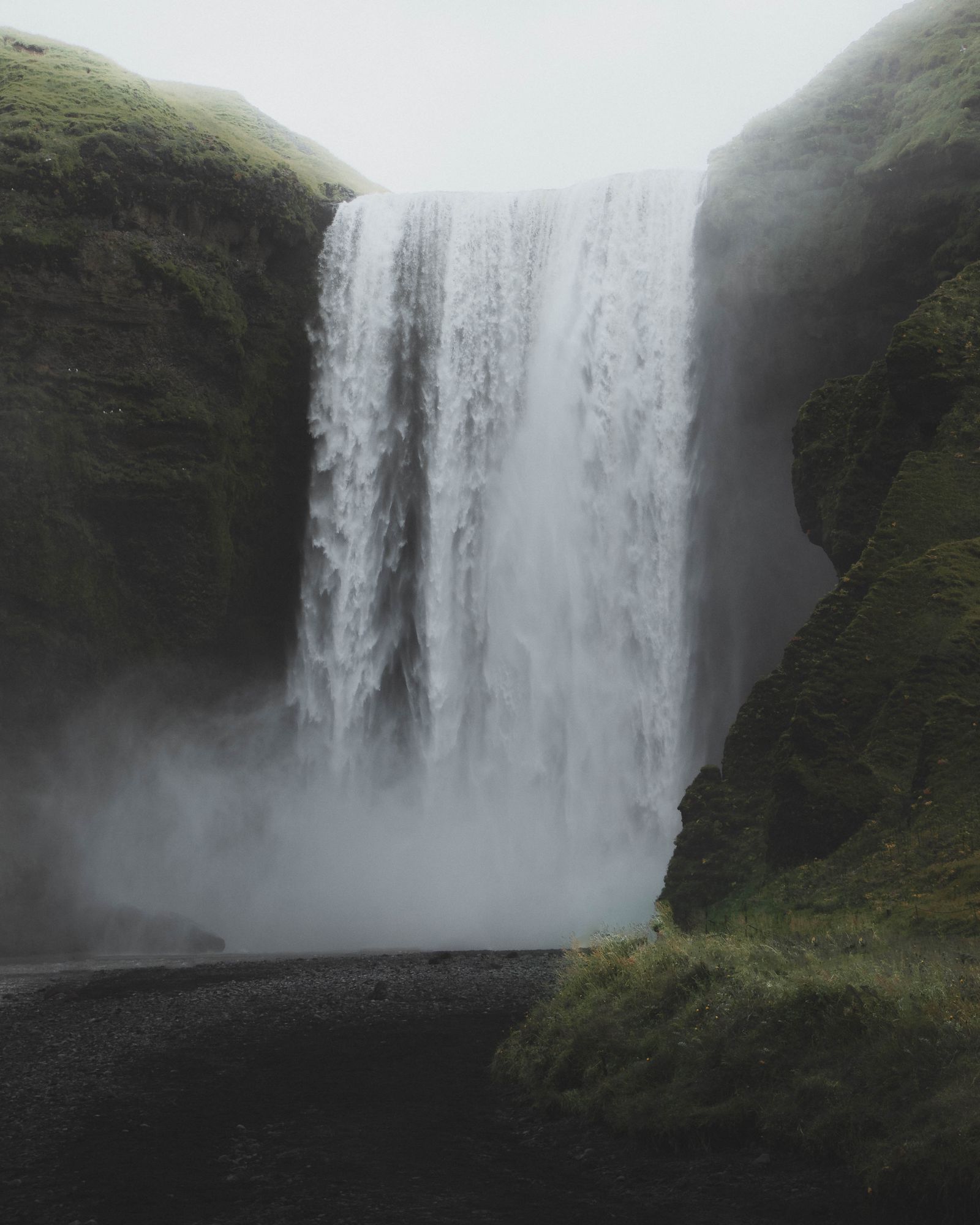
Photo: Dajana Reçi / Pexels
Standout experience: Visiting Skógafoss early or late in the day, when you might have the falls almost to yourself.
Blue and white icebergs float silently across the lagoon, often with seals bobbing among them.
Vatnajökull is Iceland’s largest ice cap, covering about eight percent of the country, and it hides active volcanoes beneath its ice. Jökulsárlón formed only in the twentieth century as the outlet glacier Breiðamerkurjökull retreated, and it has since become Iceland’s deepest lake. Icebergs break from the glacier face, some containing ice formed many centuries ago, and drift slowly toward a short channel to the sea. Boat tours run on the lagoon in the warmer months, and harbor seals often follow the fish.
Across the road, on what is widely known as Diamond Beach, chunks of ice wash up on the black sand and glitter in low sun, a wonderful sight at sunrise. Nearby, Skaftafell, now part of Vatnajökull National Park, has trails to Svartifoss, a waterfall framed by dark hanging basalt columns, the kind of formation that inspired Icelandic architects. The southeast is also lobster country: the fishing town of Höfn is known for langoustine, served grilled with garlic butter or in creamy soups.
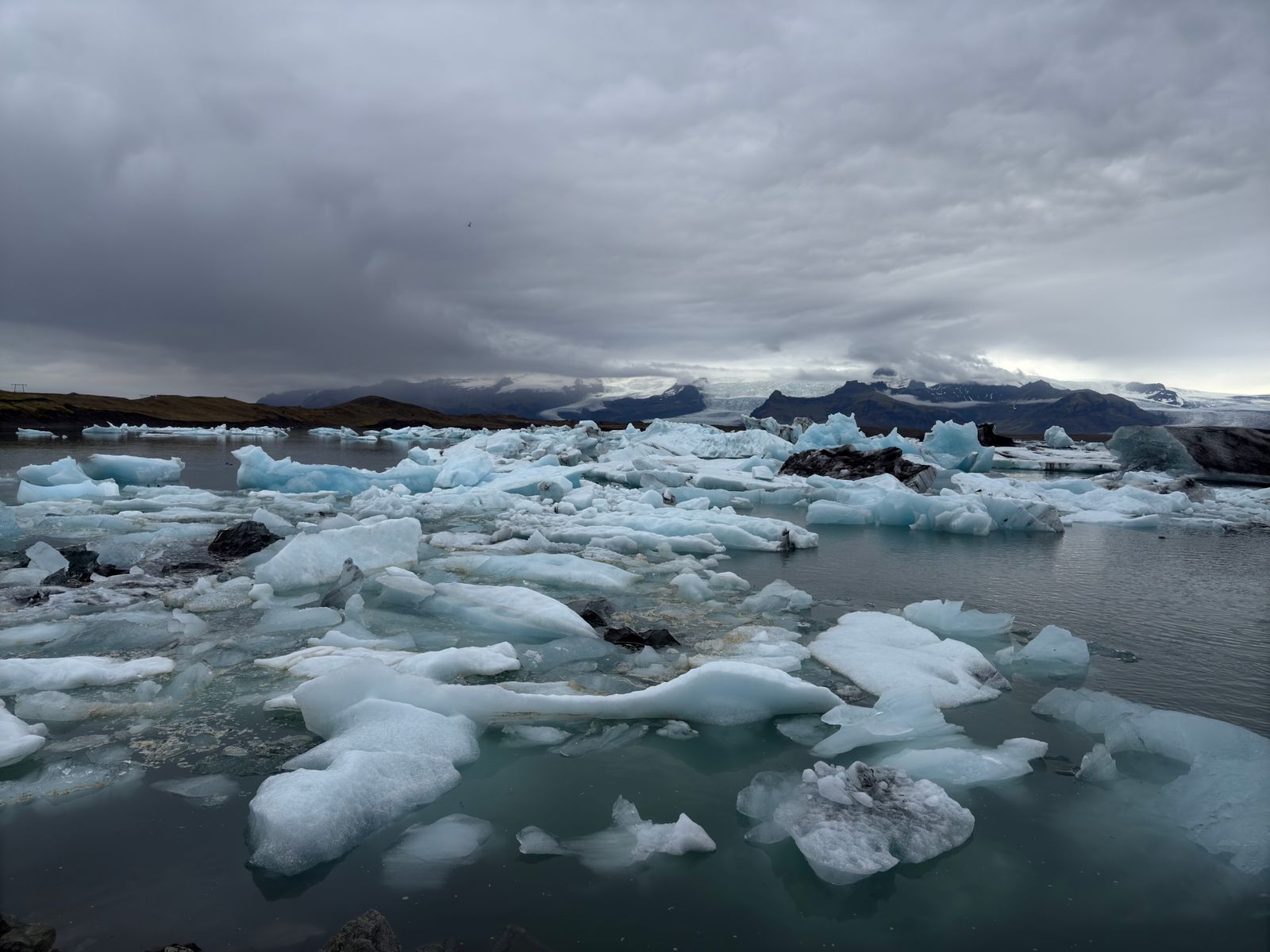
Photo: Ruyel / Pexels
Standout experience: A guided glacier hike on Vatnajökull, or a winter ice-cave tour, always with certified glacier guides.
Explore the old harbor, the Harpa concert hall, and the city’s buzzing restaurant and coffee scene.
Reykjavík is the world’s northernmost capital of a sovereign state, a small, colorful city of corrugated-iron houses, street art and sea views toward Mount Esja. Hallgrímskirkja, designed by Guðjón Samúelsson, rises like a cascade of basalt columns, and its tower gives a panorama of rooftops and mountains. On the harbor, the Harpa concert hall glitters behind a facade of glass panels created with artist Olafur Eliasson, and the Sun Voyager sculpture along the shore makes a beautiful stop at dusk.
Life here is warmed by geothermal energy, which heats most homes in Iceland and fills the city’s many public swimming pools. Locals gather in the hot tubs to chat, making a neighborhood pool one of the best windows into everyday culture. The dining scene ranges from hearty lamb soup and fresh fish to inventive tasting menus built on Nordic ingredients, and in winter the city glows with candlelit cafes and bookshops, fitting for a country that treasures storytelling.
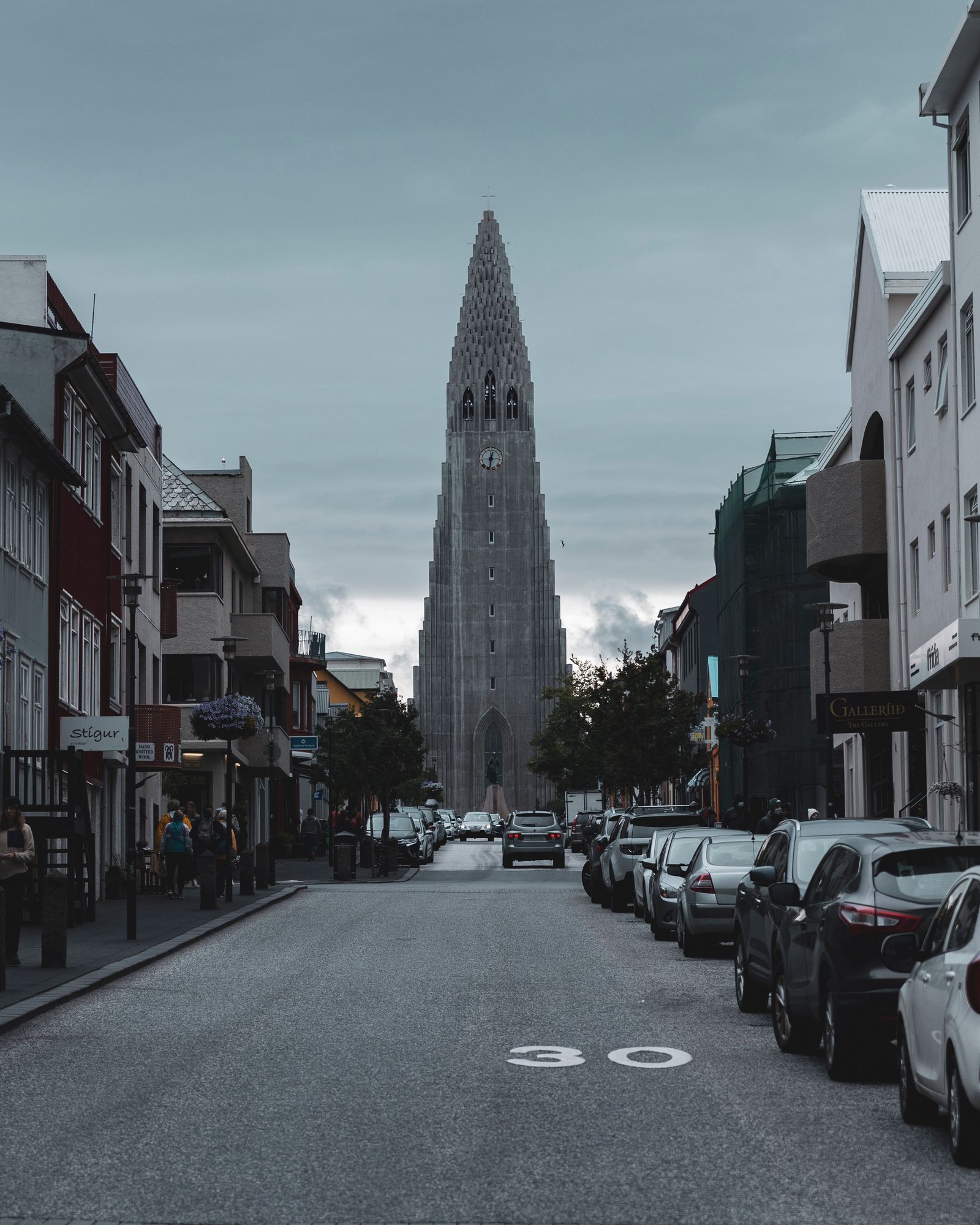
Photo: Nick Haynes / Pexels
Standout experience: A food walk through downtown, finished with the view from Hallgrímskirkja’s tower.
Icelandic culture is shaped by long winters and a deep love of books. There is a cherished custom called Jólabókaflóð, the Christmas book flood, when new books are given on Christmas Eve and read late into the night. Folklore remains part of the landscape, from the thirteen mischievous Yule Lads who visit children before Christmas to the hidden people, or huldufólk, said to live in rocks and hills. Even road planners have occasionally been asked to take such beliefs into account.
On clear, dark nights, roughly from September to April, the aurora can appear anywhere in Iceland.
The aurora appears when charged particles from the sun meet gases high in Earth’s atmosphere, producing curtains of green from oxygen and, during strong displays, touches of red or violet. Iceland sits beneath the auroral oval, so activity is frequent, but you need two things together: darkness and clear skies. From mid-May to early August the nights are too bright, which is why the season runs roughly from September to April, often peaking in lively displays around the equinoxes.
The Icelandic Met Office publishes a forecast that combines aurora activity with cloud cover, a useful tool because weather moves quickly between regions. Staying in the countryside, away from city lights, helps enormously, and many rural hotels will offer a wake-up call if the lights appear. For photographs, bring a tripod and a camera that allows long exposures, and dress as if you were going for a winter hike, since a good display can keep you outside for an hour or more.
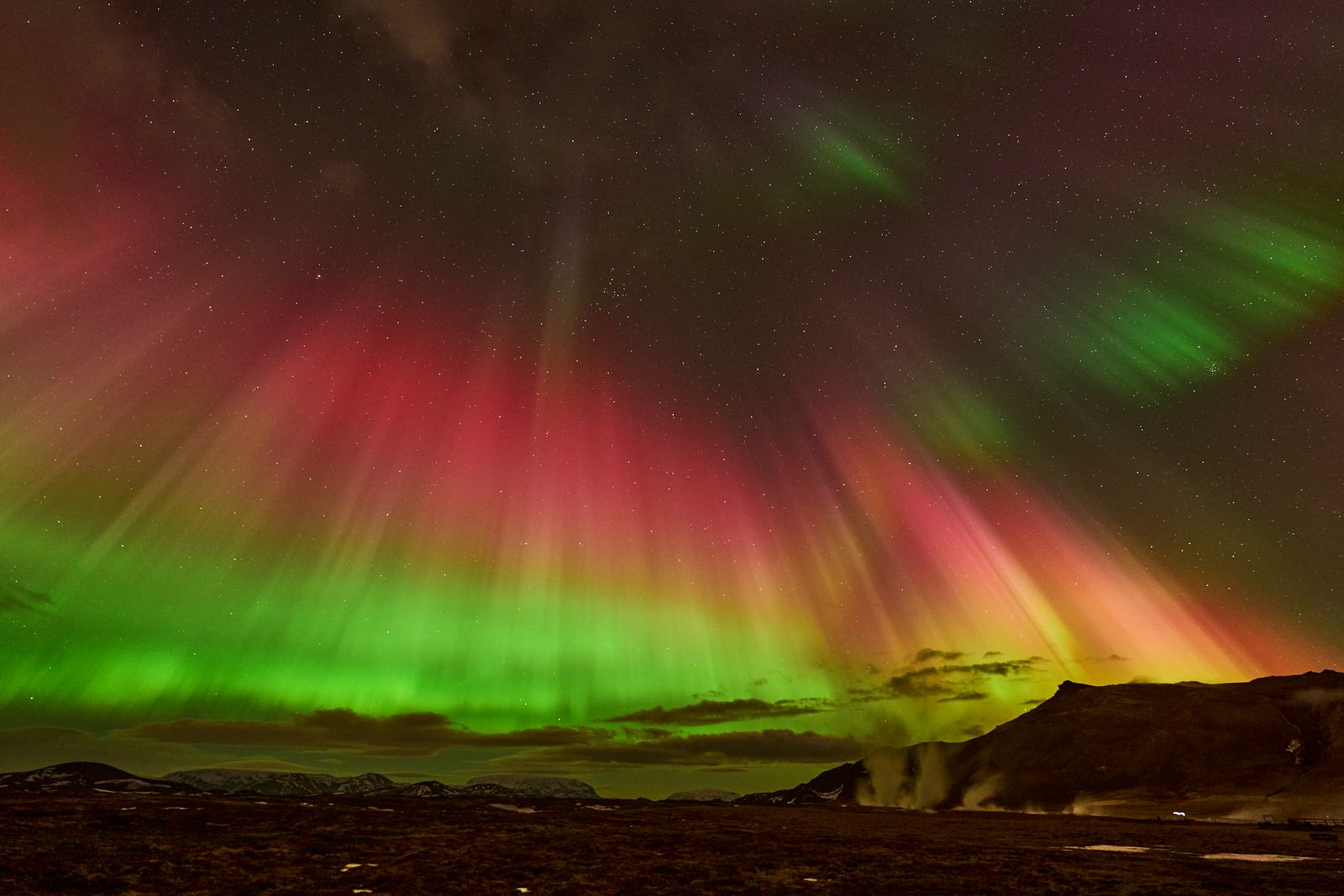
Photo: Francisco Cornellana Castells / Pexels
Standout experience: A small-group aurora hunt with a guide who follows the cloud and activity forecasts.
Explore steaming vents, lava formations, and quiet bird-filled lakes around Mývatn, then head to Húsavík to look for humpbacks in Skjálfandi Bay.
Standout experience: A summer whale-watching trip from Húsavík, followed by a soak in the geothermal baths nearby.
Mývatn, whose name means midge lake, was shaped by eruptions that left pseudocraters, lava pillars and the twisted formations of Dimmuborgir, the dark castles, linked in folklore with the Yule Lads. East of the lake, Námafjall’s mud pots bubble and steam in shades of ochre and gray. On the way from Akureyri you pass Goðafoss, the waterfall of the gods, where legend says a lawspeaker threw his pagan idols after Iceland adopted Christianity around the year 1000.
Hike near Kirkjufell, explore the coastal cliffs at Arnarstapi, or drive deeper into the wild Westfjords.
Snæfellsnes ends at the glacier-capped volcano Snæfellsjökull, the gateway to the underworld in Jules Verne’s Journey to the Center of the Earth. Around its base lie rugged lava fields, the sculpted basalt cliffs of Arnarstapi and Hellnar, the pebble beach of Djúpalónssandur with its scattered shipwreck remains and the small black church at Búðir. Farther north, the Westfjords are cut by deep fjords and mountain passes, and their cliffs at Látrabjarg rank among the largest seabird colonies in Europe.
Iceland is home to a large share of the world’s Atlantic puffins, which come ashore to nest in burrows on grassy cliff tops from about May through August. They mate for life, return to the same burrow year after year and carry rows of small fish crosswise in their colorful bills. Good places to see them include Dyrhólaey, Látrabjarg, Borgarfjörður Eystri in the east and the Westman Islands, where volunteers help lost fledglings find the sea each late summer.
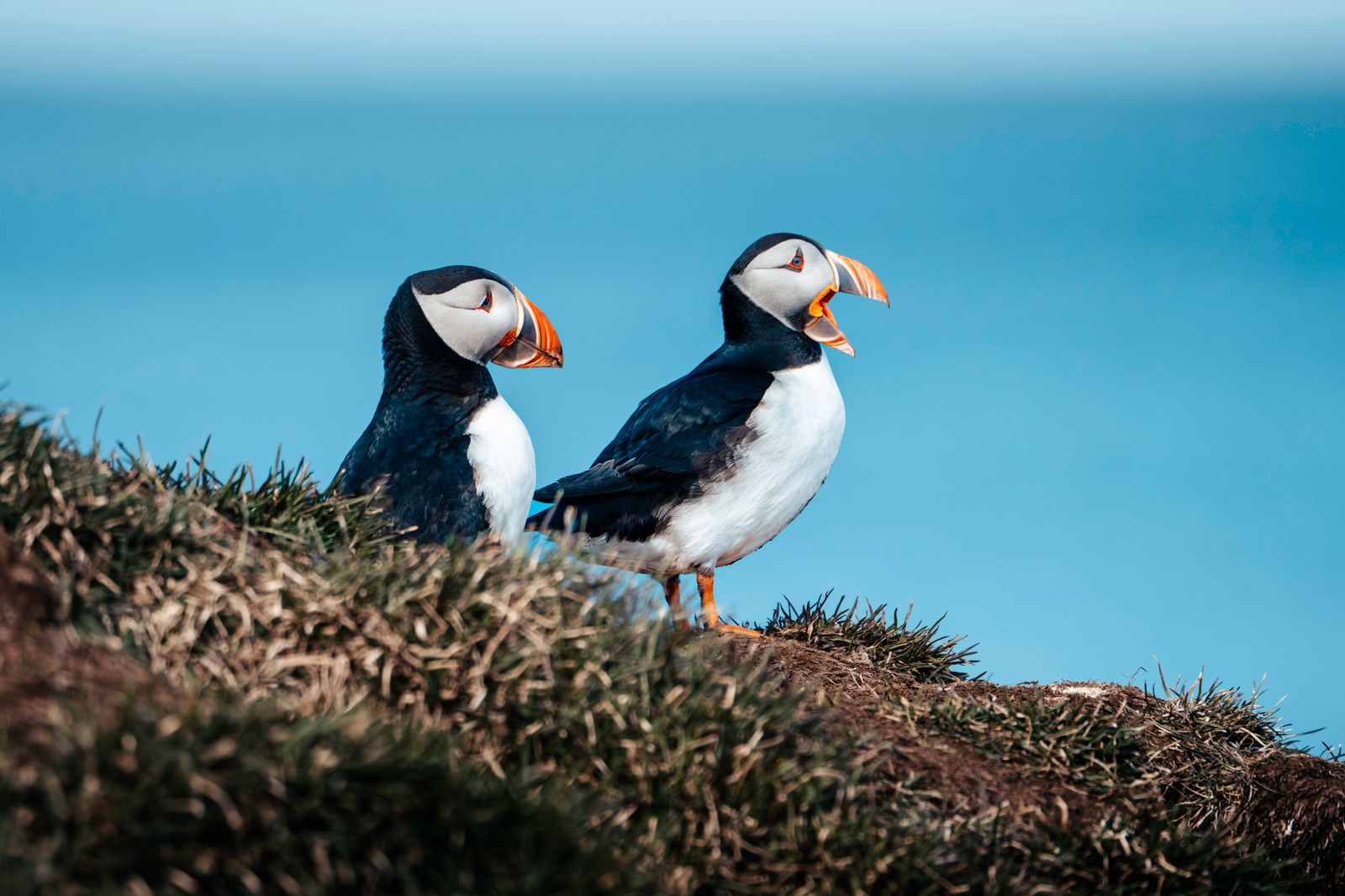
Photo: Raul Ling / Pexels
Standout experience: Watching puffins on the cliffs in summer, then ending the day beside Dynjandi.
Soaking in naturally heated water is a national pastime. Choose from famous spa lagoons near Reykjavík, the nature baths at Mývatn, and simple local pools in every town.
Standout experience: A late-evening soak under the midnight sun, or under falling snow in winter.
Food and drink: Try Icelandic lamb, Arctic char, langoustine from Höfn, creamy skyr, and dark rye bread traditionally baked in the hot ground. A hot dog from a Reykjavík stand is a local rite of passage, and adventurous eaters can sample fermented shark with a shot of Brennivín.
Etiquette: Before entering any pool or lagoon, you’ll be expected to shower thoroughly without your swimsuit, which is an important hygiene rule. Tipping isn’t customary. Stay on marked paths, as Iceland’s moss and fragile landscapes can take decades to recover.
Festivals: Look for National Day on June 17, Reykjavík’s Culture Night in August, and Þorrablót midwinter feasts.
No, not for tourist stays of up to 90 days in the Schengen Area. Expect EES biometric registration on arrival. ETIAS is not yet in effect.
Roughly September to April, on clear, dark nights. Sightings are never guaranteed.
At least 7 days, and ideally 10 or more, to enjoy it without rushing.
Eruptions on Reykjanes have been localized, but conditions change. Follow the Icelandic Met Office and safetravel.is, and respect closures.
Natural ice caves are generally a winter experience, roughly November to March, and always with certified guides.
As Fora advisors, we handle every detail for you: the right season for your goals, hand-picked hotels with added amenities at select properties, vetted guides, and a flexible plan built around Iceland’s weather.
Novera Travel will be happy to arrange your international flights when you’re traveling first class.
Call +1 33 22 NOVERA – +1 (332) 266-8372 or email info@noveratravel.com
Prefer to reach out another way? Visit our Contact page.
Novera Travel is an independent travel advisor of Fora Travel.