Renaissance roofs over a hunting park, a gallery built across a river, and a port city whose vineyards start at the edge of town.
Photo: Susanne Jutzeler / Pexels
The Loire is France’s long royal river, and the stretch between Blois and Tours is where the French Renaissance decided to show off. Kings and their ministers built hunting lodges that turned into palaces, with staircases you can walk for an hour and roofscapes that look like a city turned upside down. Between the châteaux are quiet villages, goat-cheese farms, and towpaths where the only traffic is a bicycle and a heron. It is grand without being hurried, which is why we send first-time visitors here when they want France beyond Paris and do not want a schedule built only around museums.
Bordeaux is the other half of the same trip, and it earns its own days. The eighteenth-century riverfront, washed pale gold and reflected in a shallow sheet of water, is one of the most walkable city centers in Europe. Vineyards begin a short ride from the cathedral. On the left bank the Médoc is a long gravel peninsula of vines between the Gironde estuary and a belt of pine forest. On the right bank, Saint-Émilion sits on a limestone ridge, a medieval town whose church was cut down into the rock. Pairing the two regions gives you architecture, river light, and wine country without pretending they are the same landscape.
May and June are the months we suggest first. The château gardens are fully leafed, the days are long, and the tour groups have not yet reached the August crush at Chambord. Temperatures are warm enough for lunch outdoors and cool enough that a stone stair does not feel like a climb in a greenhouse. September and October belong to Bordeaux. Harvest is underway in the vineyards, the city light turns softer, and the Loire is still pleasant for walking even as some smaller sites shorten their afternoon hours. Book the popular château time slots ahead in both of those windows.
July and August are lively and hot, especially on the gravel courts and roof terraces, so we start Chambord and Chenonceau at opening and keep Bordeaux for the evening waterfront. November through March is quiet, often gray, and honestly beautiful if you like empty courtyards. Some wings and gardens close, river fog sits on the Cher in the morning, and Bordeaux’s squares are easier to photograph. It is a poor month for a first vineyard trip and a good month for travelers who already know they want the buildings more than the gardens.
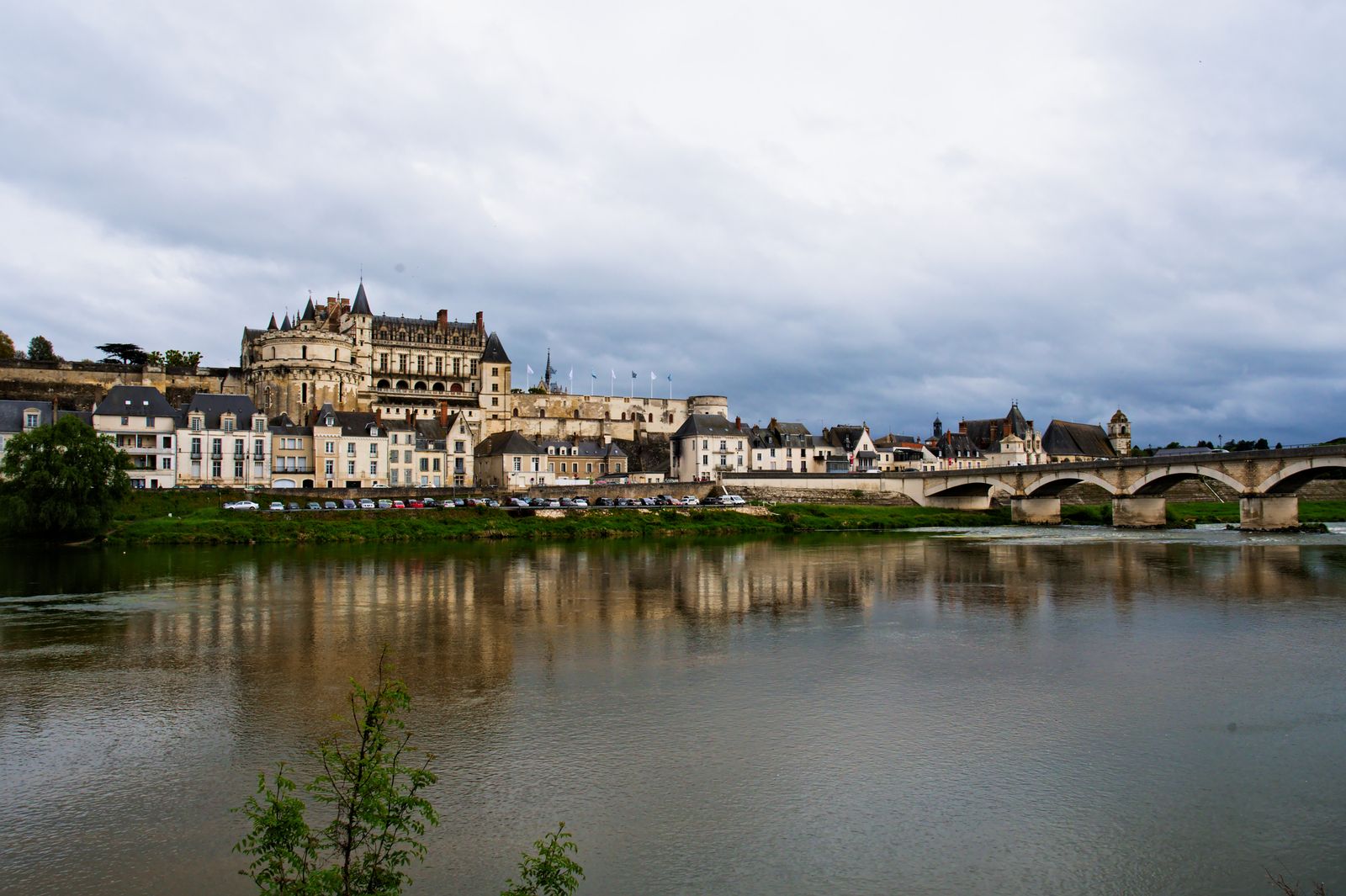
Photo: Jean-Paul Wettstein / Pexels
The practical shape is a one-way trip, not a loop that drags you back to the same station. Most of our clients ride the TGV, the French national high-speed railway operated by SNCF, from Paris to the Loire, spend four or five nights among the châteaux, then continue south to Bordeaux for the city and one or two vineyard days. Doing it in reverse works just as well if your flight home is from Paris and you would rather end with a night in the capital. Our Paris travel guide covers that city end of the journey. A rental car is the right tool once you leave the station, because the best châteaux do not sit on a single train line.
Saint-Pierre-des-Corps, the TGV station serving Tours, is the useful Loire railhead. From there a car reaches Amboise, Chenonceau, and Chaumont in easy hops, and Chambord is a longer but straightforward drive east toward Blois. Bordeaux is then about half a day’s drive south, or a separate TGV ride if you would rather hand the car back and not drive the highway. The point is to move in one direction. Visitors who base in Paris and day-trip the Loire spend more time on the train than in a garden, and they arrive at Chambord in the middle of the day with everyone else.
Public trains still matter even if you drive. The TGV is how you should arrive and leave, and a local train is a pleasant way to see the Gironde towns without adding another long highway day. We plan the car days for the châteaux and the vineyard lanes, and we keep at least two days in Bordeaux with no car at all, because the historic center is flat, walkable, and better without parking. If anyone in the group dislikes driving on the right, or prefers not to drive, say so at the start and we will build a driver-and-guide pattern for the château days instead of a self-drive.
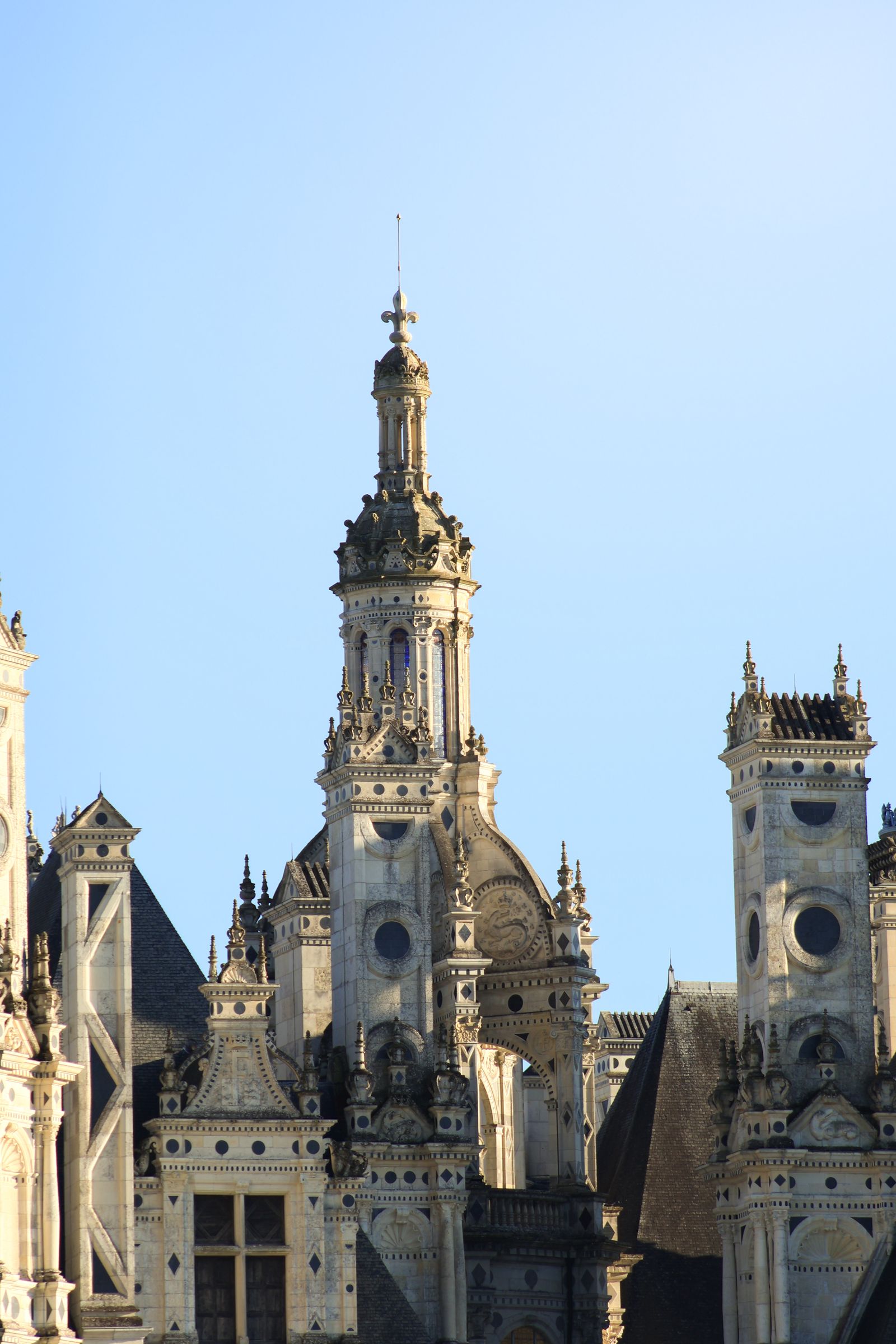
Photo: Guillaume Boulanger / Pexels
Chambord is the Loire’s showpiece, and it looks like nothing else in France. Francis I began it in 1519 as a hunting lodge and then let it become a French Renaissance palace in the middle of a forest park, with a keep the size of a fortress and a roofline of lanterns, chimneys, and dormers that you are meant to wander. The double-helix staircase is the interior everyone remembers: two spirals wrap the same core so people going up do not meet the people coming down. Give it a full morning. The park around the building is part of the visit, a flat hunting forest crossed by long straight avenues, and it is the right place to let a group spread out after the stairs.
Go early. By late morning in summer the courtyard fills, and the roof terrace, which is the best part, feels narrow. The building was a statement more than a home, so do not expect a cozy sequence of lived-in rooms. What you get is scale, light, and stonework, plus the odd feeling of a palace dropped into the woods with no town pressed against its gates. Pair it with a slow lunch in Blois or back toward the river rather than rushing straight to a second giant château. One monumental building a day is enough. The second stop should be smaller, or it should be a garden.
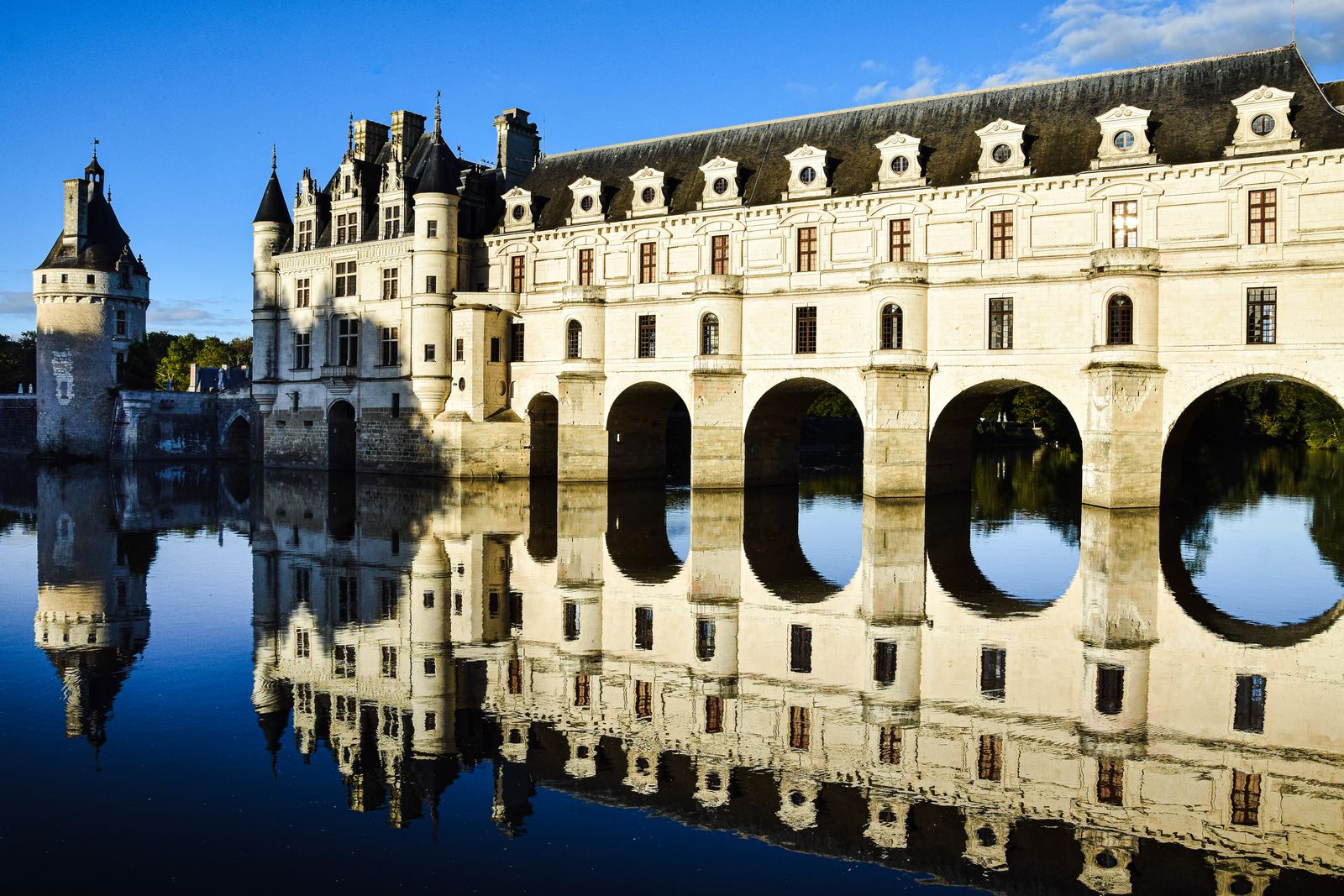
Photo: AXP Photography / Pexels
Chenonceau does the opposite of Chambord. It is elegant, low, and tied to the water. The château stands in the Cher, its gallery running across the river on a row of arches, so from the bank you see a palace that appears to float. Diane de Poitiers made it her residence in the sixteenth century. Catherine de’ Medici took it back and added the long gallery over the water, which is the picture you came for. The rooms are furnished and human in scale. The gardens on either bank are formal, and they are worth the time even if you are not usually a garden person, because they explain how the house sits in its landscape.
Walk the gallery slowly and then go outside. The upstream and downstream views are different, and the reflection on a still day is the one to wait for. Chenonceau is close to Amboise, so it combines cleanly with the town rather than with Chambord. Trying to see both giant châteaux and Amboise in one day is how people end up remembering ticket lines instead of rooms. We split them. Children who are past the stroller stage do well here, because the story is concrete and the walk is flat. Very small children and anyone who tires on stone floors will do better with a shorter visit and a long lunch on the bank.
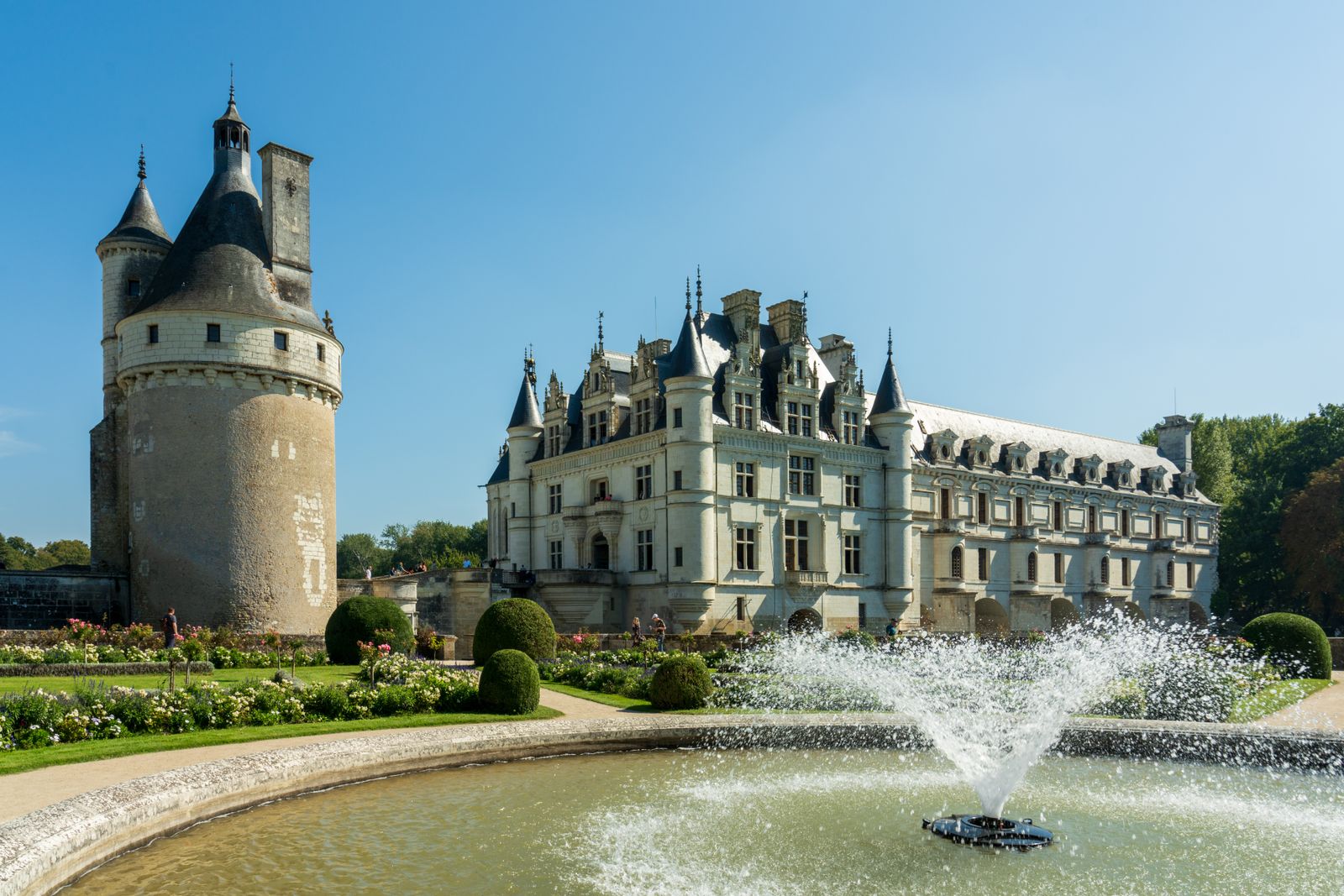
Photo: Susanne Jutzeler / Pexels
Amboise is the Loire town we use as a base more often than Tours, because the royal château sits on a ridge above the river and the streets below it are small enough to learn in an evening. The château is older than the Renaissance palaces and more of a fortress-palace, with wide views up and down the water. Charles VIII died here in 1498 after striking his head on a lintel, a detail guides never skip and visitors always remember. Below the château, the riverfront is for an unhurried dinner. Stay in town if you can, so the morning walk to the ramp is part of the day rather than a drive from an industrial ring road.
A short walk or a very short drive away, Clos Lucé is the manor where Leonardo da Vinci spent his last years as Francis I’s guest, and where he died in 1519. You do not need a special interest in painting to justify the stop. The house is domestic, the gardens hold models of machines taken from his notebooks, and the setting explains why the king wanted him nearby. Treat it as a complement to Amboise, not as a third monumental château. If the group has already climbed Chambord, this is the gentle afternoon. Tours itself is worth a meal and a look at the cathedral quarter, and it is the rail city, but we do not usually spend a night there unless a train time demands it.
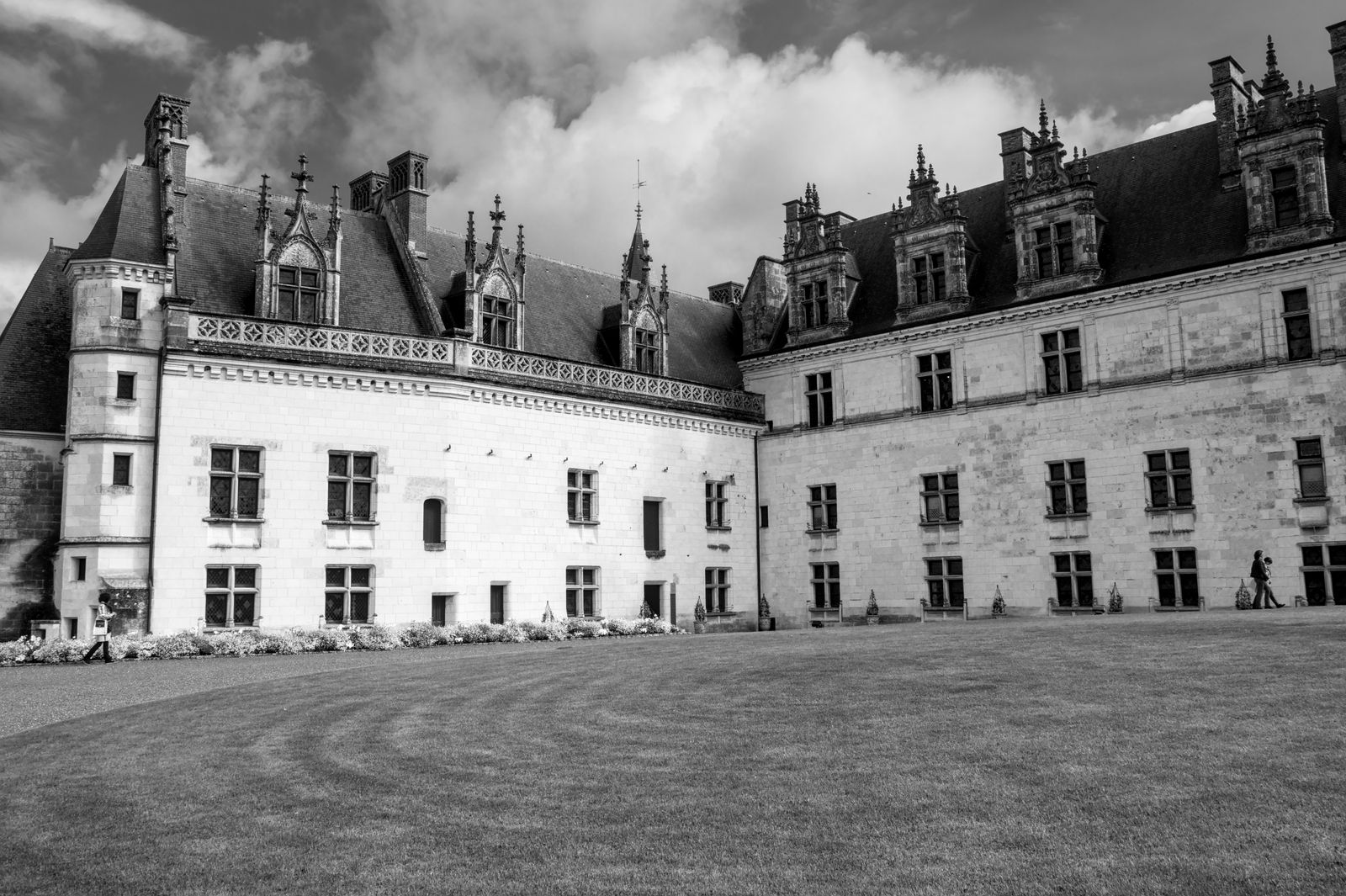
Photo: Jean-Paul Wettstein / Pexels
If the group has the appetite for one more building, the moated château at Écuillé, west of the main tourist spine, shows the moment French houses stopped being only forts. It went up in a few years in the late fifteenth century for Jean Bourré, a minister of Louis XI, and it still reads as a square island of pale stone, corner towers, and a single working bridge. The exterior is the point. You see the defensive outline and, at the same time, the large windows of a house someone meant to live in. It is an easy way to talk about the shift into the Renaissance without standing in another crowded courtyard.
This stop only belongs on the itinerary when you are already driving west, toward Angers or toward the highway south. It is not a reason to crisscross the valley. Travelers who want gardens and river towns more than a fourth set of towers should skip it and take the hours back in Amboise or on the towpath. The Loire rewards subtraction. A week with three great buildings, two long lunches, and one unstructured afternoon will feel more generous than a week with six châteaux and a spreadsheet.
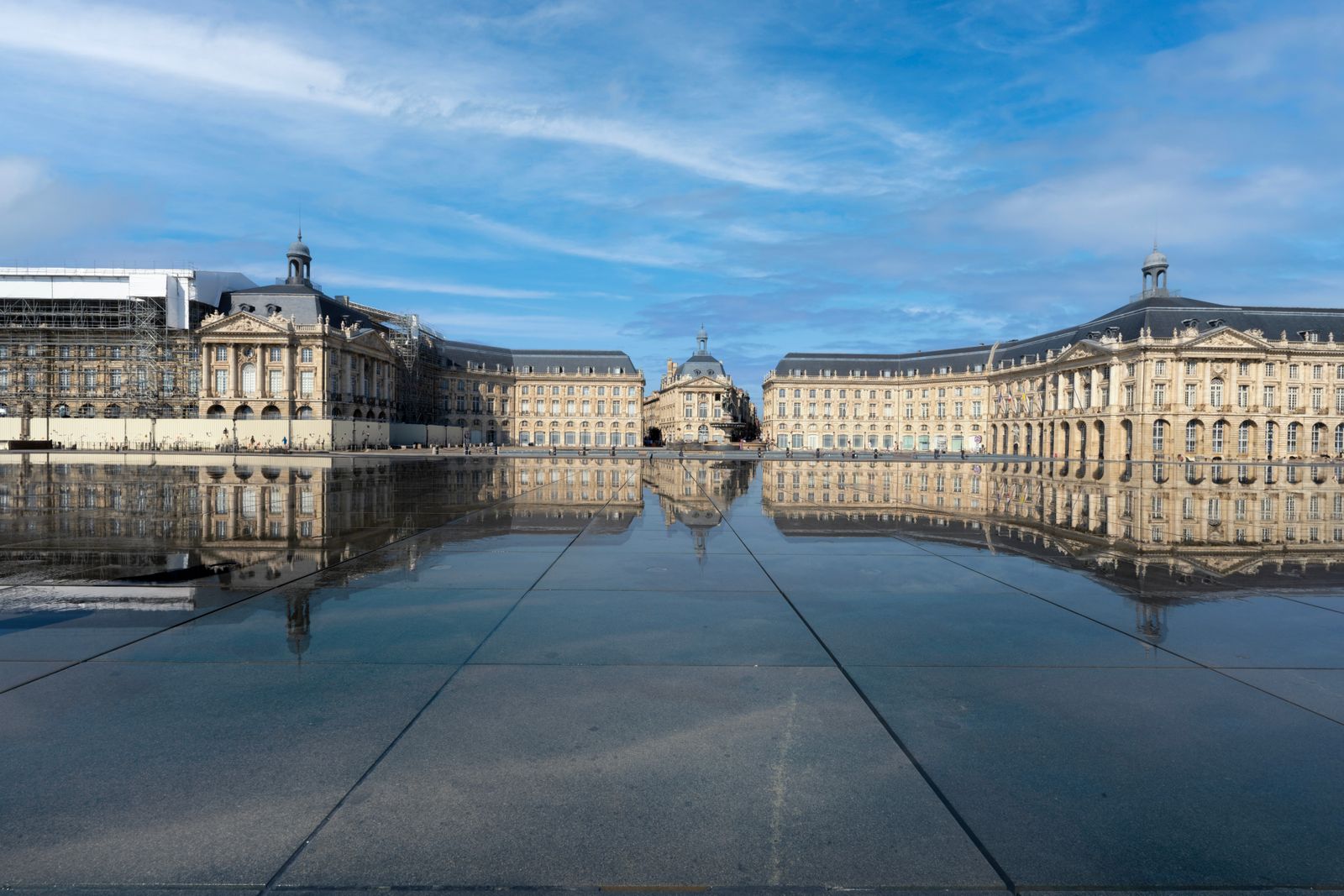
Photo: Miguel Cuenca / Pexels
Bordeaux’s center is an eighteenth-century port city opened onto the Garonne. The Place de la Bourse faces the river, and in front of it the Miroir d’eau spreads a thin film of water across a huge granite square so the façade doubles, breaks up when children run through it, and then goes still again. Come at the end of the day. The stone turns warm, the square fills with people rather than tour groups, and you understand why the whole historic port, the Port of the Moon, was inscribed as a UNESCO World Heritage site in 2007. The streets behind the square are shops, passages, and restaurants in pale limestone. Give the city two nights before you add a vineyard.
The Médoc is the left bank, a long wedge of vines on gravel soils between the estuary and the coastal forest. Cabernet sauvignon leads the classic blends. You can drive the vineyard road for an hour and see how flat and serious the landscape is, with châteaux set back behind gates and gravel verges. We do not build the day around famous estate names. We build it around the landscape, a tasting where the host can talk about gravel and the Gironde, and a return to the city for dinner. Oysters from the Arcachon basin, just to the west, are the classic Bordeaux lunch if you want a half-day that is not another cellar. The right bank can wait for Saint-Émilion, which should be its own morning.
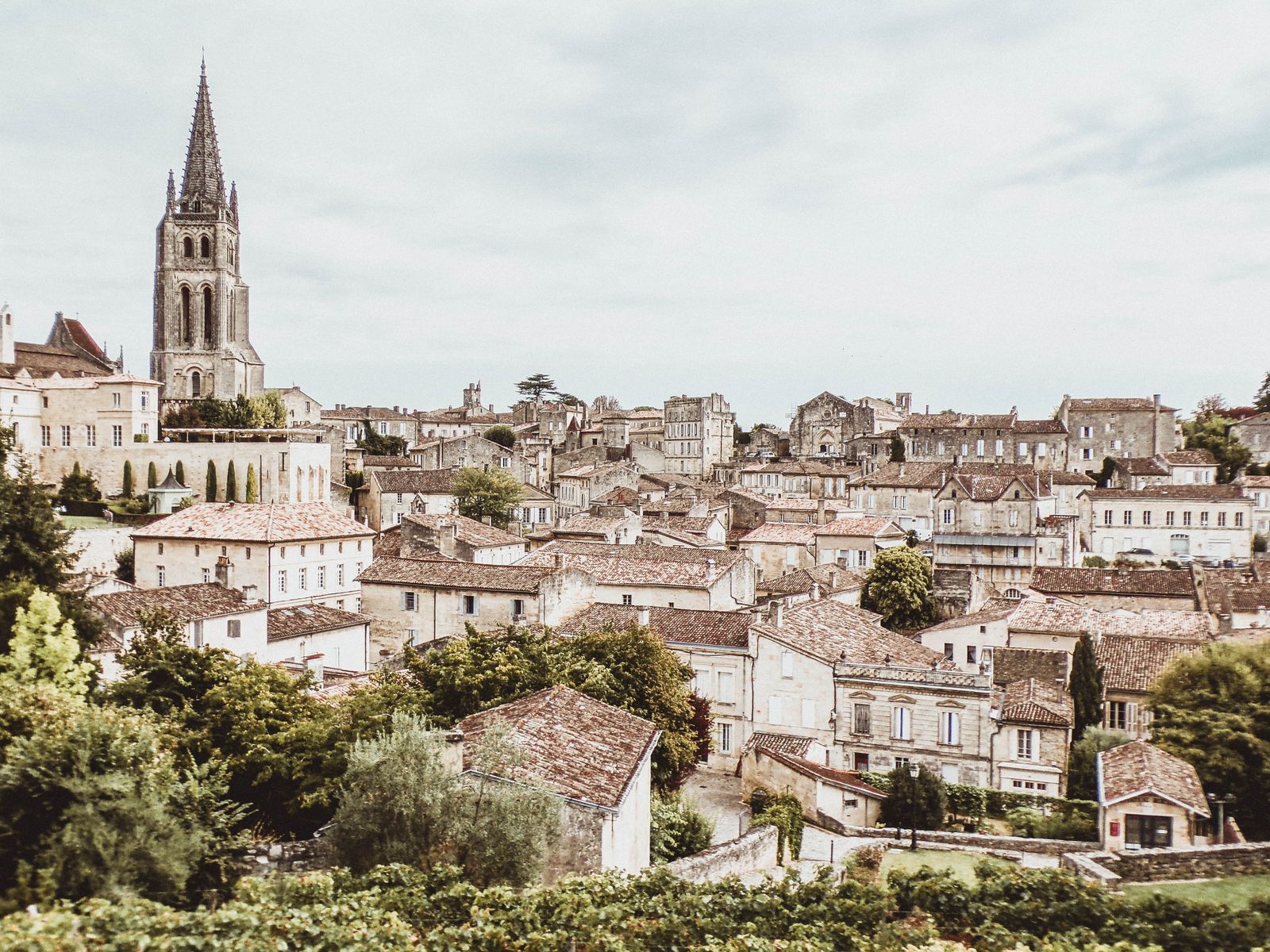
Photo: Niki Nagy / Pexels
Saint-Émilion is a medieval town on a limestone hill, and it looks like it. Lanes run between honey-colored houses, the monolithic church was carved downward into the rock rather than built up from it, and the vineyards start at the last rooftops. The jurisdiction of Saint-Émilion was inscribed by UNESCO in 1999, the first wine landscape on the list, which is a useful way to explain to a group why the town and the vines are one place rather than a pretty village with a tasting room attached. Merlot is the grape you will hear about. The soils change from limestone plateau to clay and gravel within a short walk, which is why two neighboring bottles can taste unrelated.
Go in the morning, before the day-trippers from Bordeaux fill the main street. See the church and the view from the terrace, then spend the rest of the visit outside, on a lane between vines, rather than collecting logos. A car or a driver is simpler than the train-and-taxi combination, though a local train plus a prearranged pickup works for travelers who are not driving. Do not try to add the Médoc on the same day. The two banks are different countries that happen to share a city, and rushing both is how a wine day turns into a windshield day. One bank, done properly, with lunch, is the version people talk about later.
A small hotel in Amboise or in a village along the Loire puts the evening stroll and the morning château in the same place. This is the right base for couples and for anyone who wants to park the car and forget it after arrival.
On the Bordeaux side, a guesthouse set in a vineyard, without turning the trip into a stay at a famous estate, gives you quiet nights and a short drive to Saint-Émilion. Ask for a ground-floor room if stairs are a concern.
For the urban nights, a flat or a small hotel inside the historic center beats a property by the ring road. You can walk to the river and you do not need the car until the vineyard morning.
Paris is the natural partner. The TGV makes the capital and the Loire a single holiday, and our Paris travel guide is the city briefing. Travelers who want a third France, warmer and more southern, continue toward hill towns and the Rhône. That trip is covered in our Provence travel guide. The Atlantic coast west of Bordeaux is a different mood again, pines and long beaches, and it suits a group that has finished with stone and wants an empty afternoon.
Stone floors, gravel vineyard lanes, and formal gardens are the surfaces you will actually walk. Bring shoes that can handle all three, and a light layer even in June because château interiors stay cool. A compact rain jacket matters more than a second pair of dress shoes. In summer, start early and carry water. In October, add a warmer layer for the evening riverfront in Bordeaux. Churches and chapels are part of the visit, so a cover for shoulders is worth packing if you prefer not to improvise.
No. US citizens can stay visa-free for up to 90 days in any 180-day period across the Schengen Area. Bring a passport valid for at least three months after you plan to leave, and we prefer six months, plus blank pages.
Not yet. ETIAS is not in operation, and the European Union has said it will announce a start date months ahead. On arrival you do go through the Entry/Exit System, which has been running at Schengen external borders since April 10, 2026. An officer takes fingerprints and a photo instead of stamping the passport. There is no fee and nothing to apply for in advance.
The State Department’s France advisory is Level 2, exercise increased caution, issued May 28, 2025, because of terrorism and unrest. The Loire Valley and Bordeaux are covered by that country advisory. It does not assign them a higher level of their own. Pickpocketing and phone thefts are called out in crowded places, including train stations and tourist sites, and protests in cities can disrupt transport. Read the full text on travel.state.gov before you go, and enroll in the Smart Traveler Enrollment Program so the embassy can reach you.
May and June for the châteaux, September and October if Bordeaux and the harvest matter as much as the buildings. July and August are possible if you start early and expect company.
Five days covers Amboise, Chenonceau, and Chambord without rushing. Ten to twelve days lets you add Bordeaux and Saint-Émilion and still leave an afternoon unplanned. Fewer than four days reduces the trip to ticket lines.
For the châteaux, yes, unless we arrange a driver. Bordeaux’s center does not need one. The TGV is the right way to connect Paris, the Loire, and Bordeaux.
The euro.
The right season, the one-way route, and the timed château entries are what make this trip feel easy instead of crowded. Planning that is our work. As Fora travel advisors with IATAN accreditation and Virtuoso affiliations, the Novera Travel team will match the pace to your group and look for added amenities at select properties. We will handle the ground details, from the train hops to the vineyard morning.
Novera Travel will be happy to arrange your international flights when you’re traveling first class.
Call +1 33 22 NOVERA – +1 (332) 266-8372 or email info@noveratravel.com