Fiords and volcanoes, glowworm caves and alpine lakes, and a warm Kiwi welcome across two remarkable islands
Photo: Mikael Dubarry / Pexels
Milford Sound, Piopiotahi in Māori, is the best known of the fourteen fiords along Fiordland’s coast. Despite its English name, it isn’t a river-cut sound but a fiord, gouged by glaciers during successive ice ages and later flooded by the sea. Mitre Peak rises nearly 1,700 meters almost straight out of the water, and the area is among the wettest inhabited places on Earth, receiving several meters of rain a year. That rain is a gift: after a heavy downpour, hundreds of temporary waterfalls stream down the cliffs.
New Zealand was one of the last major landmasses to be settled by people. Polynesian voyagers arrived by canoe roughly 700 to 800 years ago, and their descendants became the Māori, who call the land Aotearoa. European whalers and settlers followed, and Te Tiriti o Waitangi, the Treaty of Waitangi signed in 1840 between the British Crown and Māori chiefs, remains the country’s founding document. Long isolation also produced a remarkable natural world: before humans arrived there were no land mammals except bats, and birds such as the kiwi, the kākāpō and the giant, now-extinct moa filled their niches.
Aotearoa New Zealand fits an astonishing range of landscapes into a country about the size of Colorado. You might start your morning beside a steaming geothermal pool, spend the afternoon tasting Sauvignon Blanc among the vines, and finish the week cruising beneath sheer granite walls in Fiordland. Add a living Māori culture, superb food and wine, and a deep love of the outdoors, and it’s a trip that stays with you.
Here’s what we tell our clients: the distances are bigger and the roads slower than the map suggests. Pick one island, or a focused route across both, and give each region time to breathe.
Seasons are reversed from the US, so your winter is New Zealand’s summer.
Our take: For a first visit, we love February through April, when the weather is still warm, the summer crowds thin out, and the wineries are in full swing.
Auckland and the Bay of Islands: Auckland, the “City of Sails,” spreads across volcanic cones and two harbors. To the north, the Bay of Islands offers sailing, dolphins, and the Waitangi Treaty Grounds, where Te Tiriti o Waitangi was first signed in 1840.
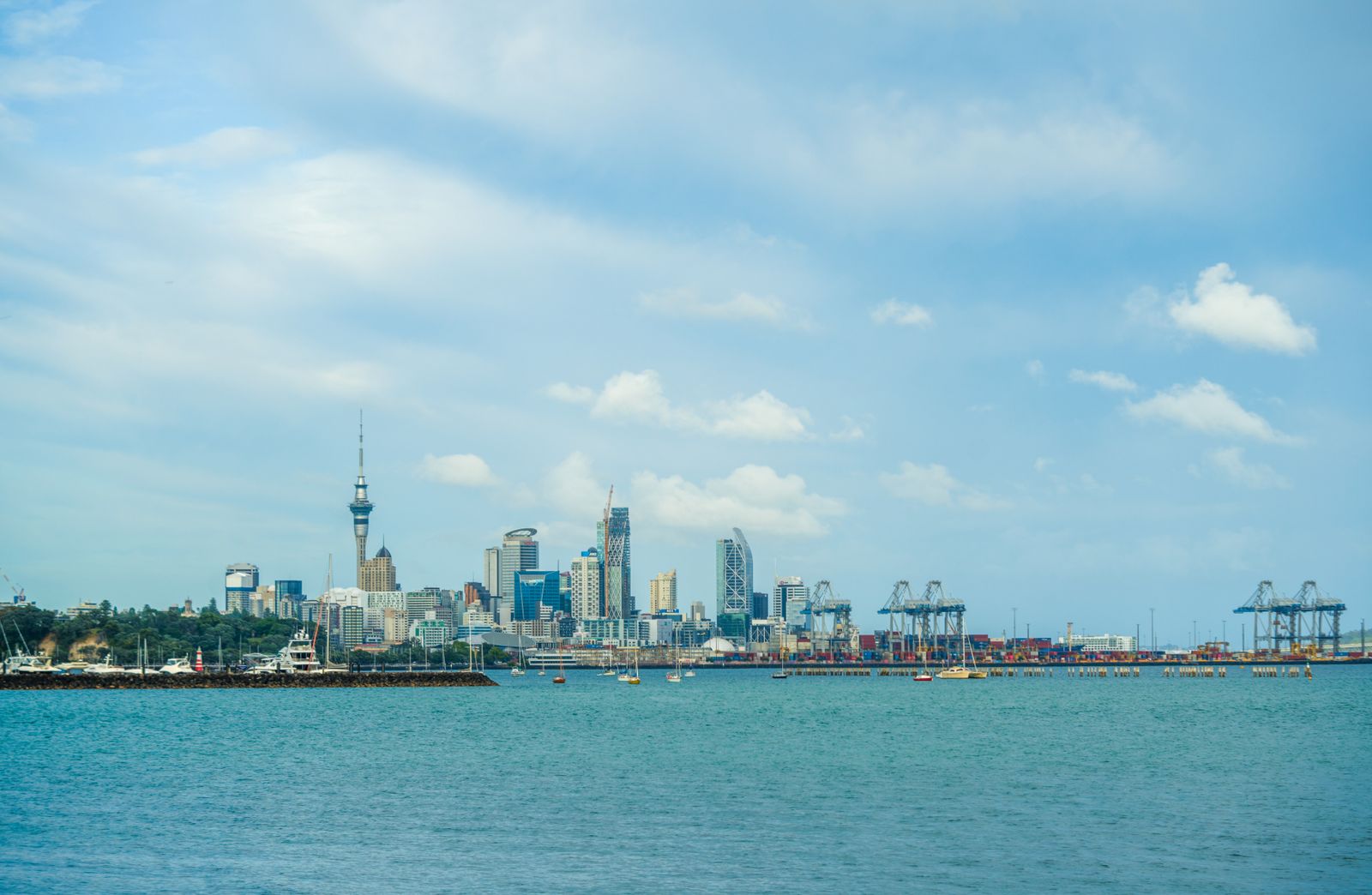
Photo: Gaurav Kumar / Pexels
Auckland is built on a volcanic field of around fifty small volcanoes, and cones such as Maungawhau (Mount Eden), along with Rangitoto Island, which rose from the sea only about 600 years ago, give the city its rolling skyline. It sits on a narrow isthmus between two harbors, the Waitematā opening to the Pacific and the Manukau to the Tasman Sea, and its strong sailing culture earned it the nickname City of Sails. Ferries link the downtown waterfront with the islands of the Hauraki Gulf.
Waiheke Island, about 40 minutes away by ferry, is known for vineyards, olive groves and sheltered beaches, while Rangitoto offers a summit walk across old lava fields to views over the gulf. Auckland is often described as the largest Polynesian city in the world, with Samoan, Tongan, Cook Islands and Māori communities whose festivals, markets and food give it a distinct Pacific flavor. North of the city, subtropical Northland leads to the Bay of Islands and, at the very tip, Cape Rēinga, where the Tasman Sea and the Pacific Ocean meet.
Rotorua and Waitomo: Rotorua sits atop a geothermal field of geysers and bubbling mud, and it is a heartland of Māori culture. Nearby, the Waitomo caves glow with thousands of tiny glowworms.
Tongariro and Wellington: Tongariro National Park, a dual World Heritage Site for its volcanic landscape and its cultural significance to Māori, is home to the famous Alpine Crossing. Wellington, the capital, pairs a compact waterfront with excellent museums, coffee, and food.
Marlborough, Nelson, and Abel Tasman: Marlborough is famous for its Sauvignon Blanc, while Abel Tasman National Park has golden beaches and turquoise bays.
Kaikōura and Christchurch: Christchurch is a garden city reborn with creative energy. Up the coast, Kaikōura is known for whales, dolphins, and fur seals.
Queenstown, Fiordland, and the Southern Alps: Queenstown is the adventure capital and gateway to Milford and Doubtful Sounds. Inland, Aoraki/Mount Cook and Lake Tekapo sit within one of the world’s largest dark-sky reserves, and the West Coast has rainforest and glaciers.
Nonstop flights from several US cities land in Auckland. Additional seasonal nonstops, including some to Christchurch, have operated during the southern summer. Domestic flights connect Auckland and Christchurch with Queenstown, Wellington, and other regional airports.
Entry rules (as of October 2026): US citizens visiting for up to three months need a New Zealand Electronic Travel Authority (NZeTA) before they travel. Request it only through the official Immigration New Zealand app or website. The International Visitor Conservation and Tourism Levy (IVL) is paid when you request it. An NZeTA is generally valid for two years and multiple visits. Your passport must be valid for at least three months after you plan to leave New Zealand, and you may be asked to show onward travel and sufficient funds. Everyone must also complete a New Zealand Traveller Declaration, which is free, and declare all food, plant and animal products, and used outdoor gear. Biosecurity is strict, so clean your hiking boots before you fly. We recheck these rules before every departure. Also review the US State Department’s New Zealand page and consider enrolling in STEP.
Ideal for independent travelers who want flexibility. New Zealand drives on the left, roads are often narrow and winding, and many rural bridges are single-lane, so plan shorter driving days.
A private driver-guide handles the roads and adds local stories, hidden stops, and winery introductions, so you can simply enjoy the scenery.
New Zealand is known for intimate luxury lodges set on sheep stations, lakeshores, and private coastlines, often with gourmet dining and guided activities included. Pair them with helicopter transfers and private guides for a seamless trip.
Small-group tours suit solo travelers and anyone who wants the logistics handled. Cruise season runs roughly from October to April, with itineraries that often pair New Zealand ports with Australia. Fleets and itineraries change each season, so we confirm current sailings.
> Advisor tip: Booking through us as a Fora advisor can unlock extra perks at many partner hotels and lodges in New Zealand, such as daily breakfast, a property credit, or a room upgrade when available. Benefits vary by property, so ask us what applies to your dates.
Waterfalls pour down sheer cliffs into the fiord, with Mitre Peak rising from the water.
Standout experience: A scenic flight over the Southern Alps into Milford Sound, followed by a cruise on the fiord.
Set on Lake Wakatipu beneath the Remarkables, Queenstown offers jet boating, hiking, skiing, and nearby Central Otago wineries.
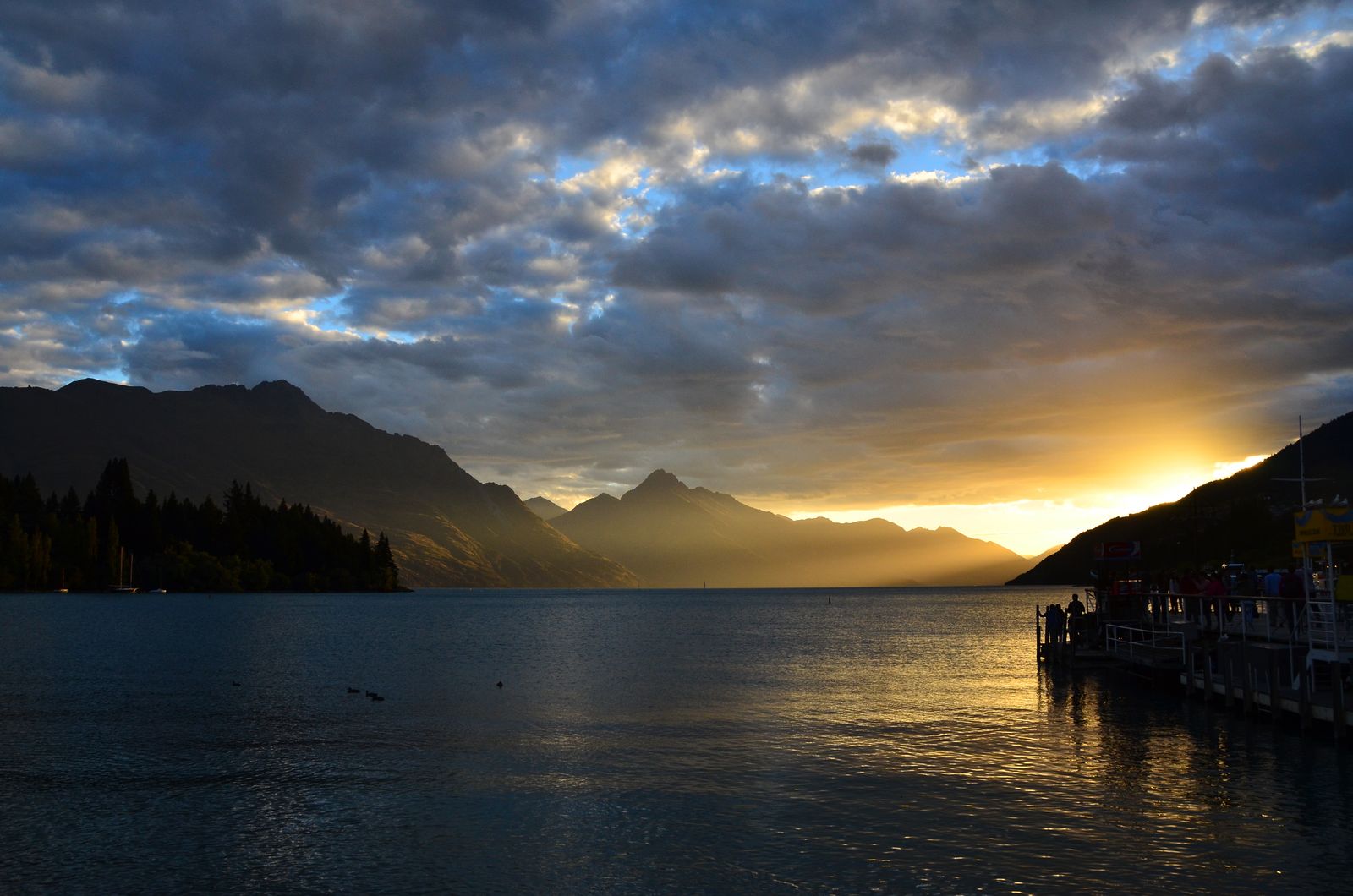
Photo: Mickoh Ramos / Pexels
Queenstown grew out of the gold rush of the 1860s, when prospectors struck gold in the Shotover and Arrow Rivers, and nearby Arrowtown still preserves its wooden miners’ cottages and the restored huts of a Chinese miners’ settlement. Today the town is famous as the birthplace of commercial bungy jumping, which began at the Kawarau Gorge Suspension Bridge in 1988, and as a base for jet boating, paragliding, mountain biking and skiing at the Remarkables and Coronet Peak. Lake Wakatipu rises and falls slightly every few minutes, a rhythm Māori legend links to the heartbeat of a sleeping giant.
The surrounding region of Central Otago has a dry, continental climate unusual for New Zealand, with hot summers, frosty winters and wide swings in temperature, conditions that suit Pinot Noir. Vineyards around Gibbston, Bannockburn and Cromwell line schist-strewn valleys, and in autumn the poplars and willows planted by early settlers turn brilliant gold. Lakeside Wānaka, about an hour away over the Crown Range road, is a quieter base with superb walks and a famous lone willow growing out of the lake.
Standout experience: A day exploring the Gibbston Valley and Bannockburn wineries with a private driver.
Geysers, mud pools, and colorful hot springs reveal the power beneath the ground. Visitors are welcomed into Māori traditions through cultural experiences hosted by local iwi (tribes).
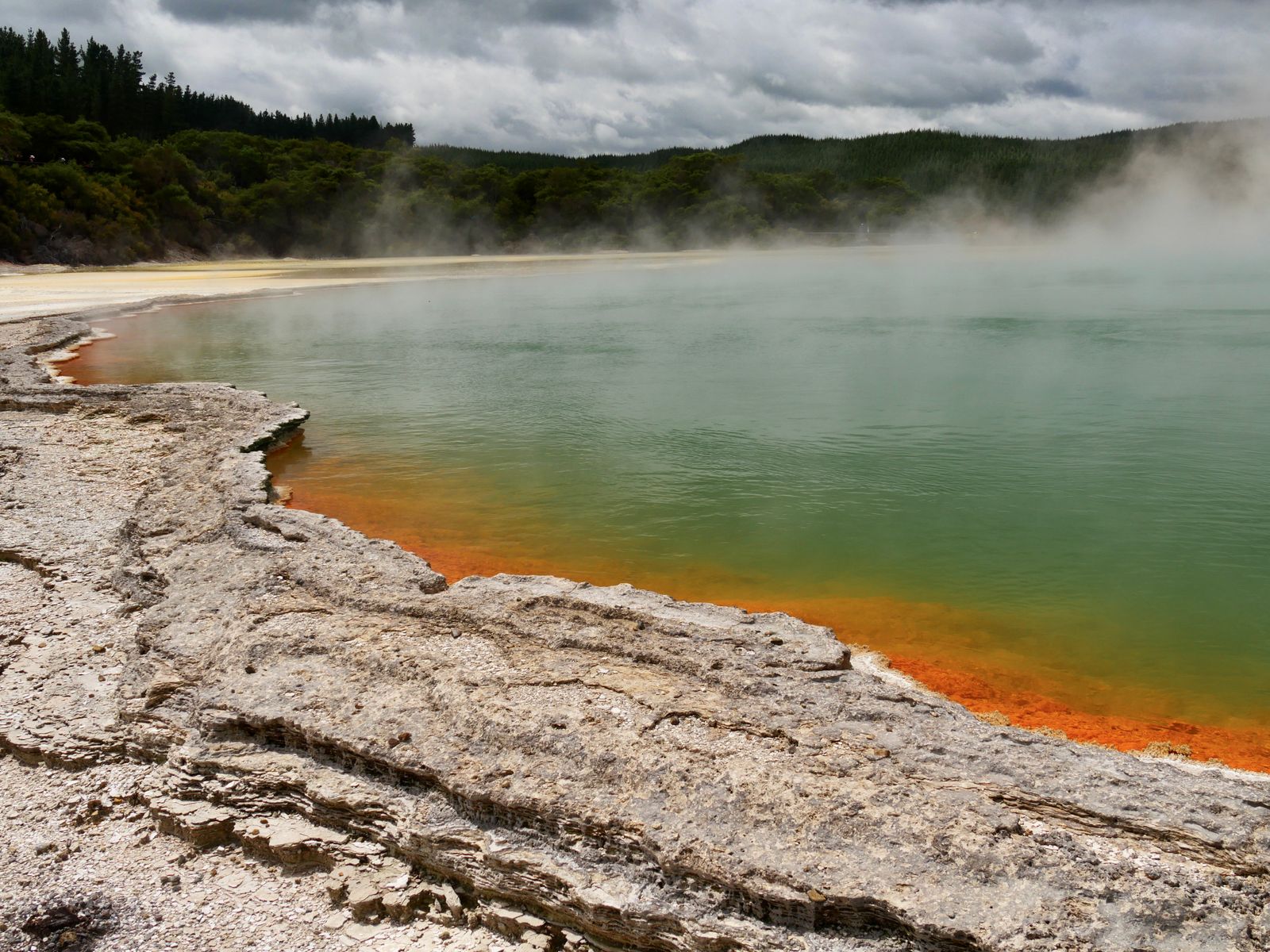
Photo: Dirk Pothen / Pexels
Rotorua lies within the Taupō Volcanic Zone, one of the most active geothermal regions on the planet, and the smell of sulfur drifting through town is part of the experience. The Champagne Pool at Wai-O-Tapu gets its orange rim from mineral deposits and its fizz from carbon dioxide, while at Whakarewarewa the Pōhutu Geyser erupts many times a day. Locals have long cooked in natural steam vents, and soaking in hot pools by the lake is a tradition that goes back centuries.
Te Arawa, the iwi of the Rotorua lakes, have hosted visitors since the nineteenth century, when the Pink and White Terraces, vast silica formations on Lake Rotomahana, drew travelers from around the world. Mount Tarawera’s eruption in 1886 destroyed the terraces and buried the village of Te Wairoa, whose excavated remains can still be visited. At Te Puia, a national school of carving and weaving keeps traditional arts alive, and the lake itself, a flooded volcanic caldera, is ringed by redwood forest trails and mountain-bike tracks.
Standout experience: An evening of storytelling, kapa haka performance, and a hāngī meal cooked in an earth oven.
Glide by boat through dark grottos lit by glowworms that look like a starry sky.
Standout experience: A guided blackwater-rafting or small-group cave trip for a more adventurous look.
Often called one of the world’s great day hikes, this route crosses volcanic terrain past steaming vents and the vivid Emerald Lakes. Alpine weather can change quickly, so check conditions first.
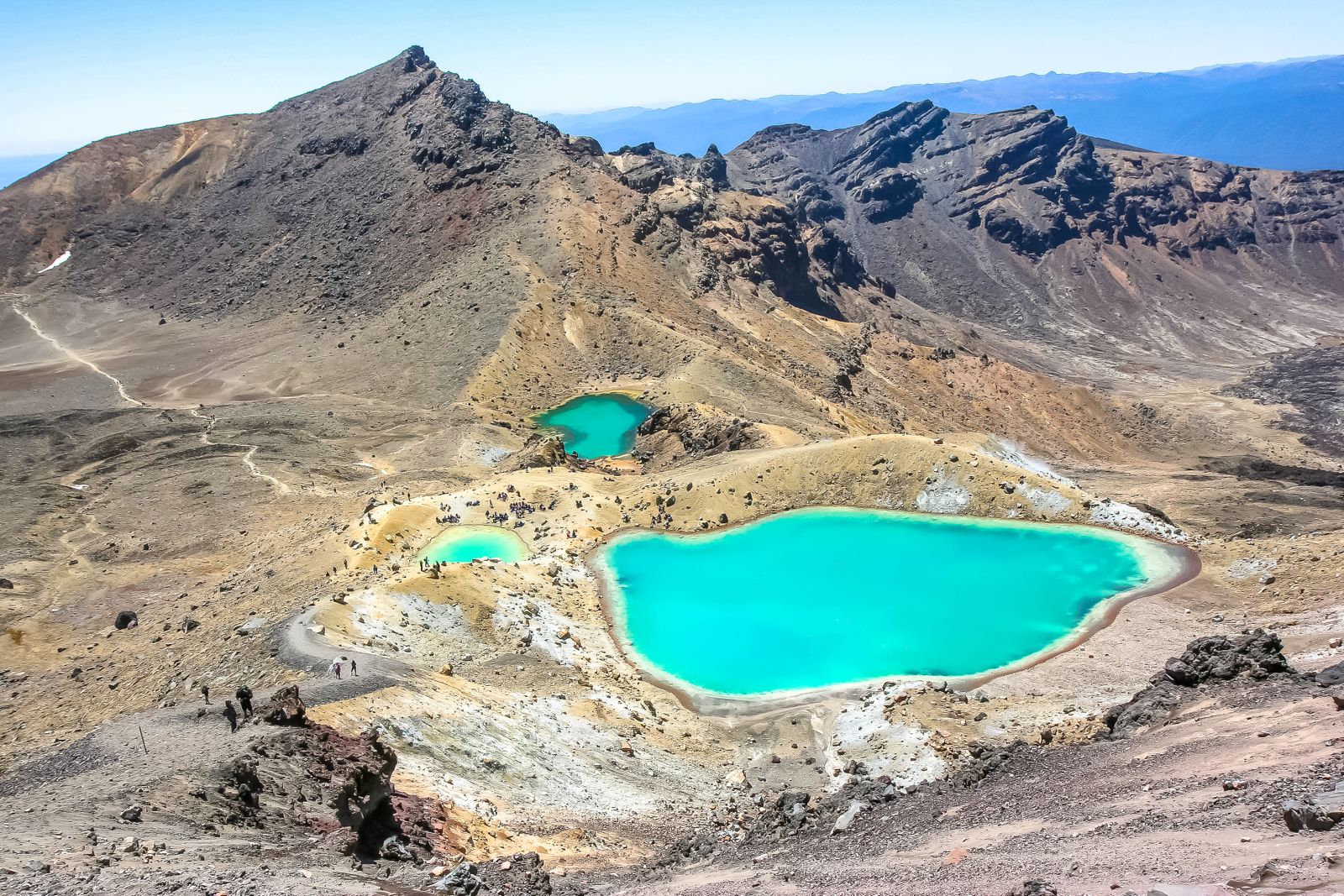
Photo: Snapwire / Pexels
Tongariro became New Zealand’s first national park in 1887, after Te Heuheu Tūkino IV, paramount chief of Ngāti Tūwharetoa, gifted its sacred peaks to the nation to protect them. Its three volcanoes, Tongariro, Ngāuruhoe and Ruapehu, are all active, and the cone of Ngāuruhoe stood in for Mount Doom in the Lord of the Rings films. The Alpine Crossing runs about 19 kilometers, climbing past the Red Crater, where the Emerald Lakes take their color from dissolved minerals, then descending through tussock and native forest.
Lake Taupō, just north of the park, is the largest lake in New Zealand and fills a caldera formed by a massive eruption about 1,800 years ago. The Waikato River leaves the lake and thunders through the narrow chute of Huka Falls, and the lake is renowned for trout fishing. In winter, Ruapehu’s slopes hold the North Island’s main ski fields. The crossing is best attempted in the more settled months from late spring to autumn, with an early start, warm layers and a close eye on the forecast.
Standout experience: Completing the crossing with a local guide on a clear summer day.
New Zealand’s tallest peak towers over glacier-fed rivers and turquoise lakes, while the surrounding dark-sky reserve offers exceptional stargazing.
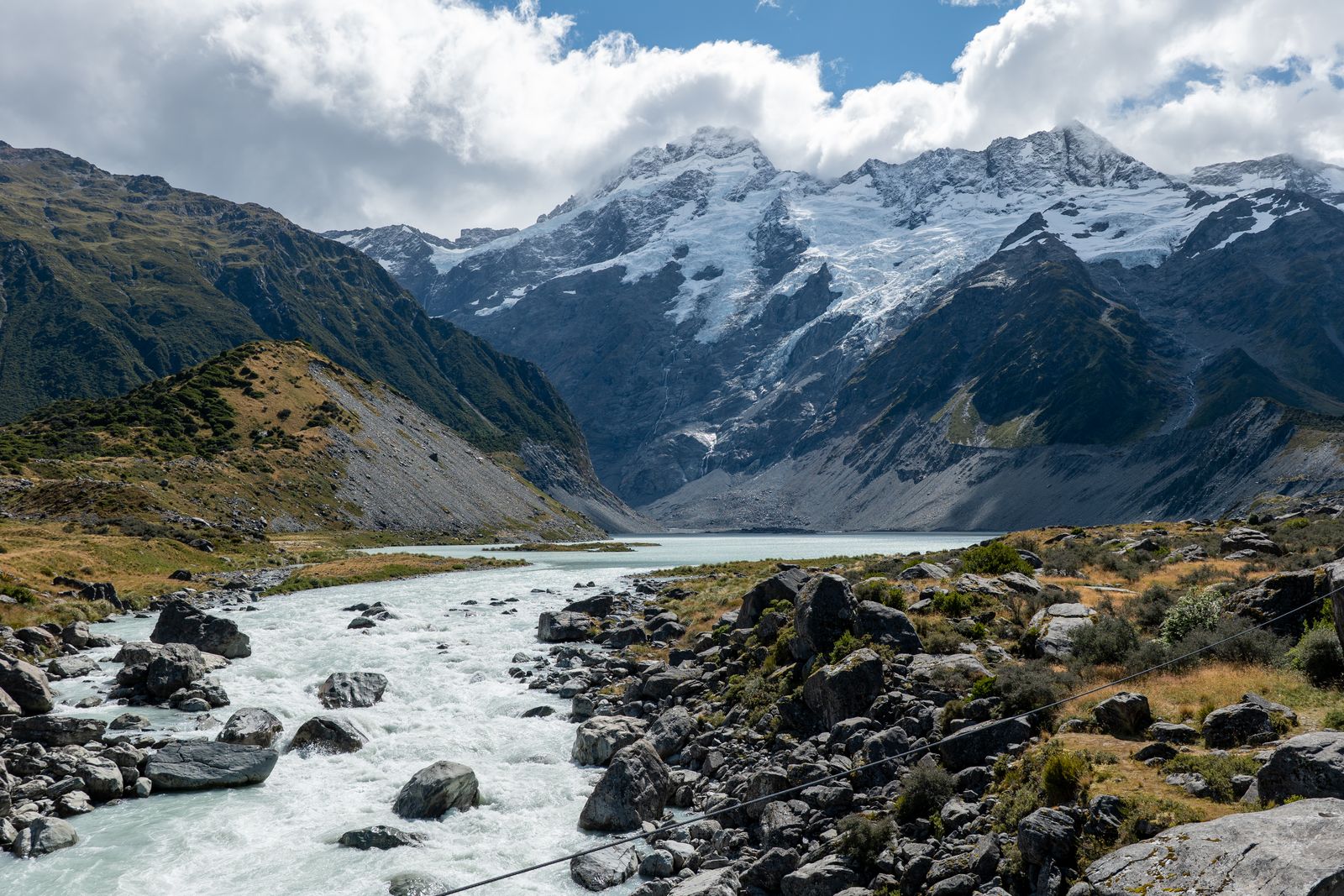
Photo: Mark Direen / Pexels
At about 3,724 meters, Aoraki/Mount Cook is the highest mountain in New Zealand, and Ngāi Tahu regard it as their most sacred ancestor. A young Edmund Hillary honed his climbing skills here before Everest. The Hooker Valley Track, about 10 kilometers return, crosses three swing bridges to a glacial lake often dotted with icebergs, with the peak rising straight ahead. In the next valley lies the Tasman Glacier, the longest in New Zealand, where boat trips explore the iceberg-filled terminal lake in summer.
The Mackenzie Basin around Lakes Tekapo and Pukaki forms the Aoraki Mackenzie International Dark Sky Reserve, where strict lighting rules keep the night sky exceptionally clear for viewing the Milky Way and the Magellanic Clouds. The lakes’ milky turquoise color comes from fine rock flour ground by the glaciers. On the shore of Lake Tekapo, the little stone Church of the Good Shepherd, built in 1935, is one of the most photographed buildings in the country, and in late spring and early summer, lupins bloom in purple and pink along the roadsides.
Standout experience: Walking the Hooker Valley Track, then joining a guided stargazing session that evening.
Mountains meet the sea here, and deep coastal waters attract whales, dolphins, and seabirds.
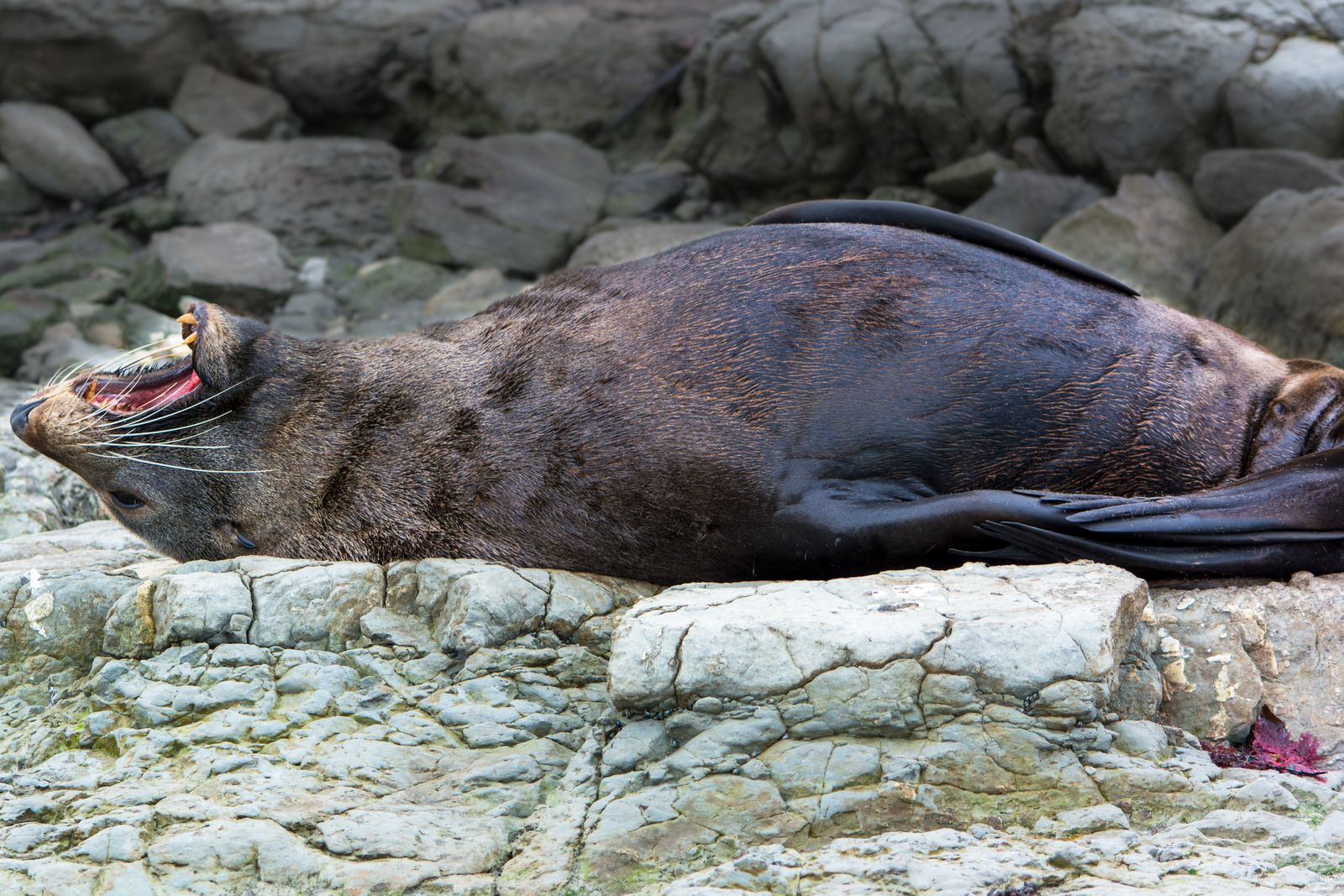
Photo: Frank Schrader / Pexels
Standout experience: A whale-watching cruise or scenic flight, followed by fresh crayfish by the shore.
Franz Josef and Fox glaciers descend toward temperate rainforest. Because the glaciers have retreated, ice access is usually by guided heli-hike.
Standout experience: A helicopter landing on the névé high above the rainforest.
Māori culture is woven into daily life, from te reo Māori place names and greetings like “kia ora” to the haka and Matariki, the Māori New Year, now a public holiday. Approach marae visits and cultural experiences with respect and follow your hosts’ lead. Food highlights include lamb, green-lipped mussels, pāua (abalone), hāngī, pavlova, and hokey pokey ice cream, paired with world-class Sauvignon Blanc and Central Otago Pinot Noir. And yes, Kiwis take their flat whites seriously. Tipping isn’t expected.
No visa is needed for tourist stays of up to three months, but you must have an NZeTA before you travel and complete a Traveller Declaration.
The North Island is strong on culture, geothermal areas, and beaches, while the South Island has the big mountain and fiord scenery. Many first-timers choose both.
February to April offers warm weather, fewer crowds, and harvest season.
Drive the scenic Milford Road from Te Anau, or fly in from Queenstown, then take a fiord cruise.
For Great Walks with overnight huts, yes. Many day hikes need no booking, but some require shuttle reservations.
As Fora advisors, we take care of the details for you: the right season and route, hand-picked hotels and lodges with added amenities at select properties, trusted guides, and a pace that leaves room for the unexpected.
Novera Travel will be happy to arrange your international flights when you’re traveling first class.
Call +1 33 22 NOVERA – +1 (332) 266-8372 or email info@noveratravel.com
Prefer to reach out another way? Visit our Contact page.