Waterfalls spilling into deep blue fjords, scenic rails, Arctic islands, and the magic of the northern lights
Photo: Nils R / Pexels
Few places deliver scenery on the scale of western Norway. Sheer mountain walls rise straight out of the sea, waterfalls tumble from cliffs into mirror-still fjords, and colorful wooden villages cling to the shoreline. Add design-forward cities, beautifully engineered roads and railways, and a north where summer nights stay bright and winter skies dance with green light, and you have a trip that feels both wild and effortless.
Geirangerfjord shows why. This narrow, S-shaped arm of the Storfjord winds about 15 kilometers between cliffs streaked with waterfalls. On one side, the Seven Sisters tumble down the rock face; across the water stands the Suitor, a falls that legend says is forever trying to woo them. High on the ledges you can spot abandoned farms such as Skageflå, once reached only by steep paths and ladders. Above the village, the Eagle Road climbs in hairpin bends, and the Dalsnibba viewpoint, nearly 1,500 meters up, looks straight down the valley to the fjord.
Here’s what we tell our clients: Norway rewards slow travel. Ferries, mountain passes, and winding fjord roads take time, so it’s worth choosing a focused region and pairing the fjords with one city and, if time allows, the Arctic north.
Our take: For the fjords, we love June and early September for long days and calmer roads. For the northern lights, plan for February or March, when there’s more daylight for exploring between aurora nights.
Bergen is the classic gateway. From there, you can reach the narrow, UNESCO-listed Nærøyfjord and the Flåm valley, then continue north to Ålesund and the dramatic, UNESCO-listed Geirangerfjord. Together they form the West Norwegian Fjords World Heritage Site.
Oslo combines a lively waterfront, the striking Opera House, and world-class museums. From here, the Bergen Railway climbs across the high Hardangervidda mountain plateau, one of Europe’s great train rides.
Stavanger is the base for the Lysefjord and its famous hikes, Preikestolen and Kjeragbolten.
Tromsø is the hub for northern lights, whale watching in winter, and midnight-sun summers. The Lofoten Islands offer jagged peaks, fishing villages, and some of Norway’s most dramatic scenery.
Nonstop flights connect the New York area with Oslo, with additional seasonal service in summer. Travelers from other US cities typically connect through a European hub. Bergen and Tromsø are reached via a short domestic flight from Oslo, or by connecting through another European hub.
Entry rules (as of October 2026): Norway is not in the EU, but it is part of the Schengen Area, so US citizens can visit visa-free for up to 90 days in any 180-day period. The EU Entry/Exit System (EES) is now fully in place. It records your fingerprints and a photo at your first Schengen border crossing and replaces passport stamps. ETIAS, the planned travel authorization, is not yet in operation, and the EU will announce its start date in advance. The Schengen rules require a passport valid for at least three months beyond your planned departure. The US State Department recommends six months of validity for Norway and two blank pages. We recheck these rules before every departure. Also review the State Department’s Norway page and consider enrolling in STEP.
Ideal for independent travelers. Fjord roads are spectacular but narrow, with frequent ferry crossings and tunnels, so plan shorter driving days.
Norway’s scenic railways and fjord ferries link many highlights without a car, and they make for a relaxed, low-stress journey.
A private driver-guide handles the roads, ferries, and timing, adding stops at viewpoints and villages that are easy to miss on your own.
Stay in historic fjordside hotels and design-led retreats, add private boat excursions and helicopter sightseeing, or explore by sea on a fjord cruise or a classic coastal voyage that calls at dozens of ports between Bergen and the far north. Since January 2026, smaller passenger ships in the World Heritage fjords must run without direct emissions, and the rule extends to larger ships from 2032. Many fjord sightseeing boats are now electric and whisper-quiet.
> Advisor tip: Booking through us as a Fora advisor can unlock extra perks at many partner hotels in Norway, such as daily breakfast, a property credit, or a room upgrade when available. Benefits vary by property, so ask us what applies to your dates.
Waterfalls such as the Seven Sisters cascade down the cliffs of this deep, winding fjord.
Standout experience: A fjord cruise past the waterfalls, followed by the drive up to a high viewpoint for sweeping views.
Bergen’s Bryggen, the colorful Hanseatic wharf and a UNESCO World Heritage Site, faces a busy harbor framed by seven mountains.
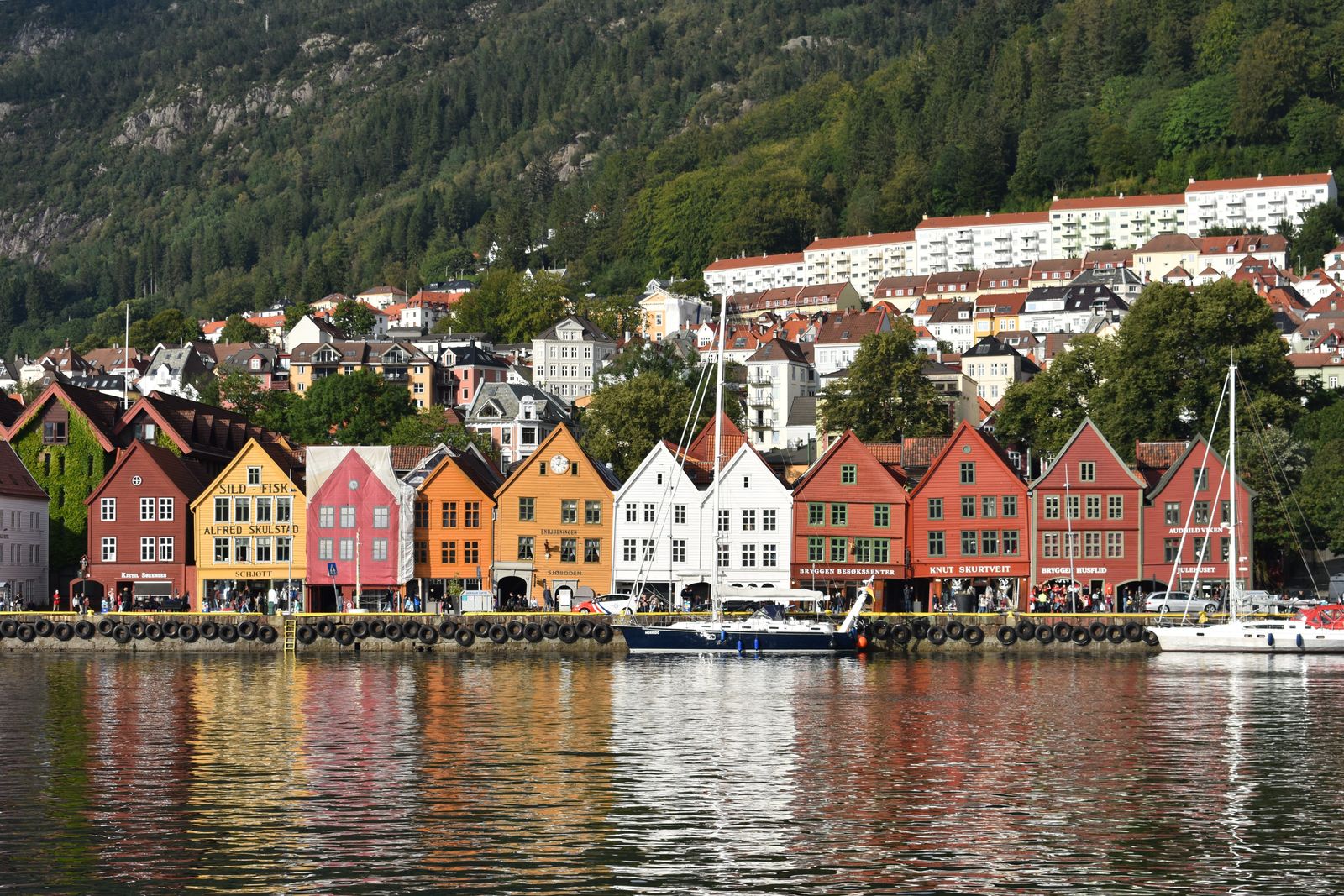
Photo: Abdullah Guc / Pexels
Bergen was founded around 1070 and served as Norway’s capital in the thirteenth century. From the fourteenth century, merchants of the German Hanseatic League ran a trading post at Bryggen, exchanging grain for the dried cod, or stockfish, shipped down from the Arctic north. The wharf’s narrow wooden buildings have burned and been rebuilt many times along the same medieval lines, and the passages between them, with tilting walls and creaking boardwalks, now hold small workshops, galleries and cafés.
Bergen sits among seven mountains and is famous as one of the rainiest cities in Europe, so a good rain jacket is part of the local uniform. When the sun breaks through, the city is glorious. The harborside fish market sells shellfish, smoked salmon and creamy fish soup, and the KODE art museums around the Lille Lungegårdsvann lake hold an important collection of works by Edvard Munch. Composer Edvard Grieg’s lakeside villa, Troldhaugen, just south of the city, hosts lunchtime piano recitals in summer.
Standout experience: Riding the funicular up Mount Fløyen for views over the city and fjords.
A scenic mountain railway links the tiny village of Flåm with the high Bergen Railway, passing waterfalls and steep valleys. Nearby, the Nærøyfjord is one of the narrowest fjords in Europe.
Standout experience: Riding the railway down to Flåm, then gliding through the Nærøyfjord on a quiet electric boat.
After a fire in 1904, Ålesund was rebuilt in the Art Nouveau style, with turrets and ornate façades. Farther north, the Atlantic Ocean Road hops across islets and bridges right at the sea’s edge.
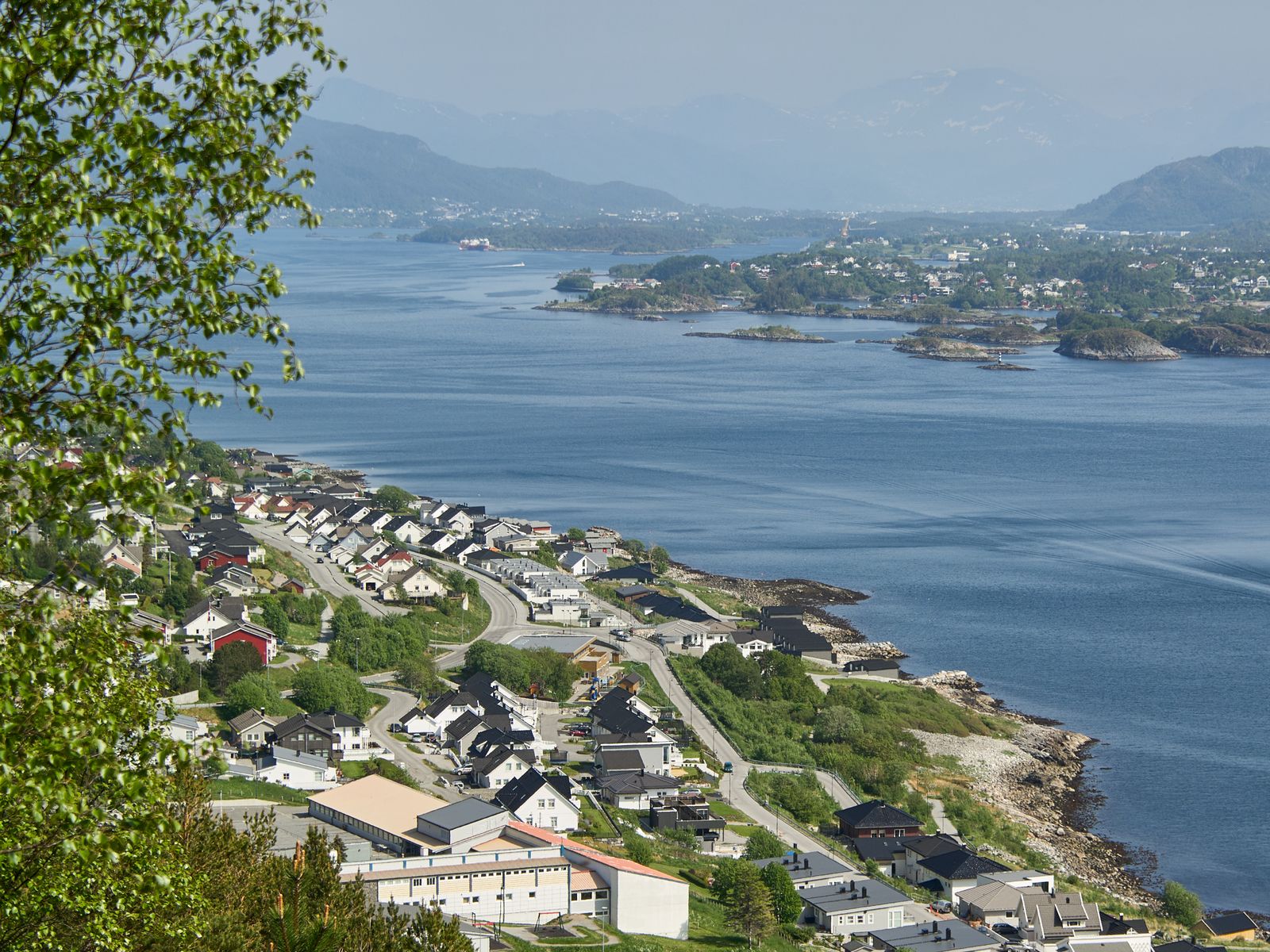
Photo: Wycher van Vliet / Pexels
In January 1904, a fire swept through Ålesund and destroyed most of the town, leaving thousands homeless. Germany’s Kaiser Wilhelm II, who often holidayed in the region, sent ships with supplies, and within a few years the town was rebuilt in stone and brick in the Jugendstil, or Art Nouveau, style of the day. The result is one of Europe’s most harmonious Art Nouveau townscapes, full of turrets, spires and decorative details, best admired from the Aksla viewpoint, reached by 418 steps from the town park.
Ålesund is a fishing town at heart, spread across several islands near the mouth of the Storfjord, and it remains a center of the klippfisk trade, cod that is salted and dried before export. South of town, the Sunnmøre Alps rise steeply from the fjords, and summer day trips reach Geirangerfjord by road and ferry. The bird cliffs on the island of Runde, a short drive away, host tens of thousands of nesting seabirds, including Atlantic puffins from roughly April to August.
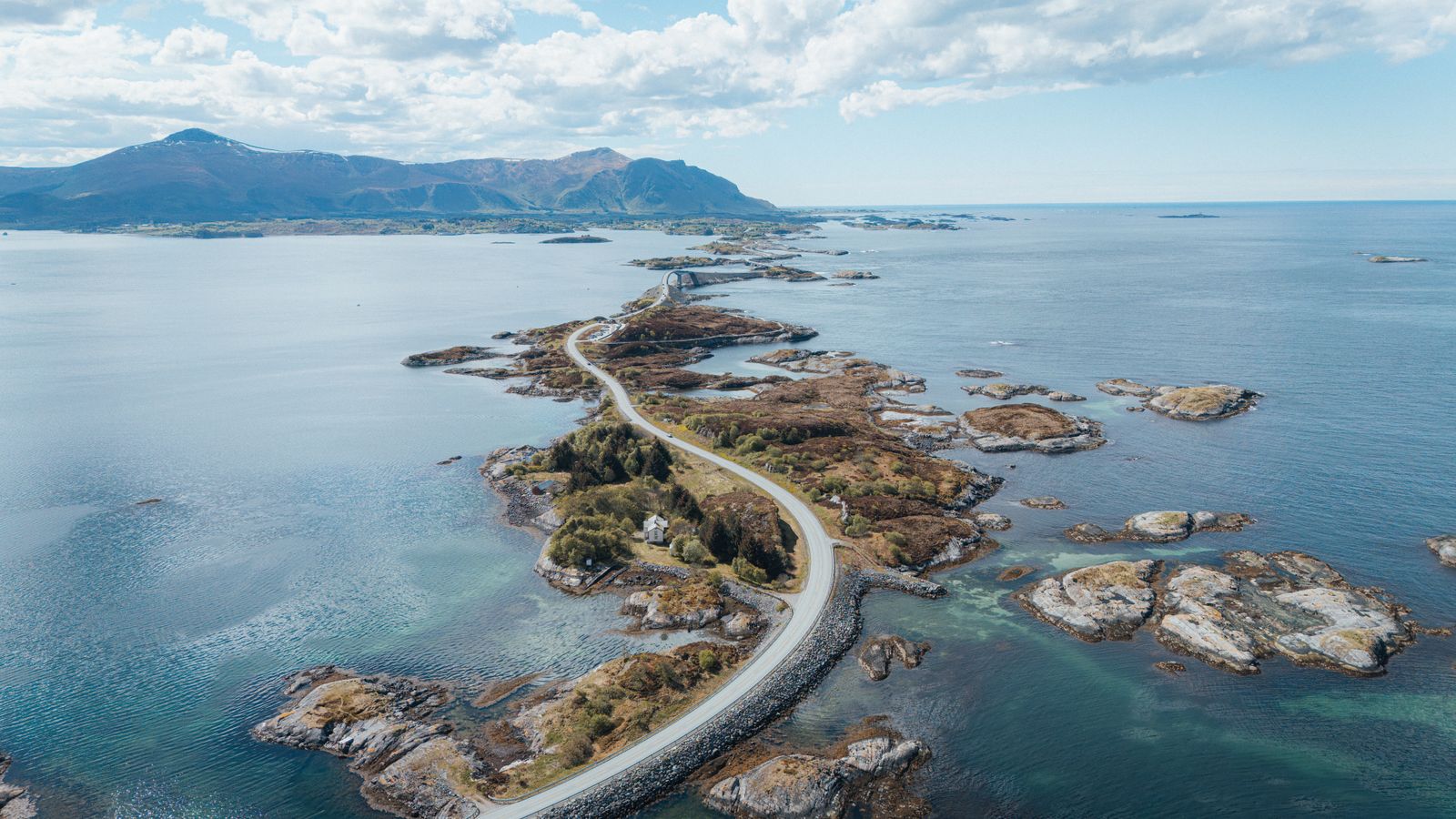
Photo: Florian Süß / Pexels
The Atlantic Ocean Road, or Atlanterhavsveien, runs about eight kilometers between Molde and Kristiansund, hopping across a chain of low islands and skerries on eight bridges. The most famous, Storseisundet, curves so steeply that from some angles it seems to end in midair. Opened in 1989, the road crosses a stretch of coast battered by autumn and winter storms, when waves can break over the roadside; on calm summer evenings, anglers cast from walkways built alongside it.
Nearby Molde, known as the town of roses, looks out from the Varden viewpoint across a panorama of more than two hundred mountain peaks and hosts a major international jazz festival each July. The fjord road southeast to Åndalsnes leads into the Romsdal valley, where the Trollstigen mountain road climbs eleven hairpin bends up a sheer valley wall beside a thundering waterfall. It usually opens from late May or June until autumn, depending on snow.
Standout experience: Climbing the steps to the Aksla viewpoint at sunset, then driving the Atlantic Ocean Road the next day.
Preikestolen (Pulpit Rock) is a flat-topped cliff high above the Lysefjord, and Kjeragbolten is a boulder wedged in a mountain crevice. Trolltunga, to the north in Hardanger, is a much longer, full-day hike. All three are demanding. Go in season with good boots and an early start, check the weather, stay well back from cliff edges, and consider a local guide, especially outside summer.
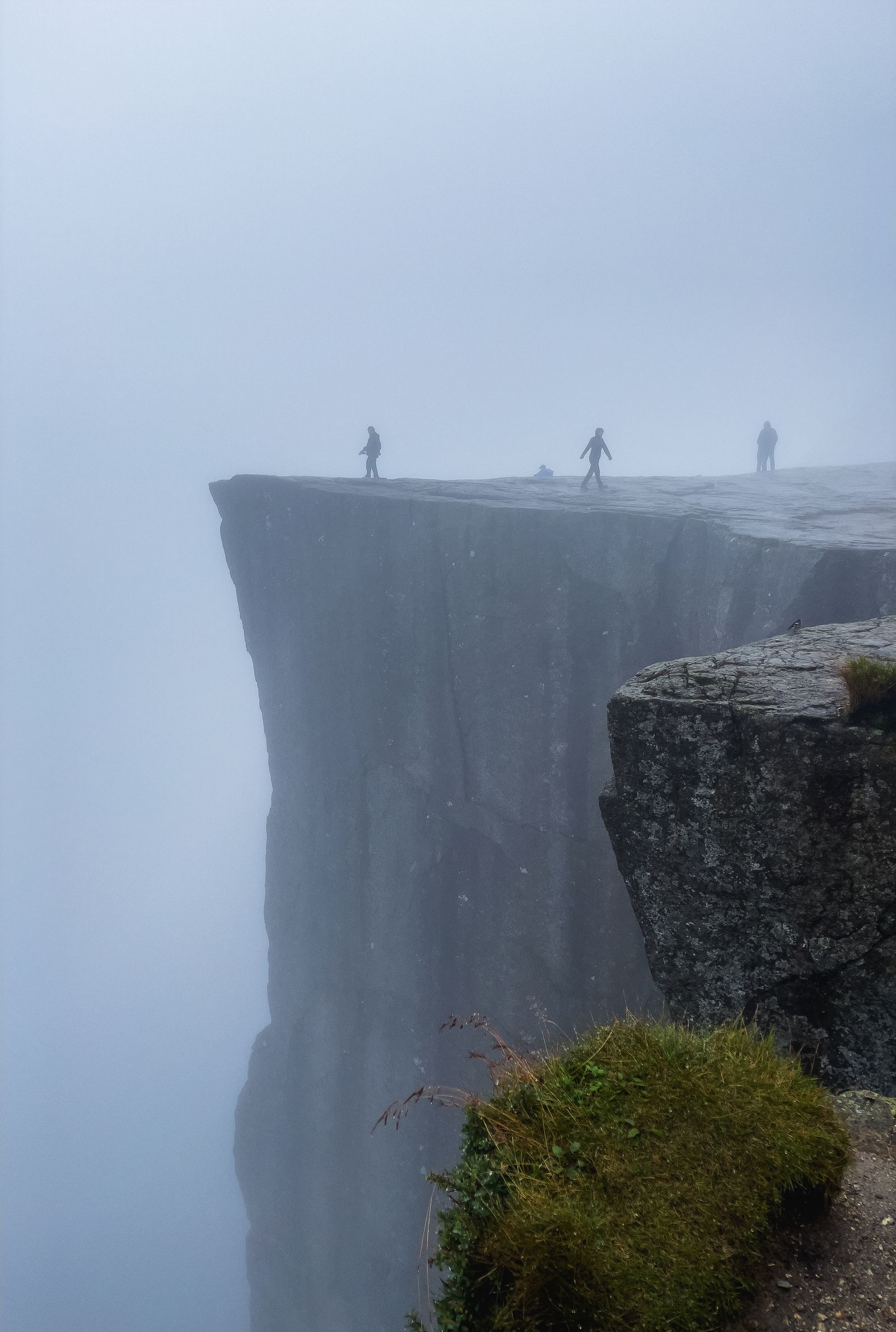
Photo: Rino Adamo / Pexels
The Lysefjord stretches about 42 kilometers inland from Stavanger, between granite walls that rise as high as a thousand meters. Preikestolen’s flat summit sits about 604 meters above the water, and the hike there takes around four hours round trip on a stone-built path with some steep sections; Nepali Sherpas helped build parts of it. Kjeragbolten, a boulder wedged in a crevice nearly a thousand meters above the fjord, demands a longer, tougher climb with chain-assisted stretches over bare rock.
Seeing the fjord from water level is just as memorable, as boats from Stavanger sail beneath Preikestolen’s cliff and stop beside waterfalls that drop straight into the fjord. Stavanger itself has a charming old town, Gamle Stavanger, with roughly 170 white wooden houses from the eighteenth and nineteenth centuries. Its petroleum museum explains how the discovery of North Sea oil in 1969 transformed Norway’s economy, and the city’s harbor is lined with seafood restaurants and bars.
Standout experience: An early-morning hike to Preikestolen before the crowds arrive.
Red fishing cabins, white-sand beaches, and granite peaks rising from the sea make Lofoten unforgettable in every season.
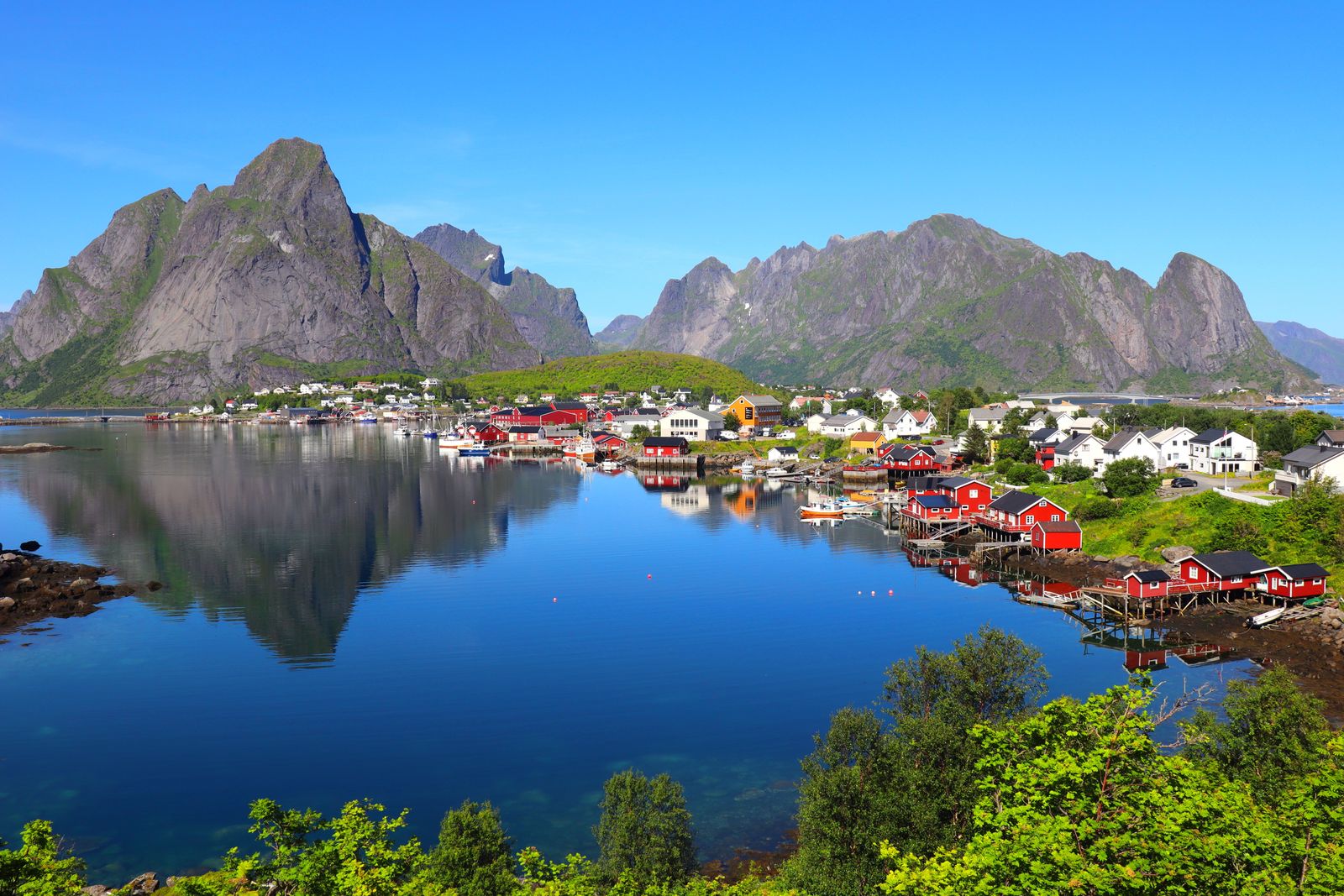
Photo: Mario Vogt / Pexels
The Lofoten Islands lie well above the Arctic Circle, yet thanks to the Gulf Stream their climate is far milder than the latitude suggests. For around a thousand years, the islands have been the center of Norway’s great winter cod fishery, when spawning skrei arrive from the Barents Sea between roughly January and April. Wooden racks hung with drying fish still line the villages in spring, and the red rorbuer, fishermen’s cabins built on stilts at the water’s edge, now welcome visitors.
Reine, often called one of Norway’s prettiest villages, sits near the southern tip of the archipelago, where the E10 road ends at the tiny village of Å. The steep Reinebringen hike, on a stone staircase built by Sherpas, looks down over Reine’s fjord and peaks. Lofoten also holds deep Viking history: at Borg, archaeologists uncovered one of the largest Viking-age longhouses ever found, now reconstructed as a museum. From late May to mid-July, the midnight sun keeps the islands bathed in light around the clock.
Standout experience: A summer hike or kayak beneath the midnight sun.
The “Gateway to the Arctic” is a lively university city with Arctic cathedral views, dog sledding, and aurora chases into the surrounding fjords.
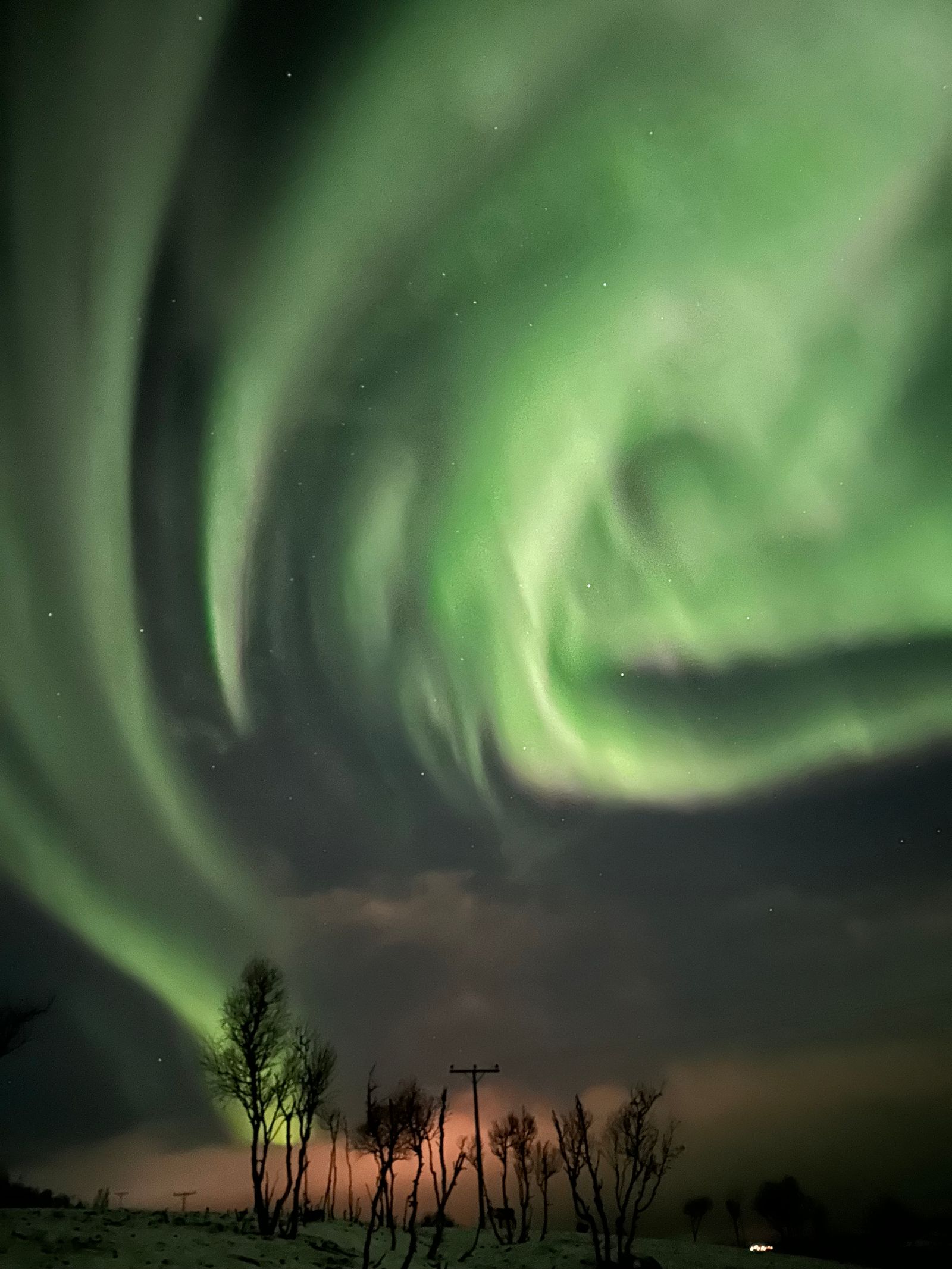
Photo: Fabio Minetto / Pexels
Standout experience: A small-group or private aurora chase with a guide who follows the clear skies.
Norwegians love the outdoors, and the right to roam (allemannsretten) lets everyone enjoy nature responsibly. In the north, the Indigenous Sámi people keep their language, reindeer herding, and traditions alive. Join cultural experiences led by Sámi hosts, and ask before photographing people or herds. Food highlights include fresh salmon, winter cod, king crab, fish soup, reindeer, brown cheese (brunost), waffles, and cinnamon buns, with aquavit for a toast. Cards are accepted almost everywhere, and tipping isn’t expected.
No visa is needed for tourist stays of up to 90 days within any 180-day period in the Schengen Area. Your entry is registered through the EES.
June through early September offers the longest days and full schedules.
From late September through March, on clear, dark nights in the Arctic north.
Yes. Scenic trains, boat trips, easy hikes, and safe cities make it very family-friendly.
Yes. Trains, ferries, and fjord boats connect many highlights, or a private driver can handle the roads.
As Fora advisors, we take care of the details for you: the right season and route, hand-picked hotels with added amenities at select properties, trusted guides, and a pace that leaves room for the unexpected.
Novera Travel will be happy to arrange your international flights when you’re traveling first class.
Call +1 33 22 NOVERA – +1 (332) 266-8372 or email info@noveratravel.com
Prefer to reach out another way? Visit our Contact page.
Novera Travel is an independent travel advisor of Fora Travel.