Limestone lagoons, emerald rice terraces, and more than 7,000 islands to explore
Photo: Koushalya Karthikeyan / Pexels
The Philippines is an island nation of extraordinary variety. Limestone cliffs rise from turquoise lagoons in Palawan, emerald rice terraces climb the mountains of the north, and coral reefs ring thousands of islands in between. Add Spanish colonial towns, lively festivals, and some of the warmest hospitality in Asia, and you have a destination that rewards curious travelers again and again.
Here’s what we tell our clients: the Philippines is wonderful but spread out, so choose two or three regions rather than trying to see everything. Building in buffer time for flights and weather turns a rushed trip into a relaxed one.
The Philippines is tropical and warm year-round, with weather that varies by region.
Our take: January through April is the sweet spot for most itineraries.
A classic first trip pairs Palawan’s El Nido and Coron with Bohol or Cebu in the central Visayas.
Combine Boracay’s White Beach with Siargao’s surf breaks and island lagoons.
Start in Manila’s Intramuros, then head north to the Banaue and Batad rice terraces and the colonial streets of Vigan.
Domestic flights from Manila and Cebu connect to most island gateways, including Puerto Princesa, El Nido, Coron (Busuanga), Bohol (Panglao), Siargao, and Caticlan for Boracay. Fast ferries link many nearby islands. Schedules shift with the weather, so we avoid tight same-day connections and plan a buffer night before international flights home.
Nonstop flights connect Manila with several US cities, including Los Angeles, San Francisco, Seattle, New York, and Honolulu, with more routes being added. Many travelers also connect through Asian hubs such as Tokyo, Seoul, Taipei, Hong Kong, or Singapore, and some arrive directly in Cebu.
Entry rules (as of October 2026): US citizens can visit visa-free for up to 30 days, and extensions are available through the Bureau of Immigration. Your passport must be valid for at least six months beyond your stay, and you’ll need a return or onward ticket. All arriving travelers must register with eTravel within 72 hours before arrival and show the QR code when boarding and arriving. Registration is free, so use only the official etravel.gov.ph website or the eGovPH app and beware of look-alike sites that charge. The Philippine travel tax generally applies to citizens and long-term residents, not short-stay visitors, and some destinations charge local environmental fees. The State Department rates the Philippines at Level 2, Exercise Increased Caution, overall. It rates the Sulu Archipelago, including the southern Sulu Sea, and Marawi City in Mindanao at Level 4, Do Not Travel, and the rest of Mindanao at Level 3, Reconsider Travel, except Davao City, Davao del Norte Province, Siargao Island and the Dinagat Islands; see travel.state.gov. We recheck these rules before every departure. Also review the State Department’s Philippines page and consider enrolling in STEP.
Two or three regions with private transfers, guided island-hopping, and time to relax on the beach.
Add Manila’s history, Bohol’s countryside, or the northern rice terraces to a beach-focused journey.
Choose secluded island retreats, private boat days, and exclusive-use villas in Palawan and beyond.
Wreck dives in Coron, surfing in Siargao, or canyoneering in Cebu.
> Advisor tip: Booking through us as a Fora advisor can unlock extra perks at many partner hotels in the Philippines, such as daily breakfast, a hotel credit, or a room upgrade when available. Benefits vary by property, so ask us what applies to your dates.
El Nido’s Bacuit Bay is dotted with limestone islands, hidden lagoons, and white-sand coves, best explored on island-hopping trips. Coron offers some of the world’s best wreck diving, with Japanese ships sunk during World War II, plus the clear waters of Kayangan Lake. Local eco-fees apply in both areas, and some lagoons limit daily visitors.
Standout experience: Kayaking into El Nido’s lagoons early in the morning before the boats arrive.
This UNESCO World Heritage Site features one of the world’s longest navigable underground rivers, winding through a cave of dramatic rock formations. Visits require a permit, and daily numbers are capped, so plan ahead.
Standout experience: A paddle boat ride into the cave, with only a headlamp lighting the way.
Bohol’s Chocolate Hills, more than a thousand grassy mounds, turn brown in the dry season. The Philippine tarsier, one of the world’s smallest primates, lives in the forests here. Visit only sanctuaries that keep tarsiers in their natural habitat, keep quiet, never touch or handle them, and don’t use flash. Finish with a cruise on the jungle-lined Loboc River.
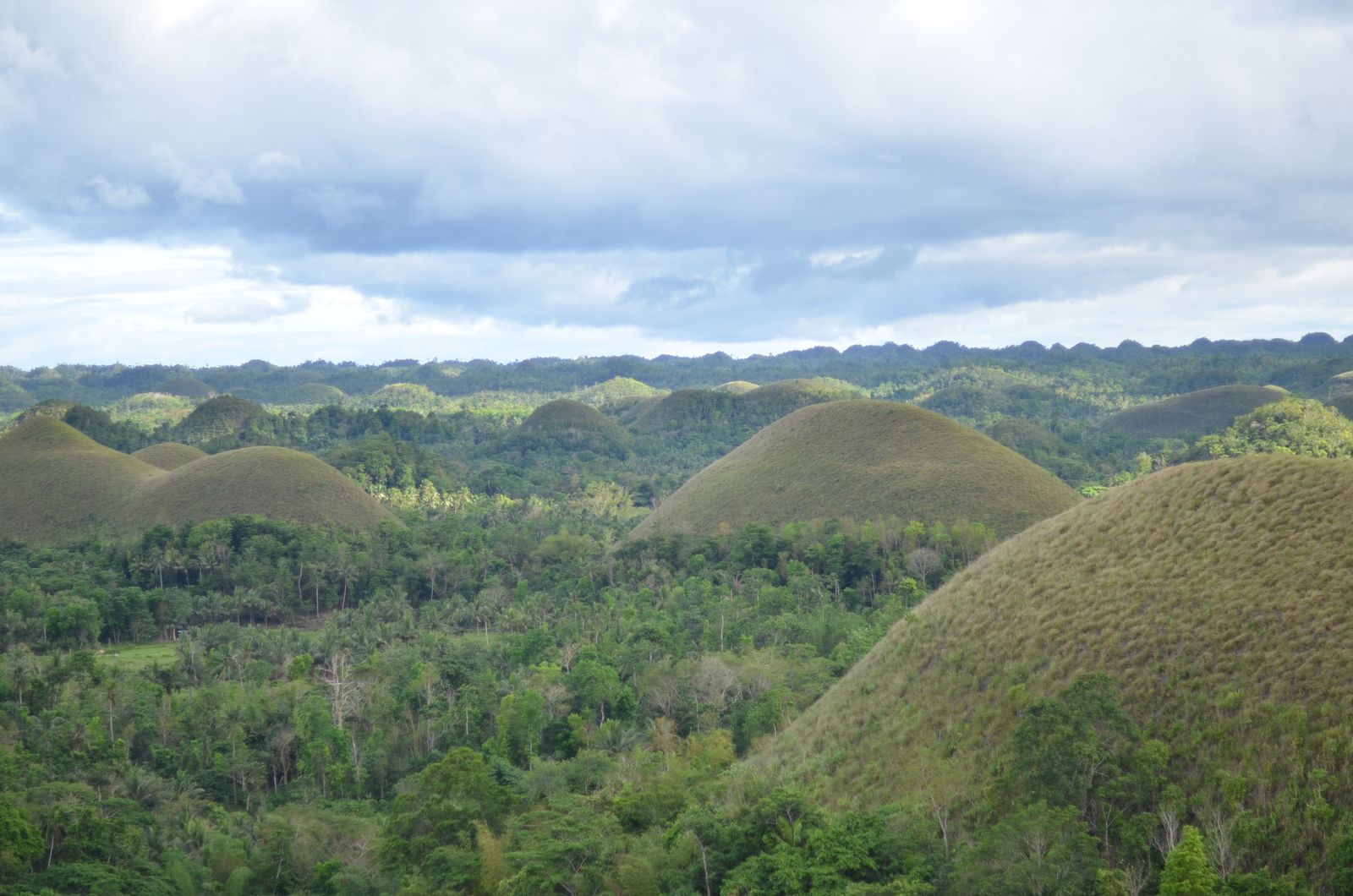
Photo: Jon Discipulo / Pexels
The Chocolate Hills are made of marine limestone that was lifted from the sea and then sculpted by rain and erosion into hundreds of strikingly uniform cones, most of them between thirty and fifty meters high. Local legends offer more colorful explanations, from two feuding giants hurling rocks and sand at each other to the hardened tears of a heartbroken giant. The hills are protected as a national geological monument, and the view is greenest just after the rains and most chocolate-brown late in the dry season.
The Philippine tarsier is a tiny, nocturnal primate that can sit in the palm of your hand, though you should never try. Each of its eyes is roughly as large as its brain, and because the eyes cannot move in their sockets, it can turn its head almost all the way around to look behind it. Tarsiers hunt insects at night and are easily stressed by noise and light, which is why responsible sanctuaries keep visits short, quiet and at a respectful distance.
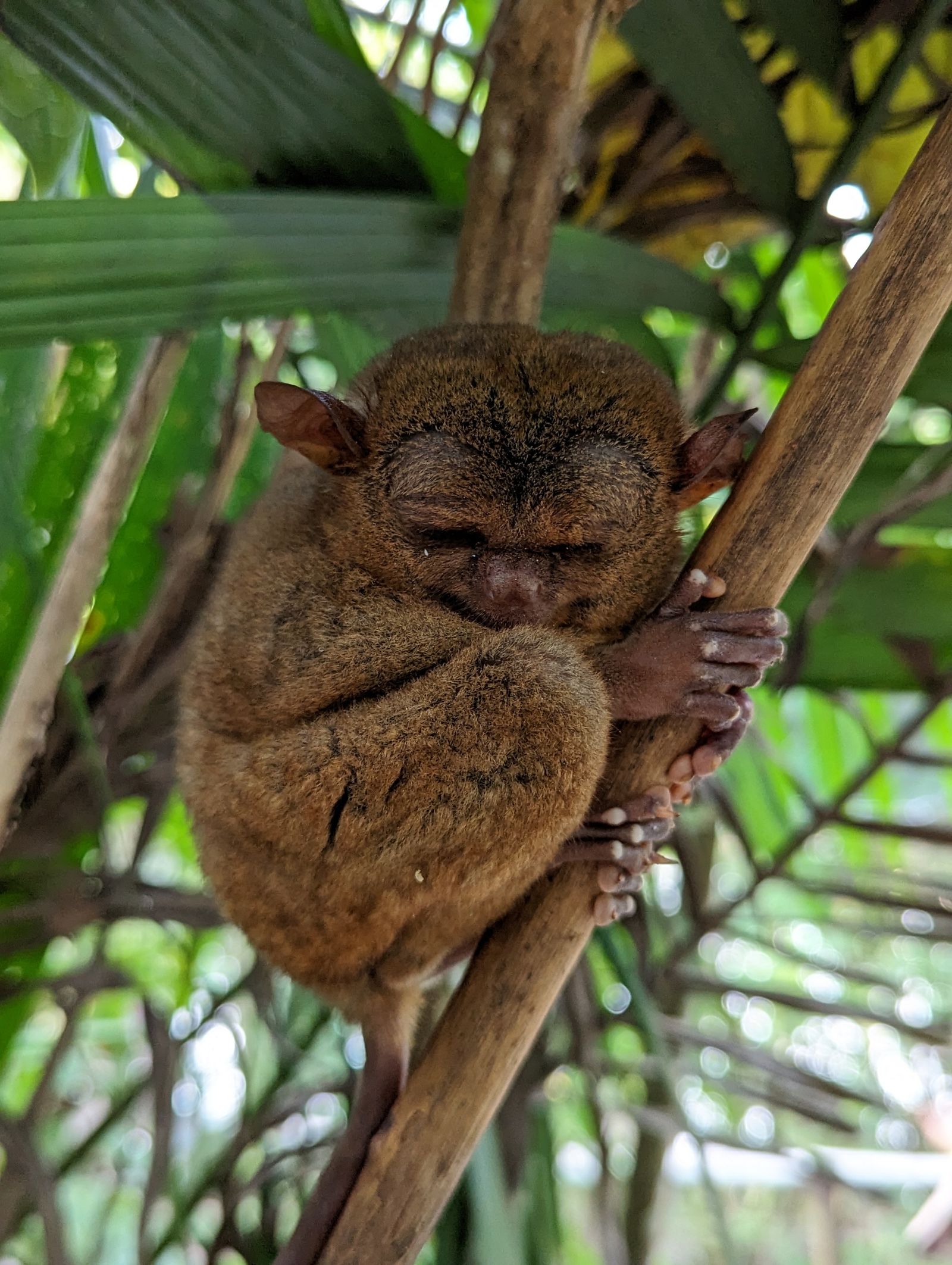
Photo: Noel Mariño / Pexels
Standout experience: Sunrise over the Chocolate Hills from a viewing deck.
Bohol also has a rich colonial and pre-colonial history. In 1565 the Spanish explorer Miguel López de Legazpi and the local chieftain Datu Sikatuna sealed a blood compact of friendship here, an event commemorated by a monument near Tagbilaran. Baclayon Church, completed in the early eighteenth century from coral stone, is one of the oldest churches in the country and was restored after the 2013 earthquake. Off neighboring Panglao Island, the waters around Balicasag are known for sea turtles and steep coral walls.
Siargao is the country’s surf capital, home to the famous Cloud 9 break, plus lagoons, rock pools, and endless coconut palms. The biggest swells usually arrive late in the year, while calmer months suit beginners. Boracay’s White Beach is renowned for its powdery sand and sunsets. After a six-month closure for environmental rehabilitation in 2018, the island enforces strict rules. Smoking and drinking are banned on the beach, and visitors must stay in accredited accommodation.
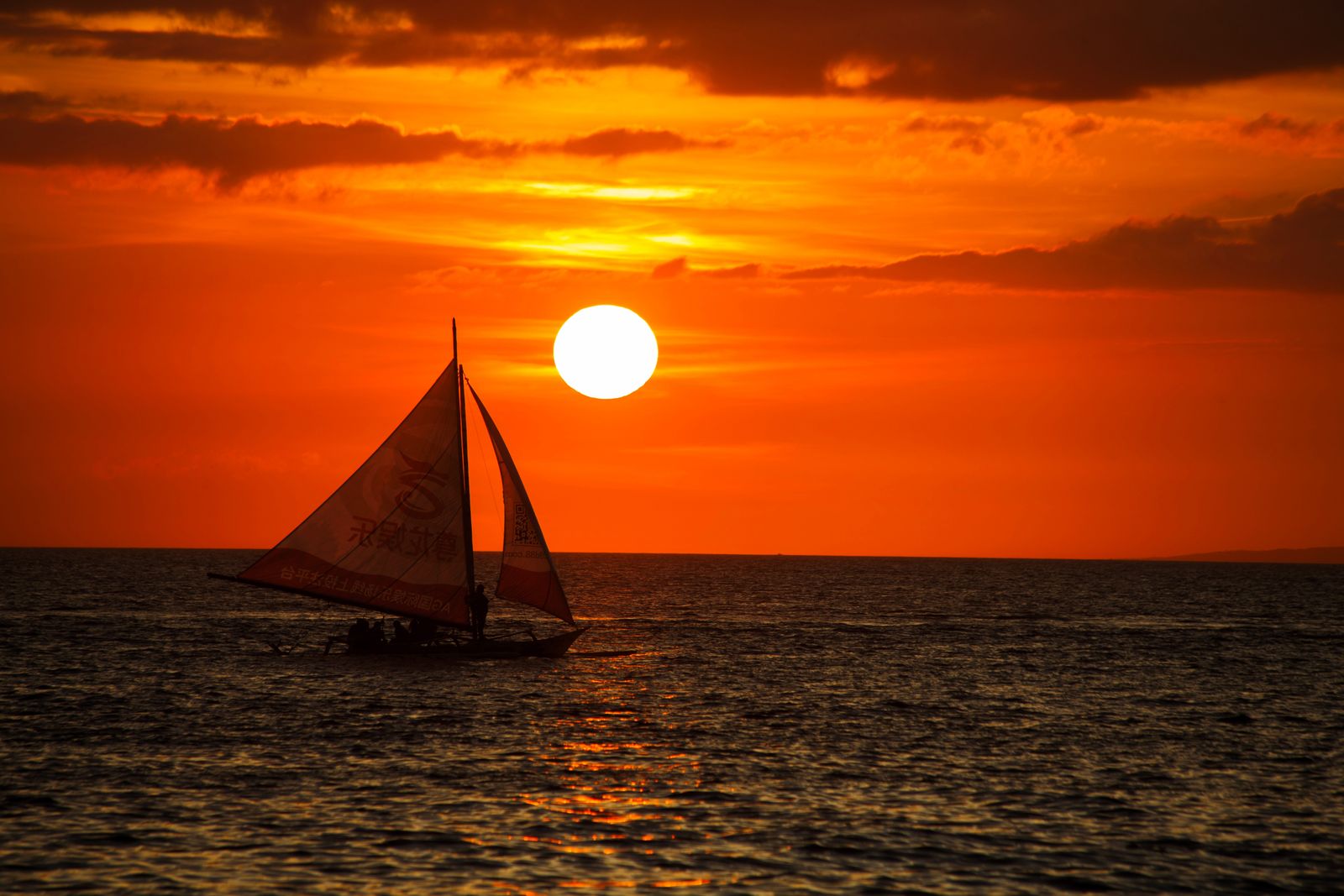
Photo: Max Mishin / Pexels
Standout experience: A sunset sail off White Beach on a traditional paraw.
Cebu blends history, waterfalls, and diving, including the sardine run at Moalboal. In Cebu City, Magellan’s Cross and the Basilica del Santo Niño recall the islands’ Spanish past. At Oslob, whale sharks are fed to attract them, a practice that conservation groups and researchers have criticized for altering the animals’ natural behavior. For a more natural encounter, we recommend Donsol, where whale sharks are seen in the wild, usually from about November to June, with sightings never guaranteed.
Standout experience: Snorkeling with a whale shark in Donsol, with guides who follow strict no-touch rules.
The Rice Terraces of the Philippine Cordilleras, a UNESCO World Heritage Site, have been carved into the mountains by the Ifugao people over generations. Batad’s amphitheater of terraces is the most spectacular. Farther west, UNESCO-listed Vigan preserves cobblestone streets and Spanish colonial mansions, best explored on foot or by horse-drawn kalesa. The mountain roads are long, so we often break the journey overnight.
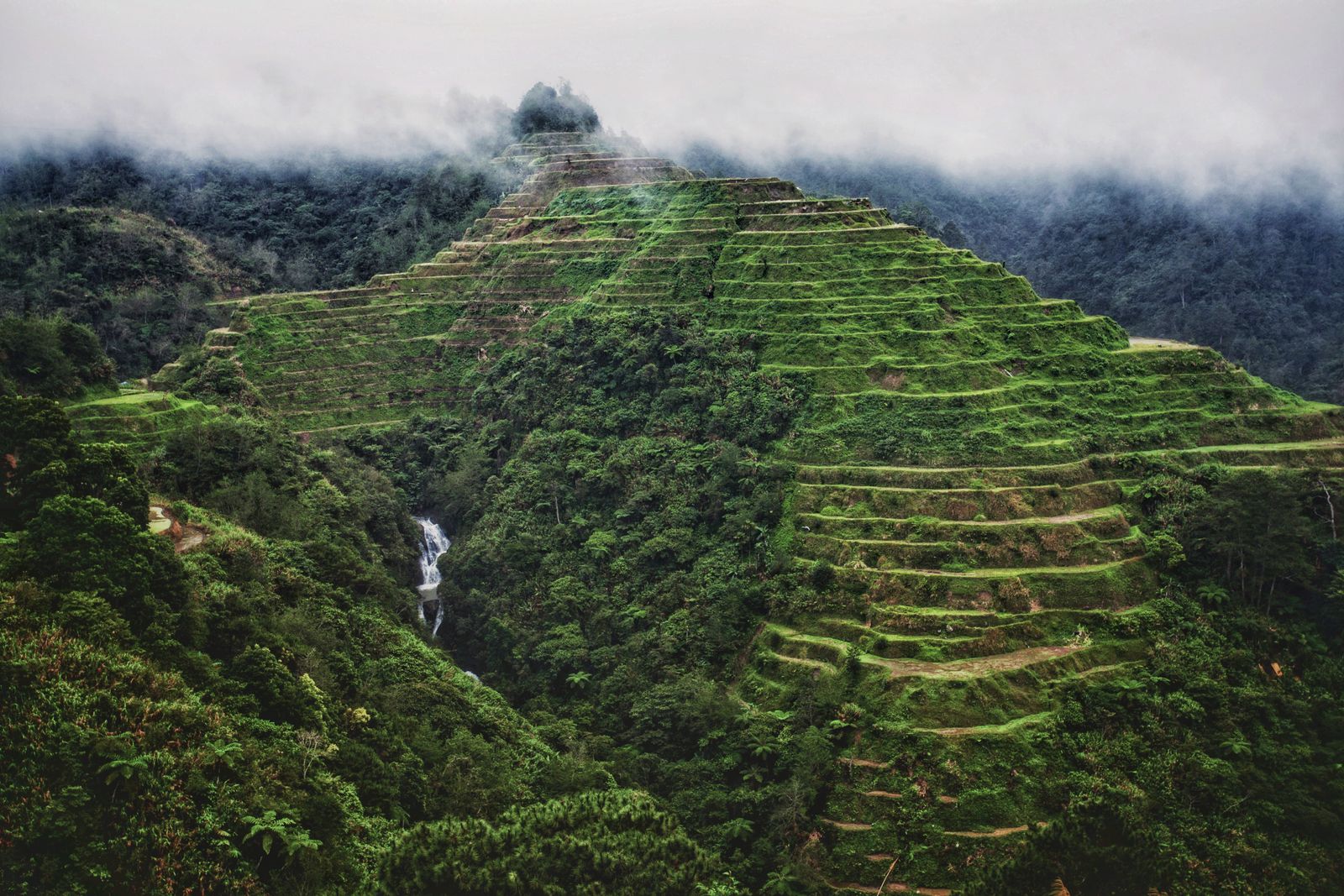
Photo: Max Mishin / Pexels
The Ifugao terraces are fed by an ingenious system of channels and bamboo pipes that carry water down from forests on the mountaintops, which families have traditionally protected as woodlots. Rice farming here is bound up with ritual: the hudhud, chanted stories sung during planting and harvest, is recognized by UNESCO as intangible cultural heritage, and carved wooden figures called bulul are believed to guard the rice granaries. The terraces are greenest during the growing season and turn gold as harvest approaches.
Batad is reached only on foot, along a steep path from the road, and its curving amphitheater of terraces leads down to a village and onward to the cool pool of Tappiya Falls. Nearby, in Mountain Province, the town of Sagada is known for its limestone caves, pine-forested hills and the centuries-old practice of placing coffins on cliff faces, a burial tradition visitors should observe respectfully with local guides. Nights in the Cordillera can be surprisingly cool, so bring a warm layer.
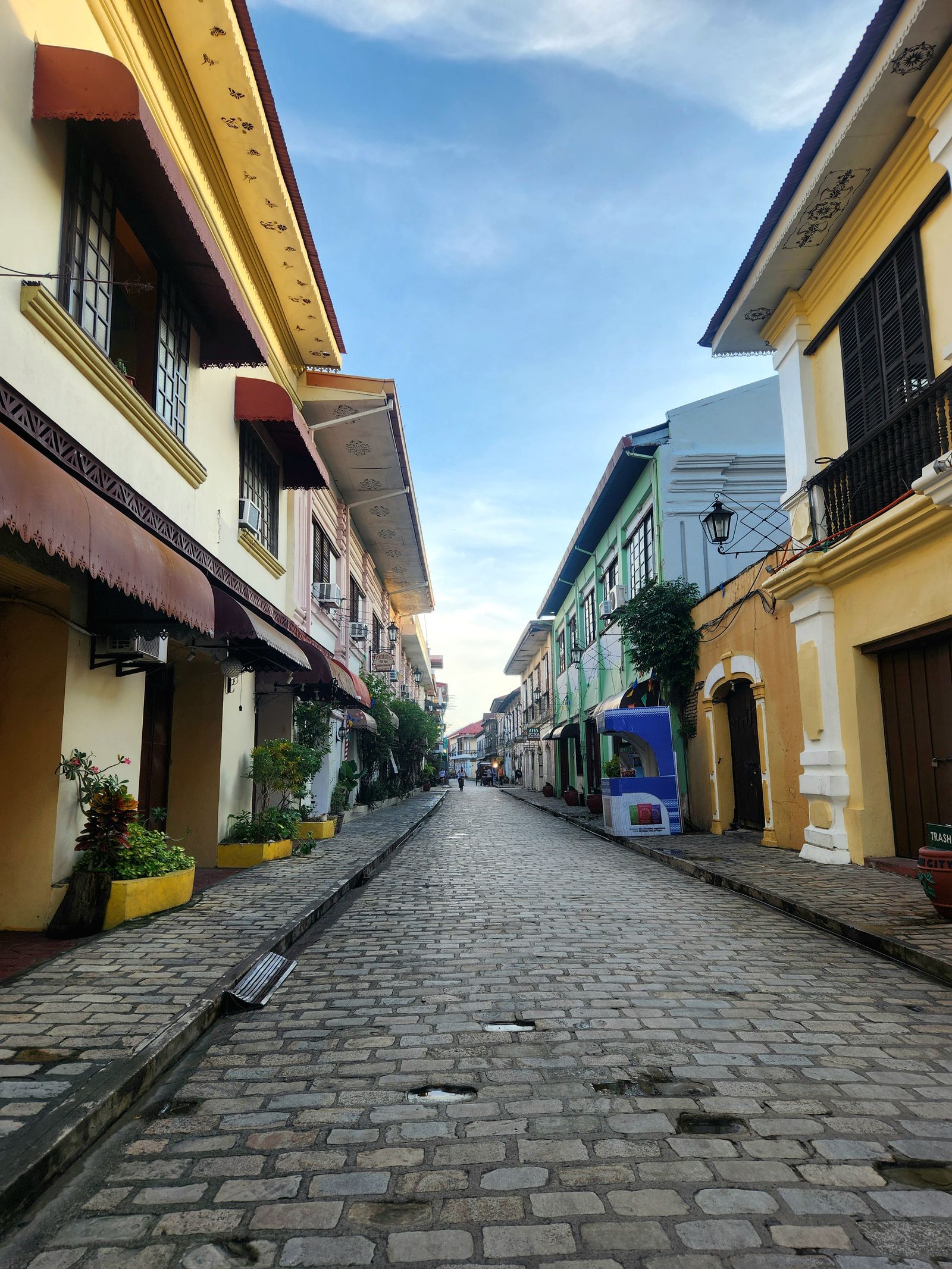
Photo: Cy Castor / Pexels
Standout experience: Hiking down into Batad’s terraces with a local guide.
Vigan was founded by the Spanish in the 1570s, and UNESCO describes it as the most intact example in Asia of a planned Spanish colonial trading town, blending Philippine, Chinese and European architecture. Many houses follow the bahay na bato style, with a ground floor of stone and an upper floor of wood with sliding capiz-shell windows. Calle Crisologo is lovely at night when its lamps are lit. Try Vigan empanada, a bright orange pastry filled with local sausage, and watch potters shaping the traditional burnay clay jars.
In Manila, explore Intramuros, the historic walled city, with Fort Santiago, San Agustin Church, and Manila Cathedral.
Intramuros was laid out by the Spanish after Miguel López de Legazpi made Manila the colonial capital in 1571, and its stone walls once enclosed churches, convents and the homes of the colonial elite. San Agustin Church, completed in the early seventeenth century, is the oldest stone church in the country and one of the Baroque churches listed by UNESCO, having survived earthquakes and the destruction of 1945. At Fort Santiago, the national hero José Rizal was held before his execution in 1896.
The Battle of Manila in 1945 left much of the old city in ruins, which is why the cathedral you see today was rebuilt in the 1950s. Across the Pasig River, Binondo, founded in 1594 for Chinese merchants, is often called the oldest Chinatown in the world, and its narrow streets are a delicious place to try dumplings, hopia pastries and noodles. Getting around, look for jeepneys, the brightly decorated shared minibuses that evolved from military jeeps left behind after World War II.

Photo: Clarence Gaspar / Pexels
Standout experience: A guided walking tour of Intramuros at golden hour.
Filipinos are famously welcoming, and English is widely spoken. Most people are Catholic, and faith and family shape daily life. Dress modestly in churches. Saying “po” adds a polite touch when speaking with elders. Try adobo, sour sinigang soup, Cebu’s famous lechon (roast pig), kinilaw (a fresh seafood ceviche), and halo-halo, a colorful shaved-ice dessert. The Philippine peso is the currency. Carry cash on remote islands, where ATMs can be scarce.
No visa is needed for stays of up to 30 days, but you must register with eTravel before arrival.
December through May offers the driest weather, with January through April especially reliable.
Most visits are trouble-free. Follow State Department advice and avoid areas under higher advisory levels.
Domestic flights and ferries connect the islands. We plan routes with buffers for weather.
Yes. Donsol offers in-season encounters with wild whale sharks and no feeding.
As Fora advisors, we take care of the details for you: the right season and islands, hand-picked hotels with added amenities at select properties, trusted guides, and a pace that leaves room for the unexpected.
Novera Travel will be happy to arrange your international flights when you’re traveling first class.
Call +1 33 22 NOVERA – +1 (332) 266-8372 or email info@noveratravel.com
Prefer to reach out another way? Visit our Contact page.