Castle-topped cities, wild glens and islands, peaty drams, and the warmest welcome in the north
Photo: Lucas Carlini / Pexels
Scotland packs an outsized amount of drama into a small country. In a single week we can have you exploring Edinburgh’s medieval closes, driving through glens that look carved by giants, sipping single malt beside the still that made it, and watching the light change over a Hebridean beach at ten o’clock on a summer night. Add castle hotels, superb seafood, and locals who love a good story, and you have a trip that lingers.
At a Glance
Scotland’s weather is famously changeable, and it’s common to get sunshine, wind, and rain in one afternoon. Timing is about daylight, crowds, and events rather than heat.
Our take: Late May, June, and September are our favorite windows: plenty of daylight, most attractions open, and fewer crowds than July and August. If the festivals are your priority, book Edinburgh hotels very early.
The capital’s Old Town and Georgian New Town are a UNESCO World Heritage Site, crowned by the castle on its volcanic rock. Walk the Royal Mile, hike Arthur’s Seat, and eat your way through a lively restaurant scene.
Edinburgh’s layout tells its history. The medieval Old Town grew along a single ridge running downhill from Castle Rock to Holyrood, and because the town was hemmed in by its walls, residents built upward, with tall tenements and narrow closes branching off the main street like the ribs of a fish. In the 1760s the city looked north across a drained loch and began the New Town, a planned grid of Georgian terraces, crescents and private gardens. Between the two now lie Princes Street Gardens and the Gothic spire of the Scott Monument, while the riverside Dean Village and the old port of Leith, with its waterfront restaurants, show quieter sides of the capital.
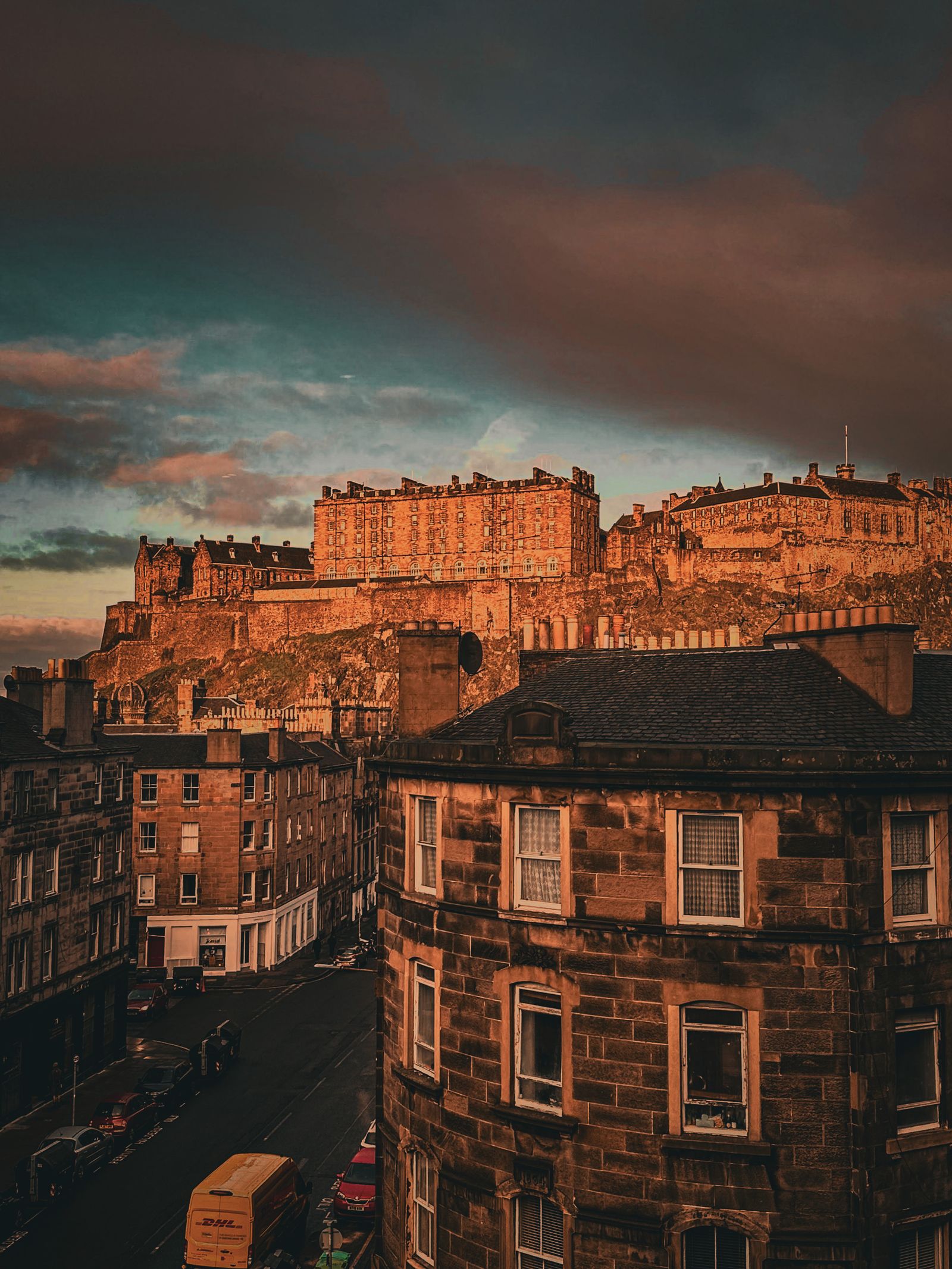
Photo: Zia Meer / Pexels
Scotland’s largest city is all grand Victorian architecture, world-class free museums, Charles Rennie Mackintosh design, and a terrific live-music culture.
Glasgow grew rich on tobacco, cotton and, above all, shipbuilding on the River Clyde, and its civic buildings still show that confidence. Kelvingrove Art Gallery and Museum, a red sandstone landmark in the West End, mixes Old Masters, Scottish painting and natural history, and it hangs Salvador Dalí’s Christ of Saint John of the Cross. On the riverbank, the zinc-clad Riverside Museum, designed by Zaha Hadid, tells the story of transport, and the Burrell Collection in Pollok Country Park reopened in 2022 after a major refurbishment. The medieval cathedral, which came through the Reformation with its roof intact, sits beside the Victorian Necropolis on its hill.
This is also the city most associated with Charles Rennie Mackintosh, whose mix of Art Nouveau curves and crisp, Japanese-influenced geometry shaped schools, houses and tea rooms here around 1900. You can step inside a faithful reconstruction of his own home at the Hunterian Art Gallery and take tea in his restored tea rooms building on Sauchiehall Street. Evenings are when Glasgow shines brightest: it was named a UNESCO City of Music in 2008, and on any night there are gigs in basement bars, folk sessions in pubs and big touring concerts. Glaswegians are known for their humor and directness, so a conversation at the bar comes easily.
Glencoe’s brooding valley, Ben Nevis above Fort William, and the long, dark waters of Loch Ness define the Highlands most travelers picture. Inverness makes a handy base for the north.
Look at a map and the Highlands appear to be sliced by one straight diagonal line. That is the Great Glen, a geological fault running from Fort William to Inverness, filled by a chain of lochs that includes Lochy, Oich and Ness. In the early nineteenth century the engineer Thomas Telford joined them into the Caledonian Canal, and its flight of eight locks at Banavie, called Neptune’s Staircase, is fun to watch as boats step up and down. Inverness sits where the River Ness meets the Moray Firth, and just outside town lies Culloden, where the Jacobite army was crushed in 1746 in the last pitched battle fought on British soil.
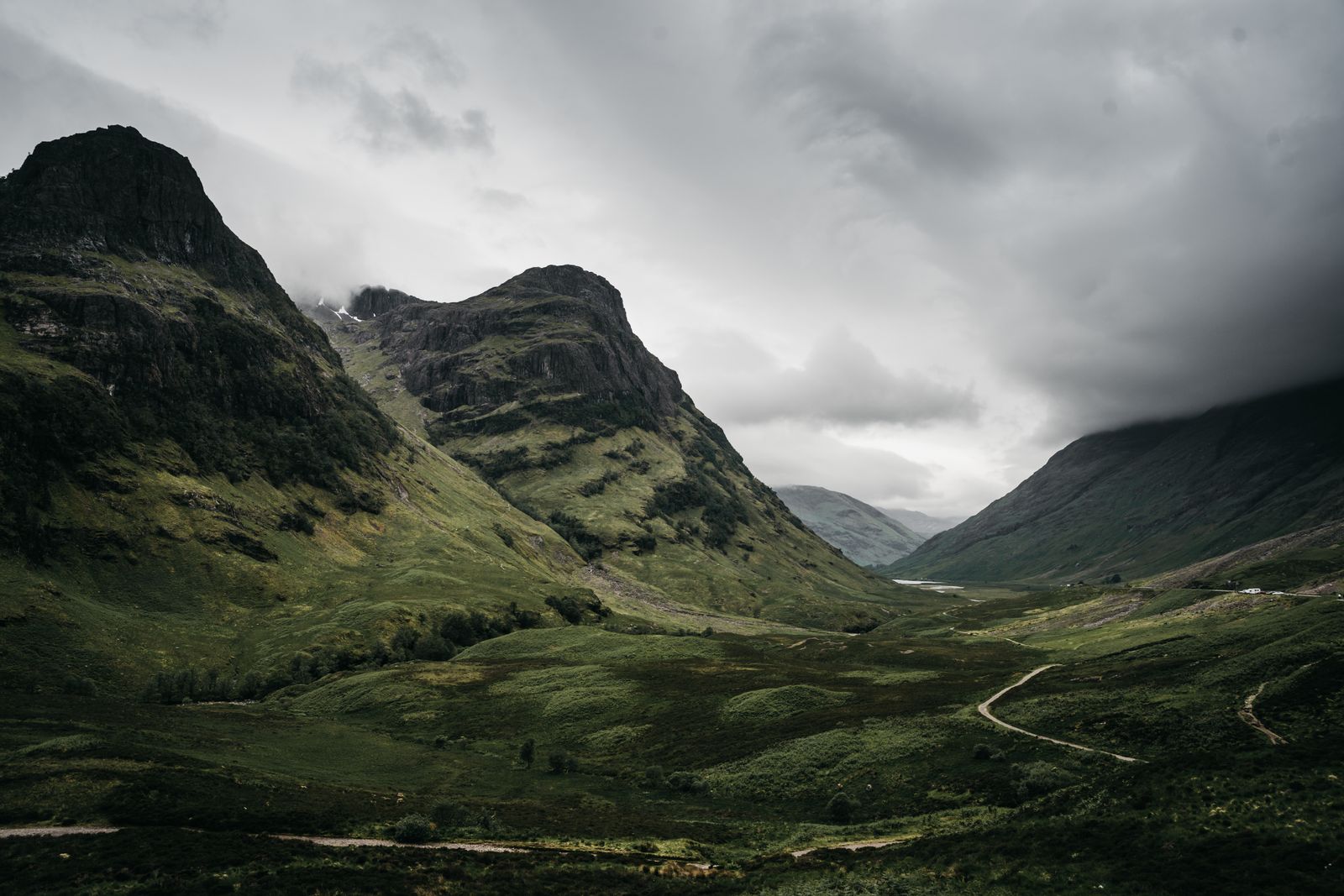
Photo: Andras Stefuca / Pexels
Jagged ridges, fairy pools, and sea cliffs make Skye the most photographed island in Scotland. Allow at least two nights.
This roughly 500-mile loop from Inverness traces the wild northern and western coastlines, past white-sand beaches, sea stacks, and tiny fishing villages. Much of it is on narrow single-track roads, so we suggest taking it slowly.
Speyside, along the River Spey, has the greatest concentration of distilleries in the country and makes mellow, fruity malts. Islay, off the west coast, is the home of bold, peaty, smoky whiskies.
The “home of golf” pairs the Old Course with a historic university town, ruined cathedral and castle, and sandy beaches.
The UK’s largest national park is a land of pine forests, high plateaus, and wildlife such as red squirrels and reindeer, along with the royal connections of Deeside.
Orkney is rich in Neolithic sites, including the village of Skara Brae and the Ring of Brodgar. In the Outer Hebrides, Lewis and Harris offer Gaelic culture, the Callanish Stones, and some of Europe’s most beautiful beaches.
Edinburgh and Glasgow are the main gateways. As of 2026, Edinburgh had year-round nonstop service from Newark and seasonal nonstops from several other US hubs, while Glasgow had seasonal summer nonstops from Newark. Outside those routes, it’s easy to connect via London, Dublin, or other European hubs. Edinburgh and Glasgow are under an hour apart by train, and rail links continue north to Inverness, Aberdeen, and the West Highlands.
Entry rules (as of October 2026): US citizens visiting the UK need an Electronic Travel Authorisation (ETA) before they travel, and airlines can deny boarding without one. Apply only through the official UK ETA app or GOV.UK. An approved ETA is linked to your passport, generally allows multiple visits of up to six months each, and lasts for two years or until your passport expires, whichever comes first. Many decisions come back quickly, but the UK government advises allowing up to three working days. Your passport should be valid for your entire stay. Rules can change, so we confirm requirements for every traveler before departure, and we recommend checking the US State Department’s UK page and enrolling in STEP.
Self-drive: Ideal for confident drivers who want flexibility. Remember that Scotland drives on the left, and rural roads can be narrow and slow.
Chauffeur-driven touring: A private driver-guide handles the roads and adds stories, history, and hidden stops along the way. This is our top recommendation for first-timers and whisky lovers.
Luxury rail: A luxury touring train runs multi-night, all-inclusive journeys from Edinburgh through the Highlands, with dining cars, an observation car, and off-train excursions.
Small-ship Hebrides cruising: Intimate small ships sail from Oban to remote islands and sea lochs that larger ships can’t reach.
Small-group tours: Great for solo travelers, with expert guides and the logistics fully handled.
> Advisor tip: Booking through us as a Fora advisor can unlock extra perks at many partner hotels and castle properties in Scotland, such as daily breakfast, a property credit, or an upgrade when available. Benefits vary by property and date, so ask us what applies to your stay.
The castle holds the Scottish crown jewels and the Stone of Destiny, and the Royal Mile below it leads down to the Palace of Holyroodhouse.
Standout experience: A private early-morning castle tour, followed by a guided walk through the Old Town’s hidden closes.
Hike to the Old Man of Storr, wander the otherworldly Quiraing, and dine on just-landed seafood.
Standout experience: A sunset drive along the Trotternish peninsula, with a stop at every viewpoint.
A heritage steam train runs seasonally between Fort William and Mallaig, crossing the curving 21-arch Glenfinnan Viaduct, famous from the movies.
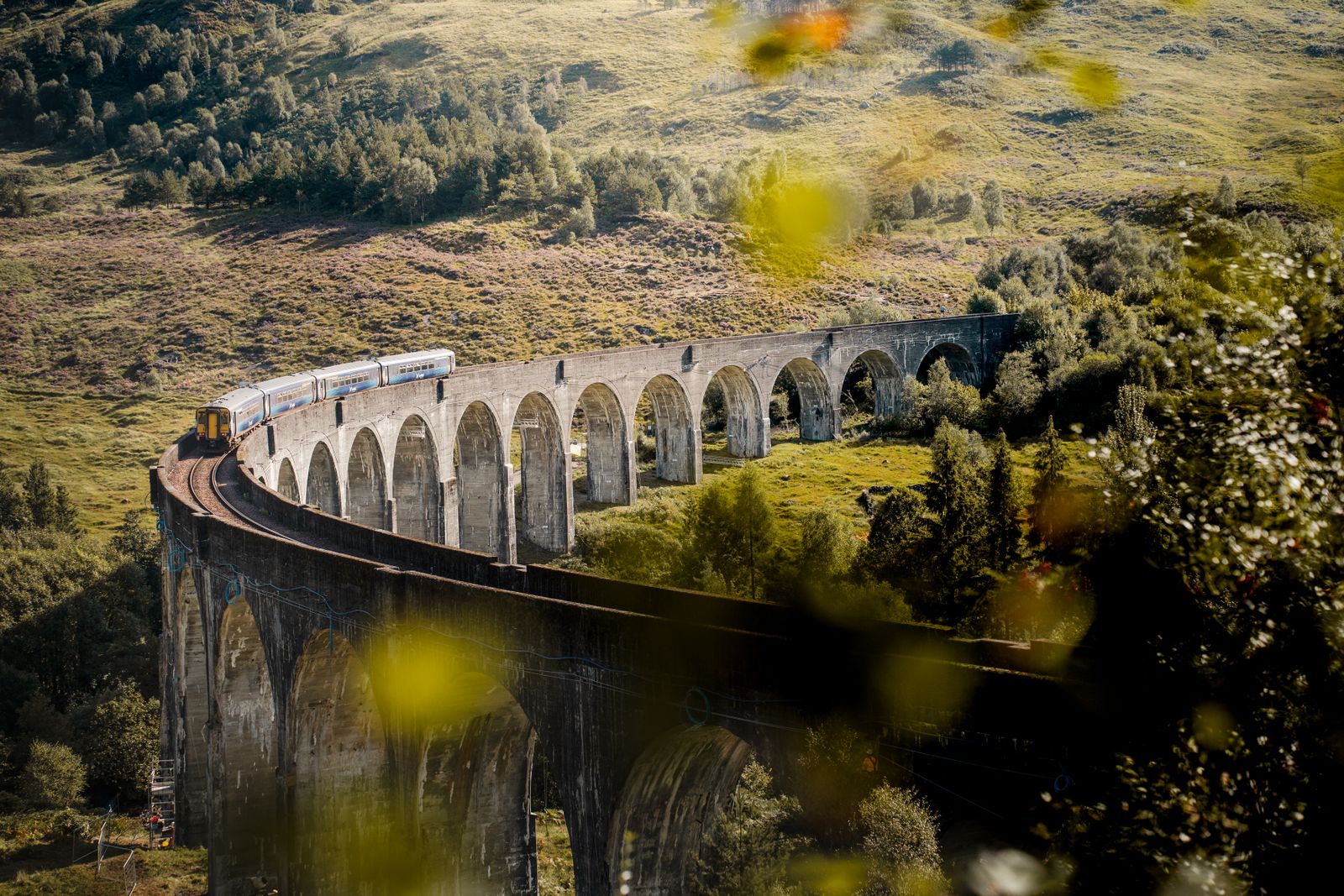
Photo: Clément Proust / Pexels
Standout experience: Ride the steam train, then watch it cross from the viewpoint above the viaduct.
The viaduct was completed in 1901 for the extension of the West Highland Line to Mallaig, and its builders chose mass concrete rather than stone, a bold engineering decision for the time. From the viewpoint you also look down Loch Shiel to the Glenfinnan Monument, raised in 1815 near the spot where Prince Charles Edward Stuart raised his standard in August 1745 to launch the last Jacobite rising. The visitor center explains both stories, and the short trail up to the viewpoint gets crowded around train times, so arriving early pays off.
If the heritage train’s dates or seats don’t line up, regular public ScotRail trains run the same scenic route all year, from Glasgow across the emptiness of Rannoch Moor to Fort William and on to Mallaig. The final stretch, long known as the Road to the Isles, passes the white sands and turquoise shallows of Arisaig and Morar, with views out to the small isles of Eigg and Rum. Mallaig itself is a working fishing harbor where ferries cross to Armadale on Skye, so the railway can become part of an island itinerary rather than a there-and-back day trip.
Eilean Donan, on its islet where three lochs meet, is the classic castle image. Stirling, Dunnottar, Cawdor, and Inveraray each have their own story.
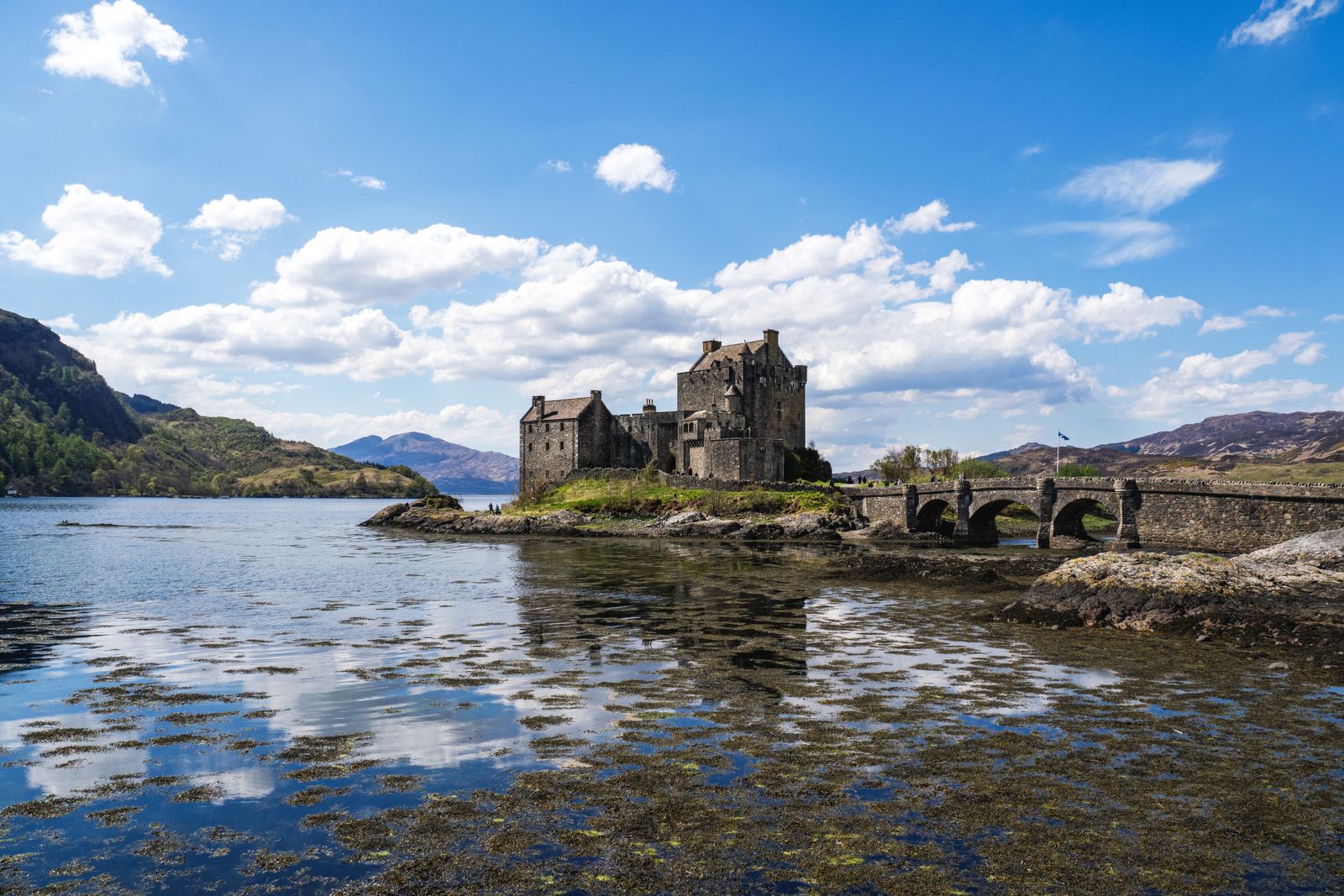
Photo: Rino Adamo / Pexels
Standout experience: A night in a castle hotel, complete with a roaring fire and a dram before dinner.
The castle you see at Eilean Donan is younger than it looks. A medieval stronghold stood on the islet for centuries, held for the Mackenzies by their MacRae constables, until government warships bombarded it in 1719, after Spanish troops supporting a Jacobite rising had garrisoned it. It lay in ruins for nearly two hundred years before Lieutenant Colonel John MacRae-Gilstrap rebuilt it between 1912 and 1932, adding the arched footbridge. Because it sits beside the main road toward the Skye Bridge, it makes a natural stop on the way to the island.
Each of the other great castles opens a different chapter. Stirling Castle commands the old crossing point between the Highlands and Lowlands; the infant Mary, Queen of Scots, was crowned in its chapel in 1543, and the battlefields of Stirling Bridge and Bannockburn lie within sight of its walls. Dunnottar, a clifftop ruin near Stonehaven, sheltered the Honours of Scotland, the nation’s crown jewels, during a siege by Oliver Cromwell’s army before they were smuggled out. Inveraray, on Loch Fyne, is still the home of the Dukes of Argyll, chiefs of Clan Campbell, while Cawdor carries the title Shakespeare gave to Macbeth.
Cruise Loch Ness to the ruins of Urquhart Castle, then drive through Glencoe, one of the most dramatic glens in the country.
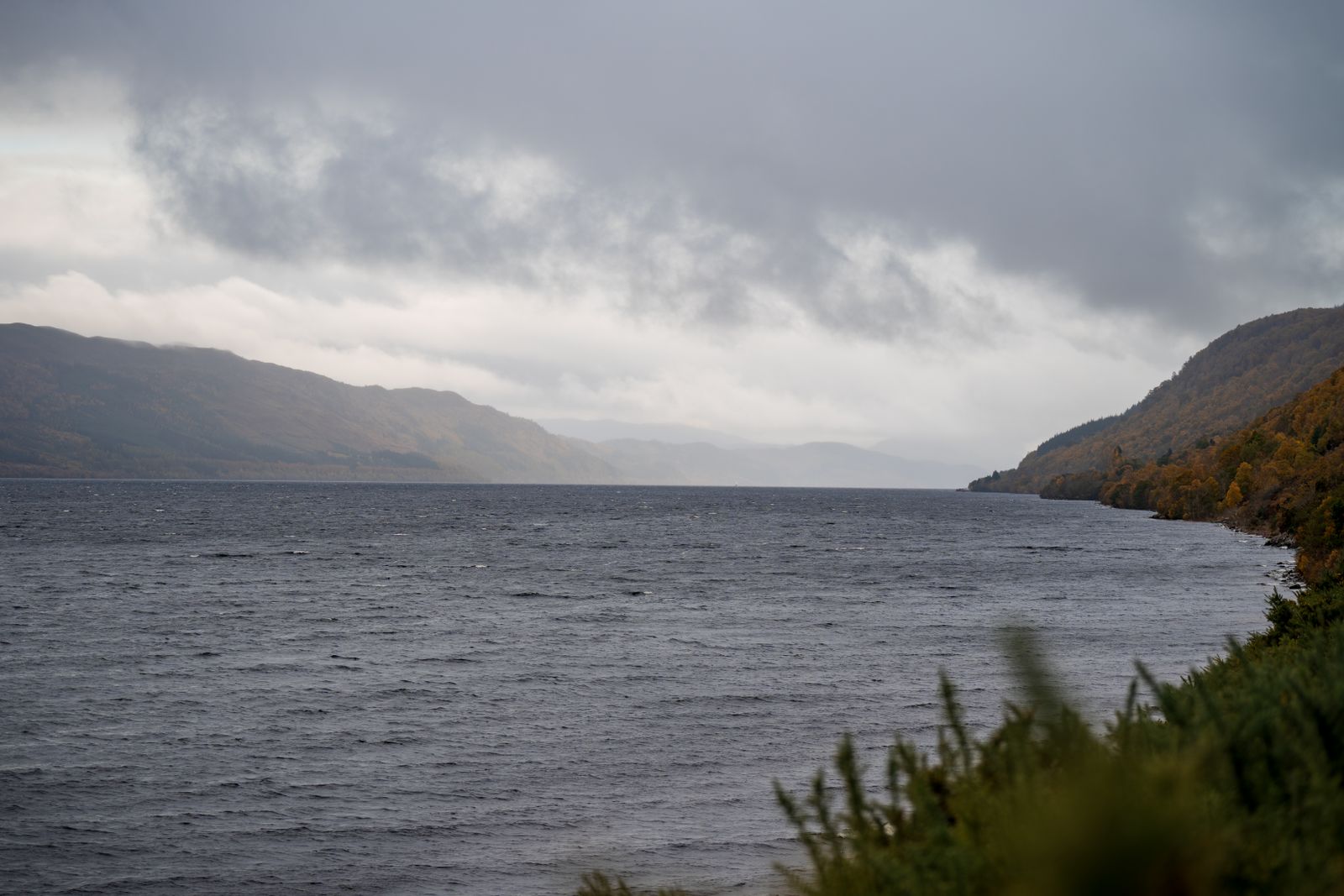
Photo: Michał Robak / Pexels
Standout experience: A guided Glencoe walk with a local who knows its turbulent history.
Loch Ness fills a long, narrow stretch of the Great Glen, about 23 miles from end to end, and it is so deep that it holds more fresh water than all the lakes of England and Wales combined. Its dark, peat-stained water and sudden squalls helped feed the legend of a monster, which took off in the 1930s after a new road opened along the shore and a famous photograph appeared that was later admitted to be a hoax. Urquhart Castle, on its headland near Drumnadrochit, was blown up in 1692 so it could not fall into Jacobite hands, and its ruins frame the loch beautifully.
Glencoe’s beauty comes with a dark history. In February 1692, government soldiers who had been lodging with the MacDonalds of Glencoe turned on their hosts before dawn, killing more than thirty people, and others died of exposure as they fled into the snow. The betrayal of hospitality made the massacre notorious in Highland memory. Today the glen draws walkers and photographers, with the pyramid of Buachaille Etive Mòr guarding its eastern entrance from Rannoch Moor and the three steep spurs known as the Three Sisters lining the road through the valley.
From the elegant malts of Speyside to Islay’s peat-smoked drams, distillery visits are a highlight for spirits lovers.
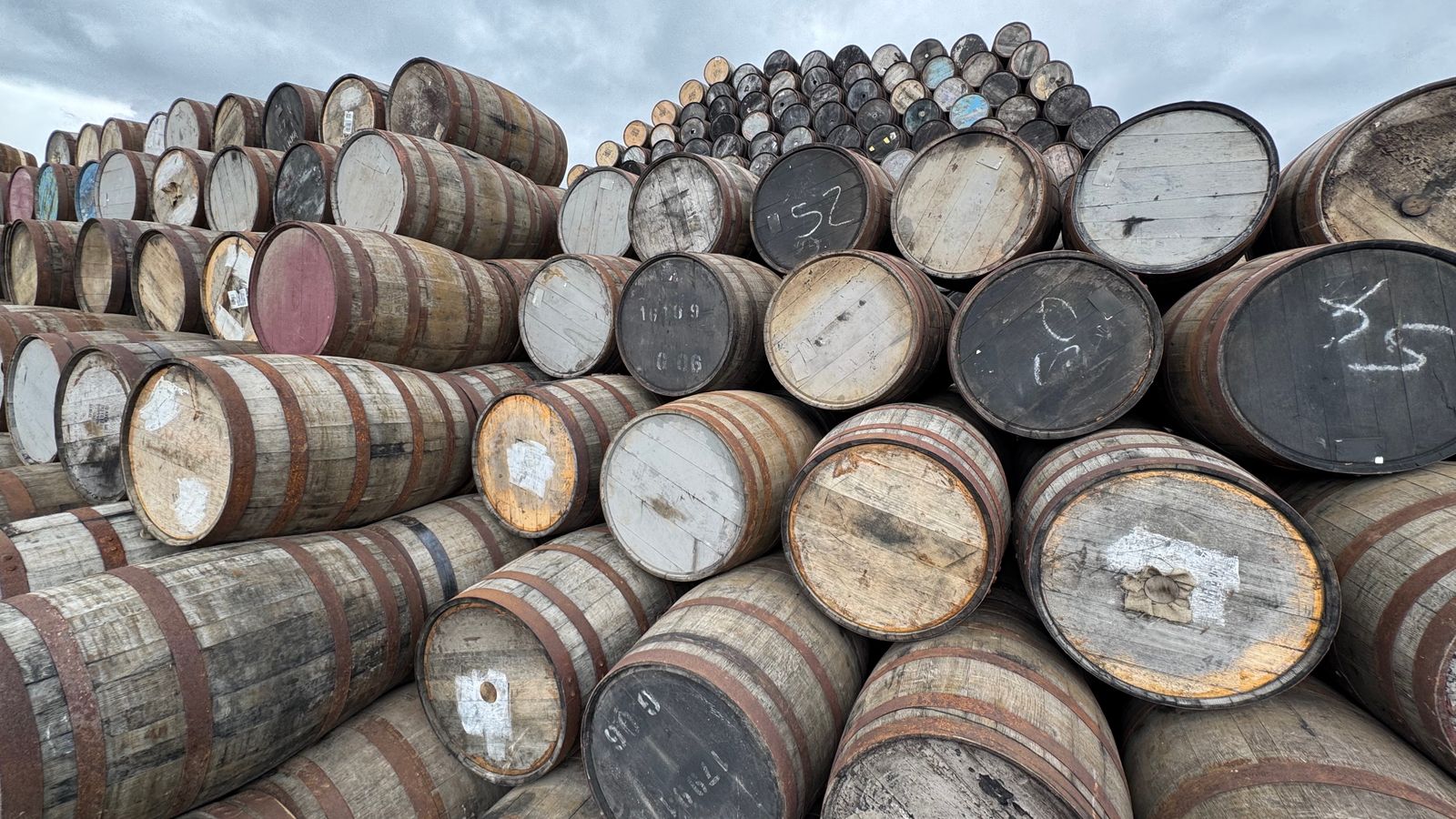
Photo: Geert Rozendom / Pexels
Standout experience: A private tasting with a master distiller or warehouse manager, sampling straight from the cask.
Whisky takes its name from the Gaelic uisge beatha, the water of life, and by law Scotch must be distilled and matured in Scotland, aging in oak casks for at least three years. Single malt is made only from malted barley at a single distillery, usually in copper pot stills whose shape helps define its character. A distillery visit typically follows the process from mashing and fermenting to the stillhouse and on to the cool, damp warehouses, where a little of the spirit evaporates each year as the angels’ share. Scotland’s drink-driving limit is stricter than in England and Wales, so a driver or a designated nondrinker is the sensible way to tour.
The whisky regions each have a personality. Speyside’s distilleries cluster along the River Spey and around towns such as Dufftown, producing many of the world’s best-known malts. On Islay, most distilleries sit right on the shoreline, and peat cut from the island’s bogs is burned to dry the barley, giving the whiskies their smoky, maritime character. Campbeltown, once home to dozens of distilleries, now has only a handful, while the Highland and Lowland regions cover everything from light, floral styles to rich, sherry-cask ones. Many distilleries offer warehouse tastings and food pairings, and booking ahead is wise in summer.
Golfers can try the Old Course ballot; everyone else can enjoy the medieval streets and West Sands beach.
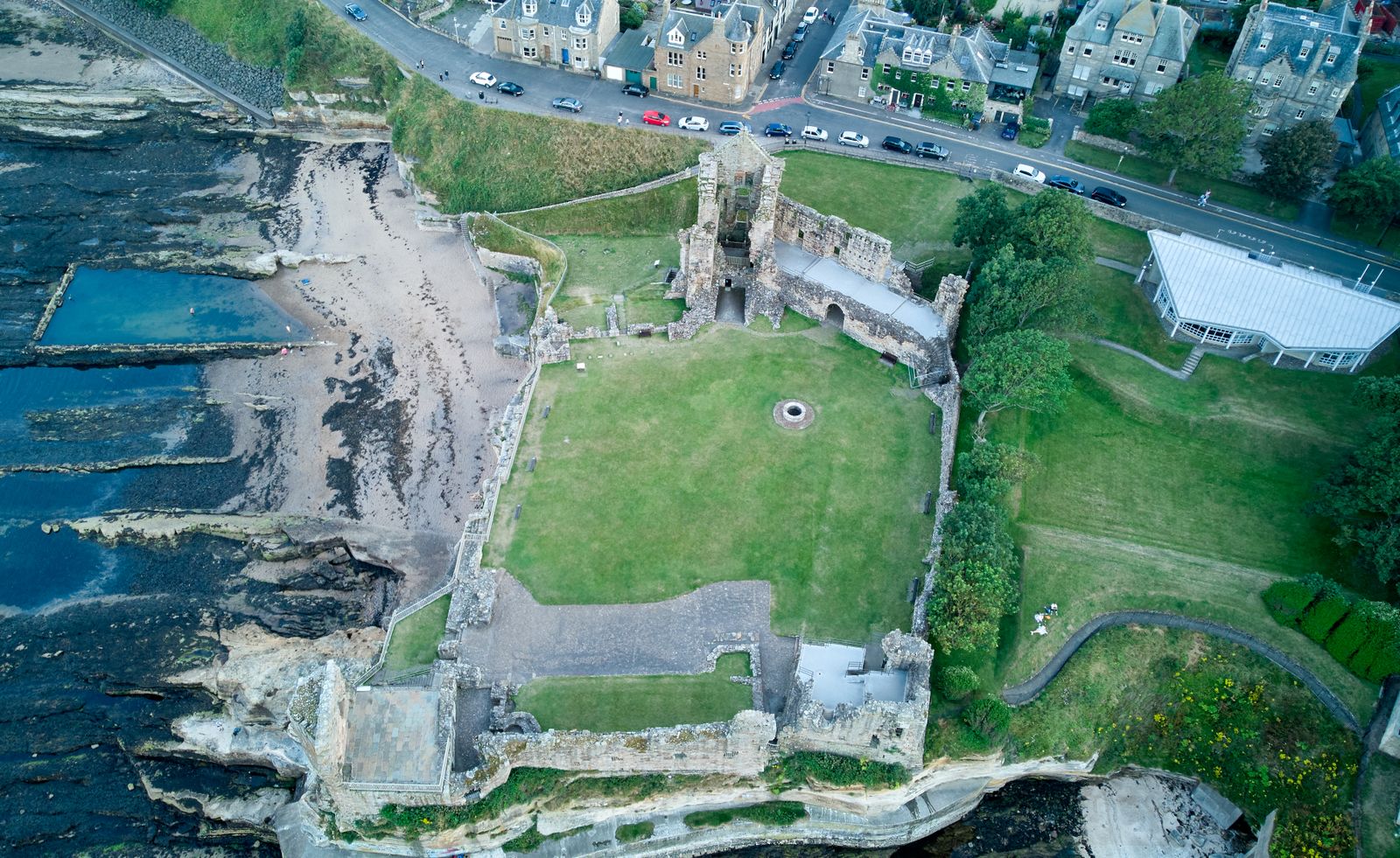
Photo: Valentine Kulikov / Pexels
Standout experience: An early stroll along West Sands, followed by a round on one of the town’s historic links courses.
These islands reward travelers who want to slow down, with ancient stones, seabird cliffs, and white-sand beaches.
Standout experience: Visiting the Callanish Stones on Lewis in the soft evening light.
Food and drink: Try haggis with neeps and tatties, Cullen skink (a smoky haddock soup), west-coast langoustines and scallops, Scottish salmon, and cranachan, a dessert of cream, raspberries, honey, and toasted oats. Shortbread and a cup of tea are never far away, and whisky is, of course, the national drink.
Etiquette: Scots are proud of their identity, so call them Scottish, not English. Tipping in restaurants is customary for good service. In pubs, it’s common for groups to take turns buying rounds.
Festivals: Look out for August’s Edinburgh festivals, Hogmanay at New Year, Burns Night suppers in late January, Up Helly Aa fire festivals in Shetland, and Highland Games across the country in summer.
Yes. You’ll need a UK ETA, applied for online before you travel, and a passport valid for your whole stay.
Eight to 12 days covers Edinburgh, the Highlands, and Skye at a comfortable pace.
Self-drive works well for confident drivers, but a chauffeur-guide removes the stress of left-side, single-track driving and lets everyone enjoy the whisky.
It runs seasonally, usually from spring or early summer into autumn. Dates change each year, so we confirm them when you book.
Probably at some point, so pack layers and expect beautiful, changeable light.
Ready to plan? We’ll match the season to your interests, hand-pick castle hotels and cozy inns, and arrange the drivers, guides, and tastings.
Novera Travel will be happy to arrange your international flights when you’re traveling first class.
Call +1 33 22 NOVERA – +1 (332) 266-8372 or email info@noveratravel.com
Prefer to reach out another way? Visit our Contact page.
Novera Travel is an independent travel advisor of Fora Travel.